Passengers face death risk in sleeper buses
Eklas Haque
Ordinary buses are being converted into sleeper buses at roadside garages and workshops without approved designs or engineering advice, raising serious safety concerns. Although sleeper buses are intended to make long-distance travel more comfortable, unapproved modifications are increasingly turning them into potential death traps.
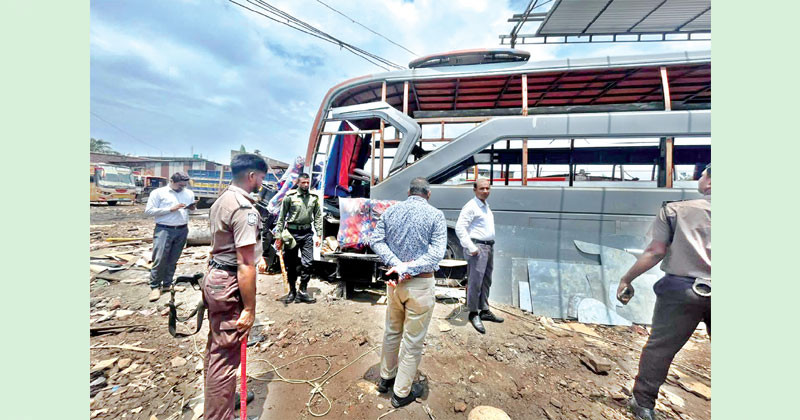
Sleeper buses are becoming popular on routes from Dhaka to Chattogram, Cox’s Bazar, Sylhet, Rajshahi and other districts and tourist destinations. However, workshops are modifying old buses by adding extra berths, changing passenger capacity and interior layouts, and altering bodies, seats, stairs and windows. Transport experts say such changes are being made without proper safety assessments. On August 7, nine people, including a child, were killed and 12 others injured in a head-on collision between two buses in Osmani Nagar, Sylhet. The accident occurred on the Dhaka-Sylhet highway at Kashikapan when a sleeper bus of Bengal Paribahan travelling from Dhaka collided with a Unique Paribahan bus heading from Sylhet. The Unique bus fell into a roadside ditch.
Meanwhile, the Bangladesh Road Transport Authority (BRTA) has been taking legal action against illegal garages and workshops, unauthorised structural modifications and unapproved sleeper buses operating on roads. Last Wednesday, BRTA conducted a joint raid on several body-building garages near Samir Mridha Jame Mosque in Jatrabari, Dhaka. Hafizul Engineering Workshop, Jisan/Nusrat Automobile, Abdullah Body Builders, A R Motors and Tabbasum Motors were each fined Tk 50,000, totalling Tk 250,000, for manufacturing and repairing unauthorised sleeper buses and operating without BRTA registration. The owners also gave written undertakings not to repeat such violations.
Transport experts said modifying a bus is not merely a mechanical job. Changes must consider the vehicle’s weight, balance, braking capacity, suspension, tyre capacity, emergency exits, fire safety, passenger capacity and evacuation during accidents. Making modifications solely for commercial profit without involving engineers or public transport specialists can create serious risks for passengers. The spread of sleeper coaches has introduced new safety concerns in long-distance bus travel. Body construction, seat installation and interior modifications are often treated as routine technical work, but even minor changes can have major safety implications. Sleeper bus tickets are often more expensive than regular bus fares, and passengers pay extra expecting a safer and more comfortable journey. Yet they generally have no way of knowing whether a bus has undergone unauthorised structural modifications or when it was last safety-tested.
Kamrul Islam, a passenger travelling from Cox’s Bazar to Dhaka, said passengers have no opportunity to verify a bus’s construction or approval when buying tickets. Ticket counters and online platforms usually provide information about fares, schedules, destinations and seats, but not whether the bus has been structurally modified, whether the modification was approved or when its safety was last inspected. “Ordinary buses are being quickly converted into sleeper coaches and put on the road. Adding extra structures, metal frames, batteries and electrical equipment can change a bus’s weight. This can lead to accidents and deaths. In fact, we are always afraid when travelling on the roads,” he said.