US Trade Deal Must Be Cancelled: Anu Muhammad
The Democratic Rights Committee has launched a campaign from Dhaka to Phulbari as part of a movement to pressure the government to cancel the US trade agreement. Marking the 20th anniversary of the Phulbari uprising, the committee began the campaign journey from Dhaka to Dinajpur’s Phulbari on Monday.
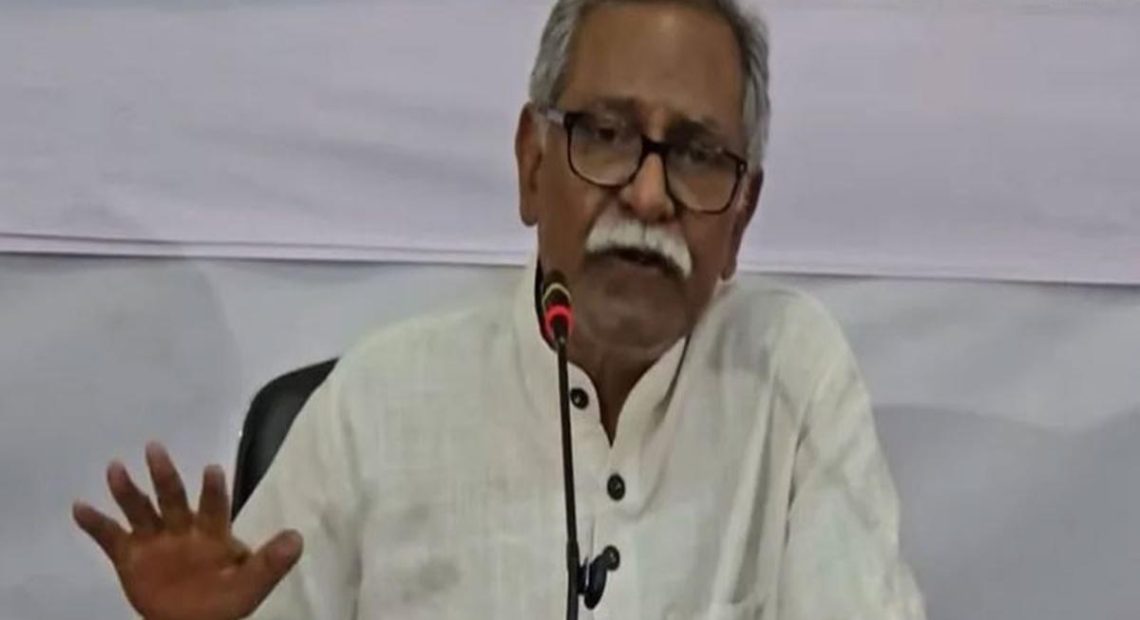
Professor Anu Muhammad, who signed an agreement with the then BNP government on behalf of the people of Phulbari during the uprising, formally inaugurated the campaign at a rally in front of the National Press Club in Dhaka. He said the campaign was based on four demands: cancellation of the “anti-national” US trade agreement; full implementation of the Phulbari agreement; a people-oriented solution to the gas and electricity crisis; and an end to privatisation in the energy, power and state-owned sectors. According to the Democratic Rights Committee, the campaign began at the National Press Club and will hold a street meeting at Gazipur Chowrasta, pay tribute at the shrine of Maulana Bhashani in Tangail, hold a rally in Tangail city and street meetings at Kadda intersection in Sirajganj and Sherpur in Bogura before ending the first day in Bogura city.
On Tuesday, the second day, the campaign will hold a rally in Bogura in the morning, followed by street meetings in Gobindaganj of Gaibandha and Birampur of Dinajpur. A rally will be held in Dinajpur city in the afternoon before the campaign travels to Phulbari for an overnight stay. On Wednesday, participants will join programmes marking the anniversary of the uprising in Phulbari. The campaign will conclude at Phulbari Shaheed Minar with a pledge to resist imperialism and compel the government to cancel the US trade agreement. An exhibition titled “Exhibition on the Dangers of the US Trade Agreement” will also be inaugurated in Phulbari that day. Speaking at the inaugural rally, Anu Muhammad said that following the 2006 Phulbari uprising, then BNP-Jamaat coalition government Prime Minister Khaleda Zia had signed an agreement with the protesters. Its key provisions included preventing development projects that went against Bangladesh’s interests, banning open-pit mining and ensuring that no development project would be undertaken without public consent.
“Twenty years after that agreement was signed, the BNP is again in power. We are concerned that there are now efforts to cancel the agreement signed by Khaleda Zia, while her son Tarique Rahman is the prime minister,” Anu Muhammad said. “In response to these efforts, we are undertaking this campaign demanding full implementation of the Phulbari agreement.”
Among others, Dhaka University Associate Professor Moshahida Sultana and Seema Dutta, president of Bangladesh Nari Mukti Kendra, spoke at the rally. Rafiq-uz-Zaman Farid, coordinator of the Democratic Student Alliance, a platform of left-leaning student organisations, moderated the event. On August 26, 2006, members of the then Bangladesh Rifles (BDR), now Border Guard Bangladesh (BGB), opened fire on a large gathering of local residents protesting a coal project by Asia Energy in Phulbari, Dinajpur. Three people were killed and more than 200 protesters were injured. The movement later spread to neighbouring Parbatipur, Birampur and other areas. Amid mounting protests, the government accepted the protesters’ demands and signed the “Phulbari Agreement” on August 30 that year.