China’s anti-corruption fight became Xi’s most important policy
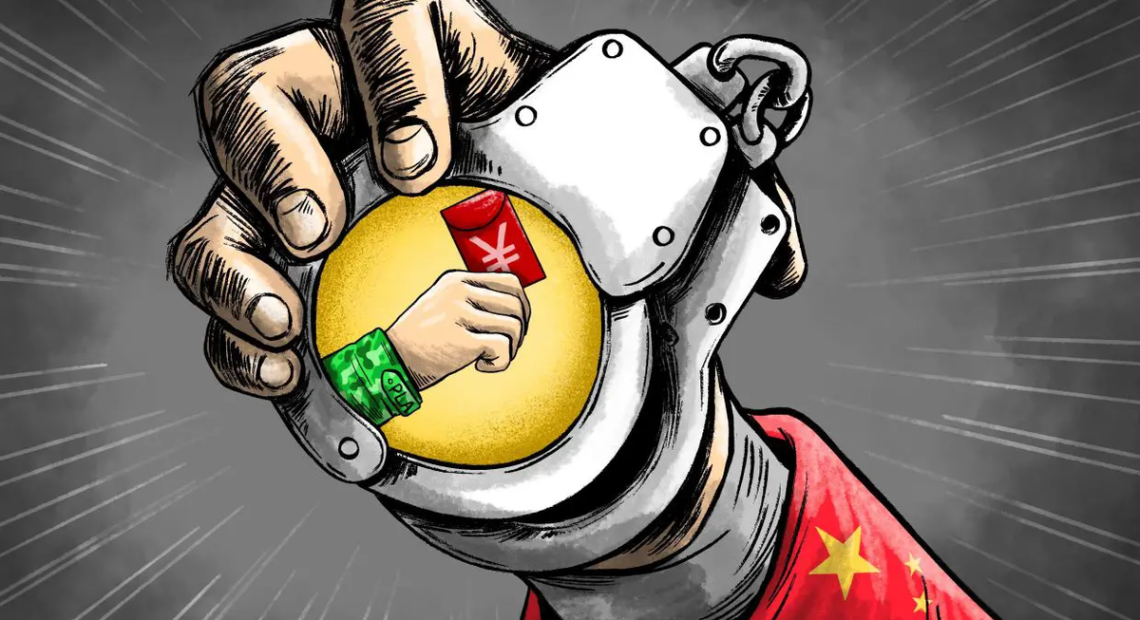
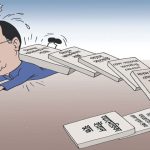
Chinese President Xi Jinping’s anti-corruption campaign has evolved from a sweeping crackdown into one of the Communist Party’s most important and enduring policies. It has become a central tool for enforcing party discipline, strengthening governance and shaping the country’s economic strategy.
In the early years of Mr. Xi’s first term, when anti-corruption investigators were removing senior officials in unprecedented numbers, Chinese authorities repeatedly reminded the public that the campaign was not merely a “gust of wind” that would quickly pass. Beijing had already imprisoned dozens of senior officials, including Zhou Yongkang, one of China’s most powerful politicians and a former member of the Communist Party’s Politburo Standing Committee.
Concerns that the campaign might be short-lived were particularly strong at the local level. More than a decade later, however, the campaign has expanded further, targeting record numbers of officials while uncovering newer forms of misconduct, including cryptocurrency-related corruption and the use of clandestine intermediaries. A recent analysis by the South China Morning Post found that 983,000 people were punished in 2025, while the number of senior officials removed from office was three times higher than in 2013. Between 2013 and 2025, around 60% of senior officials removed in the campaign had served in regional governments. The resource-rich provinces of Jiangxi, Liaoning, Shanxi and Hebei, as well as Inner Mongolia, recorded the highest numbers of removals.
Official figures show that the campaign remained highly active in 2025. Disciplinary authorities handled 1.012 million cases, punished 983,000 people and took disciplinary action against 69 officials at the provincial or ministerial level. Authorities also investigated 115 senior officials and referred 4,306 suspects accused of bribery for prosecution.
The campaign has continued into 2026. During the first quarter, authorities took disciplinary action against 183,000 people and opened investigations into 30 provincial- or ministerial-level officials. In July, former Politburo member Ma Xingrui was expelled from the Communist Party, becoming the third serving or former Politburo member to be expelled since 2025.
The crackdown has also deepened within China’s military. Alongside his push to modernise the armed forces, Mr. Xi has called for another anti-corruption campaign, while new regulations have tightened the education, management and supervision of senior military officials. The scale and persistence of the campaign indicate that it is no longer a temporary political purge. Instead, it has become an integral part of Xi Jinping’s broader effort to tighten party discipline, strengthen political control and reshape China’s system of governance.
Source: The South China Morning Post