Government Proposes Buying Rooftop Solar Power at Tk 10.50 per Unit
By Sadman Safi Pratik
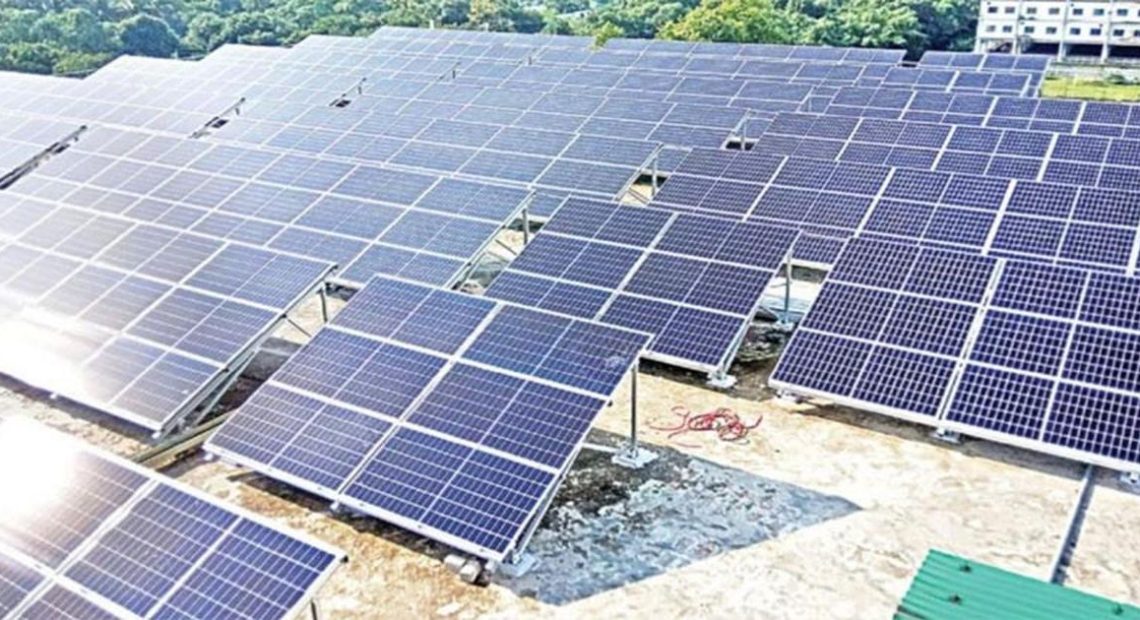
The government has proposed setting the purchase price of rooftop solar electricity at Tk 10.50 per unit to accelerate the expansion of solar power generation from building rooftops. The government aims to generate 3,000–4,000 megawatts (MW) of electricity by next summer, allowing building owners to install systems themselves or through third-party service providers.
Distribution companies have also proposed providing incentives in the form of subsidies to encourage people to invest in rooftop solar power.
According to a proposal from the Dhaka Power Distribution Company (DPDC), the current electricity tariff at 33 kV is Tk 10.09 per unit. If rooftop solar power is purchased at Tk 10.50 per unit, there would be a gap of 40 paisa per unit, which is planned to be provided as a subsidy through the Ministry of Finance.
For a 25MW project operating for four hours a day, monthly generation would be around 2.25 million units. If 40 percent of the electricity is supplied to the grid, around 900,000 units would be delivered. The resulting monthly subsidy requirement would be approximately Tk 364,500. Officials believe such incentives could accelerate the expansion of rooftop solar and net metering.
The Power Division held a joint meeting on August 25, and a final decision will be made based on recommendations from the distribution companies.
Under the proposed system, building owners can finance installations themselves or hire service providers. Distribution companies have already issued notices inviting registration of service providers nationwide. Local businesses, small and medium-sized entrepreneurs, young people, women entrepreneurs and technology-based companies will have opportunities to participate in the sector.
The government has already taken a policy decision to expand rooftop solar generation as part of its renewable-energy strategy. At a recent inter-ministerial meeting, officials discussed providing fair incentives to consumers for electricity generated under the net-metering system. Policy amendments are also planned to resolve complications related to calculating generated electricity and providing incentives.
According to relevant sources, Tk 364,500 has been allocated for various projects through February 2027. An additional budget of Tk 2.187 million has been proposed for the following six months.
The government has also decided to formulate a policy determining the rate at which consumers will be paid for electricity supplied to the grid, with the aim of making solar power generation financially viable after reviewing generation costs and the incentive structure.
For the current fiscal year, the government has set a target of installing 1,000 new rooftop solar systems under the net-metering programme, with potential generation of around 5MW.
Initially, 500 projects under the net-metering system generated about 40MW. The number has now increased to more than 5,000 projects, with a combined generation capacity of 341MW. The Ministry of Power, Energy and Mineral Resources is working to increase this figure tenfold over the next five years.
Mostafa Al Mahmud, president of the Bangladesh Sustainable Renewable Energy Association, believes the government’s new initiative will have a positive impact on the sector. He said several thousand megawatts could be generated if incentives are provided. While the government’s wholesale electricity price is around Tk 13 per unit, solar power can be obtained at Tk 10.50. This could encourage greater use of rooftops, attract investment and create employment, he added.
Power, Energy and Mineral Resources Minister Iqbal Hasan Mahmud said rooftop solar could be expanded through a model similar to cable operators and internet service providers. Under the proposed arrangement, companies would invest in solar systems, generate electricity and collect payments at the end of each month. The government plans to divide regions among service providers to facilitate the expansion of the sector.