Four New Books, Subjects Set to Enter Primary and Secondary Curriculum in 2028
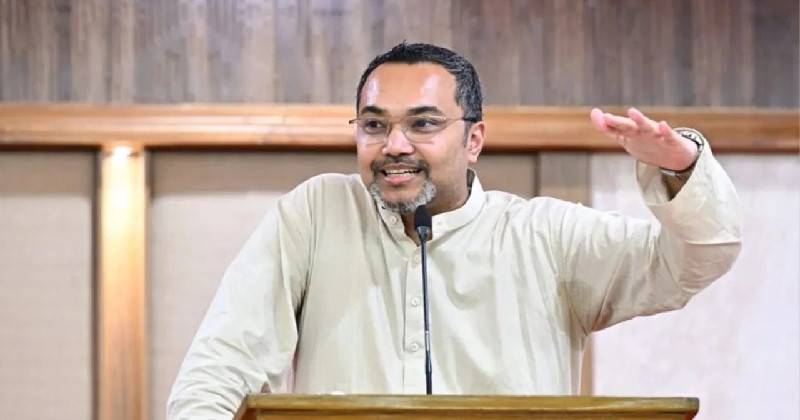
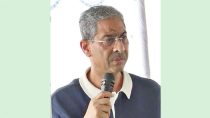
The government is planning a major reform of the country’s education system, with four new books and subjects set to be introduced at the primary and secondary levels from the 2028 academic year. Prime Minister’s Education, Primary and Mass Education Adviser and spokesperson Mahdi Amin said the government aims to build an education system based on merit, morality and human values while ending the artificial race for GPA-5 results.
Speaking to BSS in an interview, Mr. Mahdi said the curriculum is being redesigned for the 2028 academic year as part of a comprehensive reform. As an initial step, new subjects on the Fourth Industrial Revolution, artificial intelligence (AI) and sports will be introduced from the 2027 academic year. He said Prime Minister Tarique Rahman has identified education as the top priority of his government. The government is also considering forming an Education Reform Commission to restore discipline in the education sector.
From the 2027 academic year, four new books and subjects will be introduced at the primary and secondary levels. From Class Four, students will study ‘Sports and Culture’, focusing on sports and physical education. From Class Six, ‘Learning with Happiness’ and ‘Technical Education’ will be introduced. The new curriculum will also familiarise students with robotics, AI and technologies linked to the Fourth Industrial Revolution.
On SSC and equivalent examinations, Mr. Mahdi said, “During the fascist era, GPA-5 was artificially inflated to make the statistics look good. There was a culture of passing without even taking the exam. We have stopped that suicidal path. This time, no grace marks were given. Students got their GPA and genuine (correct) results in a 100% impartial and transparent evaluation.” He said students who failed the recent SSC examinations or are at risk of dropping out will not be treated as a burden. “The previous government did not think about these failed students. But we are making a special policy for them.”
Such students will be offered technical and vocational training through Technical Training Centres (TTCs). Financial support may also be provided to help them become entrepreneurs. The government is also launching ‘Employment Exchanges’ at the divisional and district levels to connect job seekers directly with employers. Youth will be able to register their skills, creating a network between skilled workers and industries seeking employees. The programme will initially be expanded at the divisional level before reaching every district, with private-sector participation and technical training.
Under the ‘One Teacher, One Tab’ programme, teachers at all levels will receive digital tablets in phases, beginning with primary schools. The government also plans to improve teacher training, digital skills and professional opportunities. To strengthen research, universities will work with local industries to address industry-related problems. The government also plans to bring Bangladeshi researchers and academics living abroad back into the country and turn the “brain drain” into “brain circulation”. Research funding will also be increased.
To reduce disparities between rural and urban schools, nationwide competitions such as the ‘Primary School Gold Cup Football Tournament’ and ‘Innovation and Startup Competition’ have been introduced. Mr. Mahdi said the government aims to build a new Bangladesh by developing not only academic knowledge but also skills, employability, ethics and human values among the next generation.