Yaba Trade ‘Hub’ on Bangladesh-Myanmar Border Controlled by Arakan Army, Rohingyas Used as Couriers

Cox’s Bazar Bureau
The traditional Yaba smuggling route along the Bangladesh-Myanmar border is changing amid the conflict in Myanmar’s Rakhine State. After gaining control of large areas of Rakhine, the Arakan Army (AA) has been accused of increasing its influence over the region’s drug trade. Border security forces and other sources say a powerful network controls the trafficking of Yaba and crystal meth, while some Rohingyas are mainly used as carriers to move the drugs across the border.
During the previous Awami League government, a powerful Yaba syndicate operated along the border. Although the network weakened after the change of government, officials say it has recently reorganised. Over the past year, the Border Guard Bangladesh (BGB) and other law enforcement agencies have seized large quantities of Yaba in border areas. In 2025 alone, the BGB seized about 14.7 million Yaba tablets.
According to officials and other sources, attempts to smuggle Yaba from Myanmar into Bangladesh remain active despite repeated seizures. Teknaf, Ukhia and Naikhongchhari continue to be major routes. Smugglers are also reportedly storing drugs near the border before moving them inland through vehicles and alternative routes. Several large seizures from late August to early September indicate that the trafficking network remains active.
BGB officials have said the ongoing conflict and changing control of border areas in Rakhine have created a new environment for drug trafficking. At a recent press conference in the BGB’s Ramu sector, officials said there were allegations that drugs were entering Bangladesh from areas controlled by the Arakan Army. They also said a significant portion of Yaba is now being smuggled through sea routes rather than directly across the land border.
With surveillance increased along the Naf River and the Teknaf-Ukhia border, smugglers are reportedly using coastal routes around Maheshkhali, Kutubdia, Banshkhali and Anwara. A BGB official claimed that about 80 percent of drugs entering Bangladesh are now smuggled by sea. Investigations suggest that Yaba trafficking is not controlled by individual carriers or small groups alone. It involves a wider network that includes producers, collectors, financiers, boat owners, border crossers, local brokers, stockists and domestic suppliers. Sources allege that the network operating on the Myanmar side is controlled by the Arakan Army.
An investigative report published in August 2026 said an illegal trade network had developed between armed groups in conflict-hit Rakhine and cross-border smugglers. It reported that Yaba and crystal meth were being exchanged for food and other essential goods smuggled from Bangladesh into Myanmar. The report also pointed to links between the trade and areas controlled by the Arakan Army. Experts, however, caution against attributing the entire drug trade to a single organisation or ethnic group, as this could allow the wider trafficking network to remain hidden.
Rohingyas are frequently arrested with Yaba during law enforcement operations along the border. BGB officials say some Rohingyas are recruited by trafficking gangs because of their mobility and proximity to the border. Law enforcement analysts, however, say the arrest of a person carrying Yaba does not establish that the person controls the wider syndicate. They say vulnerable and impoverished people are often recruited as low-level carriers for limited payments.
As a result, arrests at the field level may leave financiers, suppliers and major organisers undetected. The United Nations Office on Drugs and Crime (UNODC) has previously warned that border and coastal routes are being used to transport methamphetamine-based Yaba produced in Myanmar into Bangladesh and other parts of South Asia. The same networks have also been linked to crystal meth trafficking.
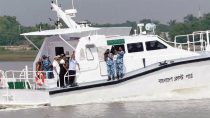
Sources say smugglers are increasingly turning to the Bay of Bengal as restrictions along the Teknaf land border tighten. Drugs are reportedly transported at night using fishing trawlers and small boats. There are also allegations of a two-way illegal trade, with food, fuel and other goods being sent from Bangladesh to Rakhine while drugs move in the opposite direction. Border security analysts warn that such an illegal economy could expand if legitimate administrative control weakens in conflict-affected areas.
Law enforcement agencies have long faced criticism for arresting carriers while failing to identify major financiers and organisers. There have also been allegations that some dishonest law enforcement personnel have been involved in Yaba trafficking. Analysts say stopping Yaba trafficking requires more than arresting carriers at the border. Authorities must identify where the drugs are produced, who collects them, how money is transferred, which land and sea routes are used and who receives the consignments inside Bangladesh.
As one security analyst put it, “The person caught at the border is often just a last-ditch worker. To catch the real controller, you have to follow the source of the money and communication.” Stakeholders believe stronger coordination among the BGB, Coast Guard, Navy, Police and Department of Narcotics Control is necessary to tackle trafficking along the Bangladesh-Myanmar border.
They have recommended expanding maritime radar and modern surveillance, monitoring suspicious vessels, improving intelligence sharing and investigating the financial transactions of suspected traffickers. The key challenge now is whether the anti-drug campaign will focus only on arresting carriers or also identify the market controllers, financiers and major organisers behind the international trafficking network.
With the conflict and control situation in Rakhine changing rapidly, analysts say Bangladesh faces growing border-security and drug-trafficking risks. They stress that an effective response should distinguish between individual criminals and organised trafficking networks rather than treating an entire population, including Rohingyas, as criminals.