Property Transfer Bill passed amid heated debate in Parliament
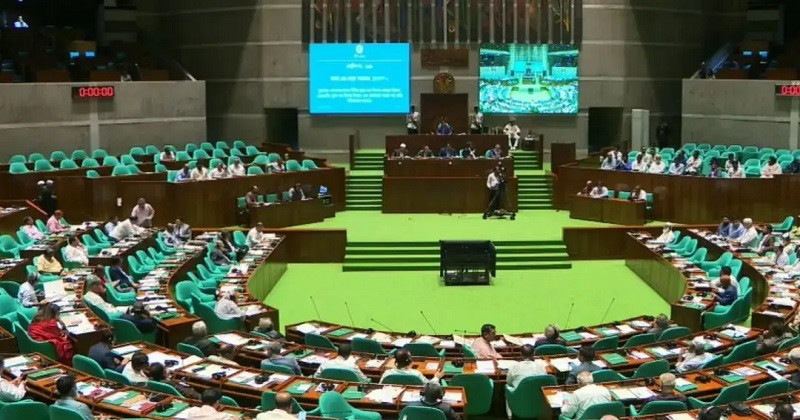
The “Transfer of Property (Amendment) Bill, 2026,” tabled in the National Parliament, sparked extensive discussion, argument, and principled opposition. After fierce opposition from the opposition camp, the bill was passed by voice vote in parliament. The proposed bill provides that parents would retain lifelong possession, usage rights and security even after land or property is registered in their child’s name, but opposition and independent MPs argued this directly conflicts with existing Muslim family law and Shariah provisions on faraiz (inheritance shares), heba (gift), and inheritance rules. The law minister and the bill’s supporters, on the other hand, say it merely creates a new mode of ordinary transfer and does not undermine the effectiveness of heba or Shariah law.
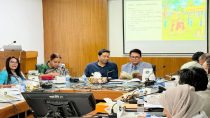
On Sunday (6 September), opposition MPs demanded the bill be referred for public opinion before passage, but it was passed in parliament regardless. Earlier, when the opposition’s motion for referral was rejected by voice vote, the opposition briefly staged a walkout for a few minutes. The session was chaired by Speaker Mr. Hafiz Uddin Ahmed.
Opening the parliamentary debate on the bill, Pabna-1 MP Mr. Nazibur Rahman Momen said the law clearly contradicts the Quran and Sunnah. Recalling earlier commitments by the home minister and political leadership, he said that, according to Islamic scholars, providing for lifelong possession rights alongside a gift runs counter to Shariah, since it would allow bypassing Allah’s prescribed inheritance rules, inconsistent with the principles of the Muslim Personal Law (Shariat) Application Act, 1937. He said that while parents’ security is an important social issue, it could be addressed through the 2013 Parents’ Maintenance Act rather than by circumventing Islamic family law.
Supporting and praising the bill, however, Brahmanbaria-2 MP Ms. Rumin Farhana said cases of parents being mistreated by their children and forced into old-age homes are common. While proposing some amendments, she suggested that the giver alone should be able to apply to cancel the deed if children neglect their parents, and recommended closing the option to mortgage the transferred property at a bank or transfer it to a third party, along with adding a provision for a quick summary trial through family courts.
Similarly supporting the humane aspect of the bill, Kishoreganj-5 MP Mr. Sheikh Mujibur Rahman Iqbal said many ungrateful children take over all their parents’ property in writing and then send them to old-age homes in their final years. He strongly urged that the law be made stronger and more up to date to secure parents’ safety in their final years, alongside swift verification and effective enforcement measures.
On the other hand, Mymensingh-6 MP Mr. Md. Kamrul Hasan described the bill as a calculated blow to Shariah. He said that, under the guise of amending an old 1882 law and invoking human rights and equality, the bill interferes with Muslim family law, arguing it is wrong to alter the core legal framework rooted in Islamic principles because of the misdeeds of a few children. Noting strong objections from the country’s Islamic scholars on this matter, he demanded detailed review and public-opinion consultation on the bill.
Echoing the same view, Bagerhat-4 MP Mr. Mohammad Abdul Alim said that, to address cases where parents are emotionally blackmailed into giving away all their property and becoming destitute, what was needed instead was state enforcement of the Islamic principle limiting gifts to no more than one-third of property. Since this bill conflicts with Islamic provisions, he proposed sending it for public-opinion review by 20 October 2026.
Sherpur-1 MP Mr. Md. Rashedul Islam Rashed said that despite the obligations under Article 70 of the constitution, many MPs privately have concerns about this bill. He said that under Islamic fiqh, for a heba to be complete, actual possession or transfer of the property is required; but a provision granting paper ownership while retaining actual possession, to take effect only after death, effectively redefines heba and opens the door to depriving rightful heirs. For this reason, he said, this structural change must be opened up for public opinion.
Likewise, Pabna-3 MP Mr. Mohammad Ali Azgar said the proposed amendment directly conflicts with Shariah provisions on meeras, faraiz, and wasiyat (inheritance and wills). He called for consultation with the Islamic Foundation and religious scholars, and also urged that public opinion be sought on the bill by 20 October.
Chattogram-16 MP Mr. Mohammad Zahirul Islam also stressed balancing the bill’s humane intent with religious principles, saying that at this time of rebuilding the new Bangladesh, the opinions of fiqh scholars should be sought rather than rushing the bill through, so that Islamic principles are not compromised. He too supported referring it for public opinion, with a deadline of 20 October.
Chuadanga-1 MP Mr. Md. Masud Parvez, joining the debate, said it would have been enough to define punishment for the misdeeds of a few wayward children and properly enforce the existing maintenance law. He argued that altering the core family and religious legal foundation would create legal complications and hardship for ordinary people, and that public-opinion consultation before passage was essential to raise public awareness.
Patuakhali-2 MP Mr. Md. Shafiqul Islam said that any law bypassing Quranic and Sunnah provisions would create confusion and social unrest, and suggested the matter should not be viewed politically but instead referred to the Fatwa Board and religious scholars for advice.
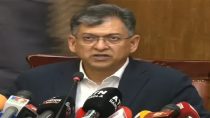
After the debate, Leader of the Opposition and Dhaka-15 MP Dr. Md. Shafiqur Rahman said that while he welcomed the humanitarian intent behind the bill, its implementation directly conflicts with religious belief and the inheritance principles of Surah An-Nisa. He said that under Islam, for heba or a will to be valid, the recipient must immediately gain ownership and possession, and that a will (wasiyat) is capped at one-third of the property and cannot be given to blood-relative heirs. Since the current bill lacks these principles, he said it would create disorder in society and deprive rightful claimants of their due. He therefore urged that the bill not be passed this session but instead be sent back to a standing committee, involving the Islamic Foundation and Shariah experts, for re-examination.
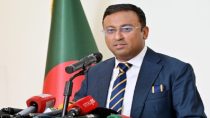
In response to all the remarks, Law, Justice and Parliamentary Affairs Minister Mr. Md. Asaduzzaman explained the government’s position. Referring to sub-section 4 of section 122A of the proposed bill, he clarified that this transfer would be treated as a completely separate and distinct mode of property transfer. He said it would in no way undermine, limit, or affect the validity of any deed transferred through existing heba, ordinary gift, or any other method under Shariah law.
The Law Minister further said the Transfer of Property Act allows for five types of transfer: sale, mortgage, lease, exchange, and gift. The current bill deals with ordinary gift, which is distinct from heba; as such, heba and inheritance law would continue to be governed entirely according to Islamic Shariah.