

LNG Cargo Arriving Today, Gas Supply Expected to Increase
Rafiqul Islam Selim
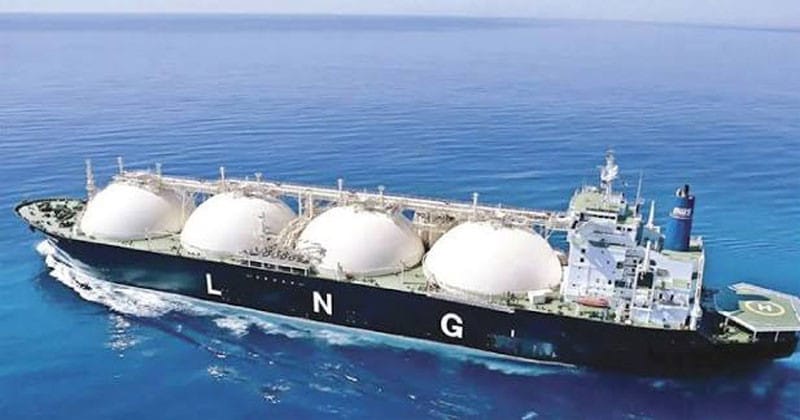
Bangladesh’s national gas supply remains severely constrained between 2,300 and 2,400 million cubic feet per day (mmcfd) against a national demand of 3,800 mmcfd due to declining domestic output and import delays. Petrobangla officials reported that national supply could improve significantly if all scheduled Liquefied Natural Gas (LNG) shipments arrive on time this month. A Greek-flagged LNG vessel operated by Maran Gas Maritime is scheduled to dock today at Summit Power Limited’s floating terminal in Moheshkhali. Petrobangla expects this arrival to ease local distribution bottlenecks across key industrial sectors immediately.
According to an official from Rupantarita Prakritik Gas Company Limited (RPGCL), four LNG cargoes are scheduled to arrive between September 10 and September 18 as part of a 10-cargo import plan for the month. Combined supply from the Moheshkhali floating terminals recently dropped from 700 mmcfd to 630 mmcfd, with Summit delivering 430 mmcfd and Excelerate Energy providing 200 mmcfd. However, RPGCL noted that if all scheduled shipments arrive, floating terminal deliveries could reach 1,100 mmcfd. Total national supply from local fields and imported LNG stood at 2,295.5 mmcfd yesterday.
In Chattogram, multinational fertilizer producer Karnaphuli Fertilizer Company Limited (KAFCO) has temporarily suspended operations for scheduled annual maintenance, reducing its gas intake from 66 mmcfd to just 3 mmcfd. The government has redirected this unallocated gas to the state-owned Chittagong Urea Fertilizer Limited (CUFL), enabling the facility to prepare for operation after a six-month shutdown caused by persistent gas shortages. CUFL received 38 mmcfd yesterday toward its daily requirement of 52 mmcfd, paving the way to restore urea fertilizer production at the long-idled facility.
Commenting on the resumption, CUFL Deputy Manager (Administration) Mr. Samiran Marma stated that the plant has initiated its restarting process after securing gas supply following a six-month hiatus, with fertilizer production set to resume shortly. The facility, which has a nominal daily capacity of 1,700 metric tons, has suffered frequent disruptions due to mechanical faults and fuel deficits. In the 2023–24 fiscal year, CUFL operated for only five days, facing repeated closures throughout 2024 and early 2025 before recent gas supply restorations on August 25 allowed preparations to begin.
Addressing the shutdown, KAFCO authorities clarified that reduced gas supply was not the primary driver for their temporary closure, emphasizing that major overhauling is conducted every three years per regulatory mandates. Meanwhile, the power sector in Chattogram continues to face severe generation constraints due to lingering fuel shortages. Four major power plants in the region remain entirely shut down, while three facilities in Shikalbaha- the 225 MW, 150 MW, and 65 MW units- received only 37.2 mmcfd yesterday against a combined daily gas requirement of 73 mmcfd.
The broader energy outlook depends heavily on whether RPGCL can adhere to its upcoming LNG delivery schedule, which includes planned shipments from POSCO on September 13, Gunvor on September 16 and 28, Aramco on September 18, and TotalEnergies on September 23. Energy authorities emphasize that timely offloading is essential to restore full terminal capacity and stabilize electricity generation and industrial output nationwide. Without consistent LNG imports and stabilized domestic well production, power plants and heavy manufacturing units will continue to operate under reduced capacity or face prolonged operational shutdowns.