
A New Diplomatic Message of Bangladesh’s Dignity and Interests
- Not Attending BRICS
Shahria Islam Shaila
In international diplomacy, accepting every invitation is not necessarily a sign of success, just as declining an invitation does not always signal distance or conflict. Often, a state’s diplomatic philosophy is expressed precisely through decisions about where it will go, in what capacity it will go, and how it will present its position on a given stage. Bangladesh’s absence from the 18th BRICS Summit held in New Delhi should not, therefore, be viewed merely as a simple matter of attending or not attending — doing so would fail to grasp the depth of the issue.
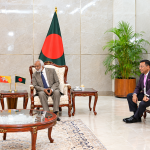
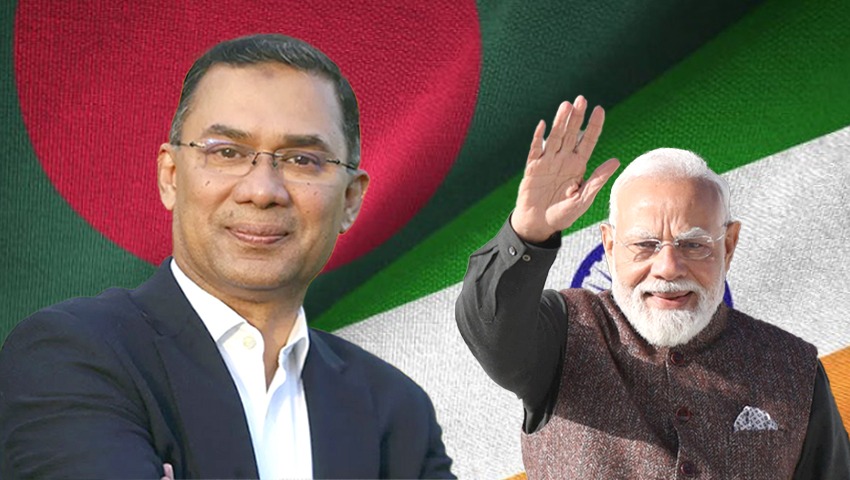
The explanation given by the Bangladesh government is what matters most here. The Junior Minister for Foreign Affairs, Mr. Humayun Kabir, has stated that Prime Minister Mr. Tarique Rahman was invited to the BRICS summit not as the Prime Minister of Bangladesh, but as the Chairman of BIMSTEC. At the same time, a separate bilateral invitation exists for his visit to India as Prime Minister of Bangladesh. The government has therefore decided that the Prime Minister’s first visit to India would be more appropriate as a full bilateral visit rather than as part of a multilateral event.
In my view, this decision needs to be understood from the standpoint of Bangladesh’s diplomatic self-respect and national interest. There is no denying that India is Bangladesh’s neighbor. Many important matters — our economy, trade, borders, water, energy, connectivity, and regional security — are bound up with the relationship between the two countries. But being neighbors does not mean that every relationship must be conducted within the same framework. Rather, however important a relationship may be, it must be built on mutual respect and equal dignity. On this point, the current government’s position sends an important message.
Bangladesh does not want to damage its relationship with India, but neither does it want to compromise on questions of its own state identity and dignity. This is not the diplomacy of opposition; rather, it is the diplomacy of building relations on the basis of equality and equal dignity. The most important aspect of this position is that the government is creating an opportunity to advance its relationship with India directly, through a bilateral framework, outside of multilateral platforms. If Prime Minister Mr. Tarique Rahman visits India in the future, it will be possible to bring the two countries’ significant unresolved issues directly into discussion there.
Opportunities may arise for a full bilateral dialogue on the trade deficit, border deaths, water sharing, river management, energy cooperation, regional connectivity, and access for Bangladeshi goods to the Indian market. In other words, it would not be logical to view the absence from BRICS merely as distance from India. Rather, this could be a strategic decision to reshape the future relationship within a new framework. BRICS is currently an important global platform with 11 members. At this year’s New Delhi summit, top leadership from member countries including China, Russia, and India took part, and discussions covered the future of the global economy, trade, technology, energy, development, and the international system. The New Delhi Declaration, adopted on September 12, gave importance to issues such as multilateralism, the role of developing countries, economic cooperation, and reform of international institutions.
Had Bangladesh been present there, some additional opportunities for engagement might have arisen — contact with top-level policymakers from China, Russia, India, and various other countries, and perhaps informal discussions on investment, trade, energy, technology, and future economic partnerships. But one thing must be kept in mind here too: Bangladesh is not a member of BRICS. So Bangladesh’s absence from one summit will not bring about any major change in BRICS’s strength or decision-making capacity. There is therefore no reason to view this as a collapse of relations either. The government’s major responsibility now is to fill the space left by its BRICS absence with other diplomatic and economic initiatives. Bangladesh’s diplomacy now needs to be one in which our foreign policy does not revolve around any single country. India is our neighbor.
China is our major trade and economic partner; we have energy and technological ties with Russia; Europe and North America are important areas for our exports and development cooperation. There is also scope to further expand Bangladesh’s economic relations with the Middle East, Japan, Southeast Asia, and Africa. This kind of balanced diplomacy is the safest course for Bangladesh.
For the current government, the biggest test of the decision not to attend the BRICS summit will be its next steps. It will not be enough simply to take a position of dignity — that dignity must be translated into economic strength. If India is an important partner for Bangladesh, then Bangladesh’s economic interests must be pressed more forcefully in bilateral talks. If China is a major investment and trade partner for Bangladesh, then new investment in industry, infrastructure, and technology must be brought in. The relationship with Russia must be put to use in energy and technological cooperation. Likewise, diplomacy must be made active in retaining Bangladesh’s exports to Western markets and creating new markets. This is the greatest potential of the current government’s diplomacy — that Bangladesh, without becoming a follower of any single power, uses its own economic significance to build relationships with everyone.
Bangladesh now faces an even larger economic reality. We must increase our exports, bring in foreign investment, ensure energy security, seek new markets, and turn the ports of Chattogram and Mongla into hubs of regional trade. The discussions that have begun on the China-Myanmar-Bangladesh economic corridor could also become part of this broader diplomatic and economic strategy. In other words, foreign policy is no longer merely a matter of state dignity; it is now directly tied to people’s employment, business and trade, and economic future.
I therefore do not view Bangladesh’s absence from the BRICS summit as any great loss for the country. Rather, it is a decision — and the responsibility for making that decision succeed now lies with the government. If, through this, the India-Bangladesh relationship can be reorganized anew on the basis of equal dignity and mutual interest, and if, at the same time, Bangladesh’s relationships with China, Russia, Europe, Japan, and other economic powers can be deepened further, then this absence too could, in the end, succeed as part of a larger diplomatic strategy.
As a citizen of Bangladesh, my expectation is very clear. Bangladesh will not act against anyone, but neither will it lag behind on questions of its own interests. Friendship will remain, cooperation will remain, the door will remain open — but every relationship must be built on the basis of mutual respect, equality, and national interest. Bangladesh was not present on the BRICS stage this time. But in the end, a country’s true dignity is not determined merely by its presence at a summit. Its true dignity is determined by how much economic opportunity it can create for its own people, how independently it can make decisions, and how confidently it can voice its own interests before the powerful countries of the world. The goal of the next chapter of Bangladesh’s diplomacy should be: friendship with dignity, partnership with interest, and relations with the world built on confidence.
The author is a politician and columnist.