Arakan Army poses obstacle to Rohingya repatriation
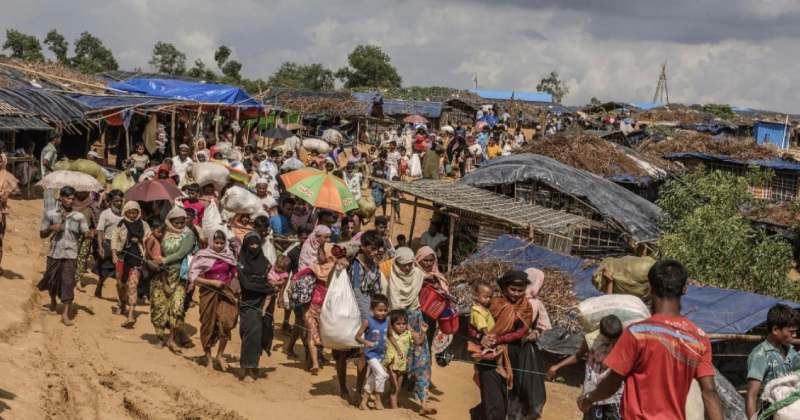
- Conflict over control of Rakhine leaves Rohingyas reluctant to return amid insecurity
Even in the ninth year of the Rohingya crisis, there has been no effective progress on repatriation. Ongoing conflict, political instability, and the Arakan Army’s control over most areas of Myanmar’s Rakhine State have emerged as a new and major obstacle to Rohingya repatriation. While the Bangladesh government has emphasized effective dialogue between the Myanmar authorities and the Arakan Army to create a stable environment in Rakhine, conditions favorable to safe repatriation have still not been established.
The number of Rohingyas who have taken shelter in Bangladesh since 2017 now exceeds one and a half million. Recently, the Myanmar government said it has been verifying the identities of a large number of Rohingyas sheltered in Bangladesh. According to Myanmar, several hundred thousand individuals from the list provided by Bangladesh have had their identities verified, and around 309,000 of them have been identified as former residents of Rakhine State. However, Myanmar authorities have also said repatriation cannot begin until the security situation in Rakhine returns to normal.
Diplomatic sources say the biggest obstacle to repatriation now is the question of actual control on the ground in Rakhine. As a result of the conflict between Myanmar’s military and the Arakan Army, vast areas of the state are currently under Arakan Army control. This means a decision by the Myanmar government alone is not enough to return Rohingyas to their villages and homesteads; ground-level realities and the positions of the parties actually in control have also become important.
Bangladesh’s Ministry of Foreign Affairs is also treating the matter seriously. In June this year, Foreign Affairs Adviser Dr. Khalilur Rahman told the National Parliament that Rohingya repatriation and an overall resolution of the crisis depend largely on the security situation in Rakhine, and that the Bangladesh government is trying to establish effective dialogue between the Myanmar authorities and the Arakan Army to create a stable environment.
Meanwhile, a recent UN human rights assessment has also expressed deep concern over the safety of Rohingyas in Rakhine. The report cites allegations against both the Myanmar military and the Arakan Army of killings, torture, forced labor, detention, and displacement of Rohingyas. According to the UN, there are also allegations of Rohingya land being seized in northern Rakhine and of displaced Rohingyas being prevented from returning to their own areas.
According to analysts, the main preconditions for Rohingya repatriation are security, civil rights, freedom of movement, livelihood, and a guarantee of return to their own homesteads. But these conditions have still not been met in Rakhine. With particular uncertainty over the future of Rohingyas in areas controlled by the Arakan Army, Rohingyas sheltered in Bangladesh also lack confidence to return.
Last August, on the ninth anniversary of the Rohingya crisis, thousands of Rohingyas in various camps in Cox’s Bazar demanded a safe and dignified repatriation. They called on the international community to ensure security in Rakhine. Although repatriation efforts have been undertaken more than once in the past, no Rohingya has agreed to return voluntarily due to the lack of guaranteed security and rights.
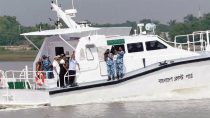
The border situation in Cox’s Bazar also makes the Arakan Army’s growing influence evident. Over the past few months, the BGB has had to secure the return of Bangladeshi fishermen and Rohingyas detained in Myanmar’s waters through contact with the Arakan Army. Most recently in August, 24 fishermen were recovered from the Arakan Army. According to BGB data, from early 2025 to August 2026 the Arakan Army detained hundreds of Bangladeshis and Rohingyas, some of whom were later returned.
According to those concerned, this situation shows that in the current reality of Rakhine, it is difficult to implement any effective Rohingya repatriation plan while ignoring the Arakan Army, since a large part of the area where Rohingyas would have to live after repatriation is currently entangled in conflict and a power struggle in terms of both security and administration.
However, diplomatic analysts say that contact or dialogue with the Arakan Army is an extremely sensitive matter. Bangladesh’s core objective, they say, should be to secure an internationally acceptable environment for the safe, voluntary, and dignified repatriation of Rohingyas, without taking sides on the question of Myanmar’s sovereignty.
The UN also says that, amid the ongoing conflict and violence in Myanmar, conditions for a safe, dignified, and sustainable repatriation of Rohingyas have still not been created. Under international law, repatriation must be entirely voluntary and must ensure the security and basic rights of Rohingyas.
On this matter, Mr. Shahjahan Chowdhury, District BNP President and MP for Cox’s Bazar-4, said that although Rohingyas were given shelter in Bangladesh on humanitarian grounds, the country can no longer bear this burden. He said Bangladesh is under various pressures because of them, socially as well as in terms of environment and law and order, and that swift repatriation is the only solution to the Rohingya problem. He also called for international organizations to become more active in supporting the government’s efforts to create a suitable environment in Rakhine.
Experts opine that opening the path to Rohingya repatriation will require more than bilateral talks with the Myanmar government alone. An integrated solution is needed addressing the actual security situation in Rakhine, the realities in areas under Arakan Army control, the citizenship and rights of Rohingyas, and effective pressure from the international community. Otherwise, there is a risk that the Rohingya crisis, which has weighed on Bangladesh for nearly a decade, will be further prolonged.