Bangladeshi Workers Caught in Russia’s War Trap
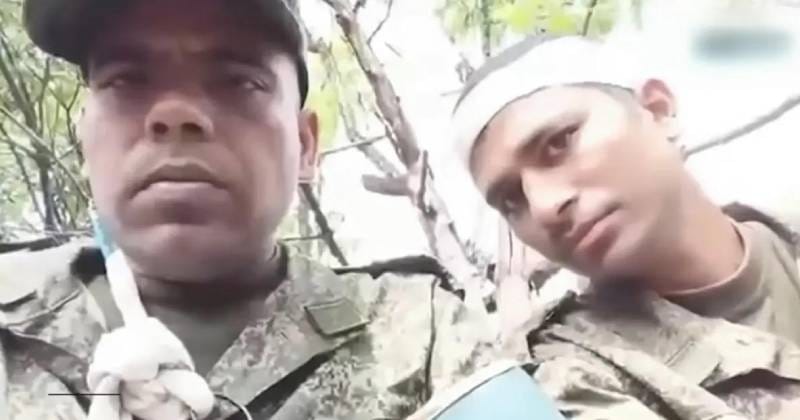
Maksudur Rahman, a 31-year-old from Lakshmipur, borrowed 1.2 million taka ($9,800) to pay a broker for a promised cleaning job in Russia. Upon arrival, he was handed an unreadable Russian document, forced to sign, and sent directly to a military camp for frontline war training. When Mr. Rahman protested, a Russian commander used a translation app to inform him that his own broker had sent him there. Mr. Rahman was threatened with ten years of imprisonment, physically assaulted, and stripped of his documents before being deployed to Ukraine, an ordeal from which he eventually escaped.
This deceptive trap highlights a broader recruitment pipeline feeding into Russia’s severe manpower crisis on the Ukrainian front lines. Reports indicate contract military recruitment dropped by 20 percent in early 2026 despite signing bonuses reaching $80,000. Journalists from the BBC and Mediazona estimate at least 300,000 Russian soldiers have died, while Western intelligence agencies place the death toll closer to 500,000. Fearing domestic backlash from another mass mobilization order, Moscow has aggressively turned to foreign recruitment across the Global South to fill its critical military labor deficit.
Human rights organizations have identified systematic, exploitative patterns targeting vulnerable foreign workers and undocumented migrants across multiple continents. Ukrainian data reveals that approximately 29,000 foreign contract soldiers have enlisted since 2022, with plans to recruit another 18,500 in 2026, explicitly naming Bangladesh as a key target. Amnesty International recently accused Moscow of engaging in fraudulent, coercive, and highly exploitative recruitment tactics. In South Asia, economic desperation drives workers from Nepal, Sri Lanka, and Bangladesh to risk their lives for promised monthly salaries of at least $550.
Official records from the Bureau of Manpower, Employment and Training (BMET) show that 8,247 Bangladeshis traveled to Russia between 2024 and June 2026. While state-run BOESL sent 426 safe workers, the vast majority traveled via private agencies and illegal broker networks. Despite this massive outflow of labor, no formal bilateral labor agreement exists between Bangladesh and Russia. During a visit to Moscow in June 2026, Bangladesh Foreign Minister Khalilur Rahman urged the swift finalization of pending agreements, while the Bangladesh Embassy formally requested Russian authorities not to draft Bangladeshi nationals into military service.
The lack of formal protection leaves workers vulnerable to severe fraud and immediate military coercion upon their arrival in Russia. Investigators note that passports and mobile phones are routinely confiscated before recruits undergo 21 days of military training. Bangladesh’s Special Response Battalion (SRB) reported that individuals traveling through licensed agencies were sent to the front lines to serve as bait to expose enemy positions to drones. In October 2026, police arrested two agency masterminds linked to a Russian national and a Kyrgyz woman, though formal legal charges remain unproven in court.
Casualty figures remain disputed due to differing data from human rights organizations, police agencies, and authorities in Kyiv. Fortify Rights and Truth Hounds reported that at least 104 Bangladeshis were forced into combat by February 2026, with at least 34 killed. Conversely, the SRB stated that out of one group of 30 workers, 20 perished, including 17 who were killed by drone strikes on their very first day at the front line. Rights groups have urged Dhaka to dismantle trafficking rings and asked Ukraine to treat captured international combatants as victims of human trafficking.
Behind the statistics are grieving families in rural Bangladesh left without bodies or clear answers about their missing relatives. Mohammad Siraj, whose 20-year-old son Sajjad was tricked into joining the war and killed, now demands accountability from those who sent his son. For Mr. Siraj, justice is not a catchphrase: ‘Justice is a named charge sheet, a parcel of remains for burial, and accountability for those who sent my boy to war.’ Relatives continue to confront local brokers in village courtyards, demanding to know why their loved ones were trained for front-line military combat.
The Expatriate Welfare Minister informed Parliament that many victims traveled via licensed agencies with official BMET clearances, demonstrating that paperwork provided no genuine defense. National dailies and civil society organizations continue to urge the Bangladeshi government to secure the immediate repatriation of all stranded citizens. Human rights groups emphasize that village square confrontations must transition into formal courtrooms to prosecute responsible agencies. Until the brokers and government officials involved face real judicial accountability, vulnerable rural families will remain trapped in an endless cycle of fraudulent migration schemes and crushing debt.
Maksudur Rahman now sits in his home in Lakshmipur holding a Russian military dog tag as tangible proof of his harrowing ordeal. His experience serves as a stark warning to thousands of others seeking overseas employment under false pretexts. While Rahman managed to return alive, many of his peers remain missing or dead on foreign battlefields. For debt-ridden families across Bangladesh, the promise of lucrative overseas work has turned into a tragedy of deception, debt, and unresolved grief, while true justice remains out of reach.