China Develops New Technology to Save Up to 90% of Energy in Oil Refining
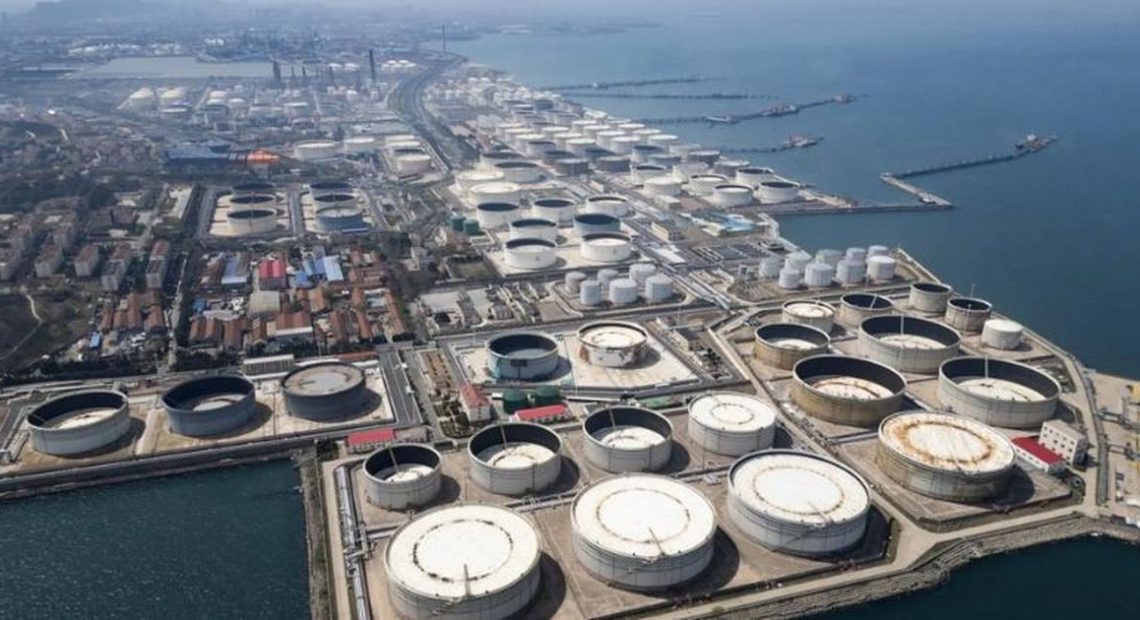
Chinese scientists have achieved a breakthrough that could reduce energy waste and carbon emissions in the global petrochemical industry. They have developed a new method for refining crude oil that can save around 90 to 91 percent of energy compared with the conventional distillation process.
The research team at China’s Dalian Institute of Chemical Physics (DICP) developed the technology. Their research report on the technology has been published in the international scientific journal National Science Review.
What Is Molecular Refining?
Conventionally, crude oil is repeatedly heated to high temperatures and condensed to produce petrol, diesel, plastics and chemicals. This distillation process consumes a significant amount of energy.
Instead of relying on a heat-based process, Chinese scientists have used “molecular refining,” an effective separation method at the molecular level.
Metal-organic framework (MOF) membranes: Special metal-organic filters are used to separate components based on molecular size and composition.
Cascade membrane separation: In the first stage, larger molecules are separated based on differences of 0.1 nanometre. In the second stage, finer differences of 0.01 nanometre can be used to separate raw materials for plastics, resins and fibres from gasoline components.
Use of tannic acid: Tannic acid is used for micro-etching to precisely maintain the pores of the membranes during the separation process.
Potential Impact of the Technology
In laboratory tests using a mixture of 15 components, researchers were able to recover 85 to 90 percent of the components in a purified form.
If the technology can be implemented on a large scale in industrial plants, it could significantly reduce operating costs at petrochemical facilities worldwide and substantially lower harmful greenhouse gas emissions.