
China Launches World’s First 100-Kilowatt Bamboo Floating Solar Power Plant
South China Morning Post
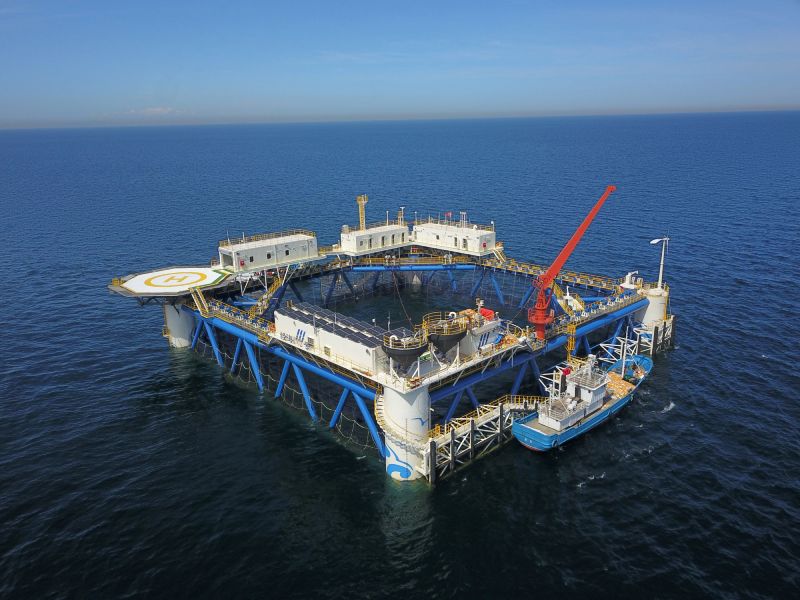
The world’s first 100-kilowatt bamboo-structured floating solar power plant was recently launched in China, opening the door to new ecologically sustainable techniques for producing maritime energy. The floating platform, known as ‘Zhilin-2’, is set up at an experimental base off the coast of Yantai in China’s Shandong Province. It is made from composite bamboo tubes and pipes. One of the project’s creators, Yantai CIMC Raffles Ocean Technology Group, said, ‘The bamboo-based design significantly reduces the adverse impact on the marine environment when compared to traditional steel or high-density polyethylene structures’.
Based on the success of the 10-kilowatt ‘Zhilin-1’ pilot project, which was started earlier in 2023, ‘Zhilin-2′ was constructed. Beijing Forestry University, China Forestry Group Corporation, CIMC Offshore Engineering Research Institute, and CIMC Raffles’ research division collaborated to design it. According to CIMC Raffles, its next objective is to construct megawatt-scale bamboo-based projects and encourage the global usage of environmentally friendly marine materials. To meet the twin carbon objectives of reaching carbon neutrality by 2060 and peaking carbon emissions by 2030, solar power facilities are being expanded along China’s coast.
According to statistics from state-owned power producer CHN Energy, the world’s largest solar power plant, with a capacity of one gigawatt, was opened last December off the coast of Dongying in Shandong. However, traditional coastal solar power facilities usually use floating materials and steel or plastic structures. China announced an action plan in 2023 to replace plastics with bamboo, and this project was also included in the country’s most recent forestry and grassland conservation plan, which was published in July.
The official forestry trade daily, China Green Times, was informed by Professor Chi Chusheng of Beijing Forestry University that the wood and bamboo materials had been specifically modified to survive high humidity, corrosion, seawater, and UV radiation. These renewable resources may be used to produce high-value and sustainable engineering materials, lowering reliance on conventional and energy-intensive materials, according to the newspaper’s August 12 story. To fight desertification in its dry northern areas, China is also using bamboo-based materials in other projects, such as sand fixation initiatives.