China’s Proposal for Third LNG Terminal Under Review
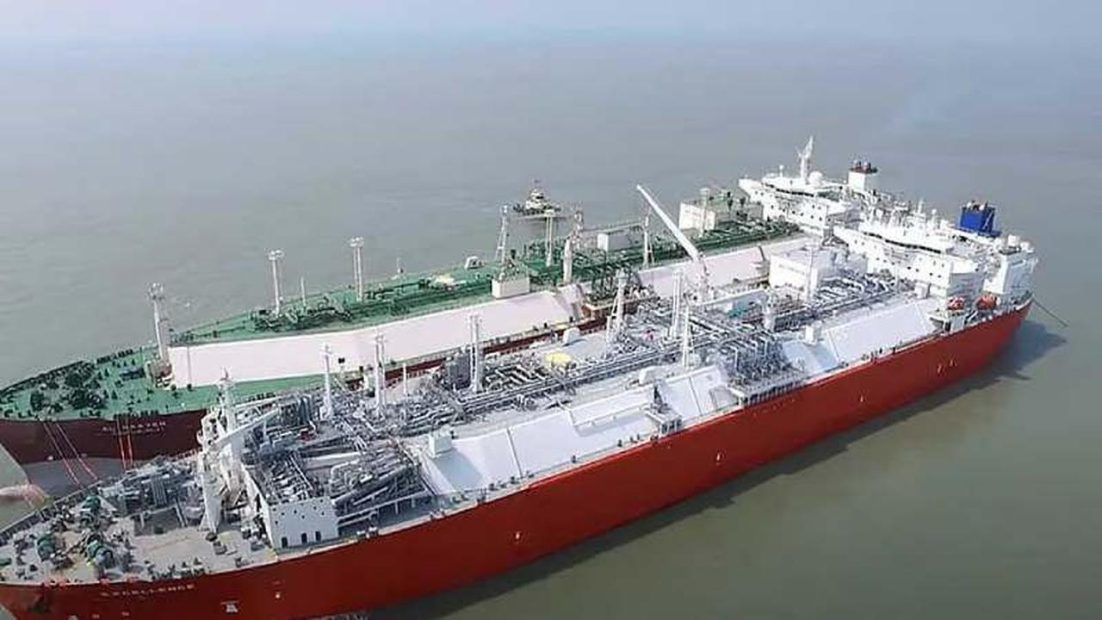
Bangladesh is reviewing a proposal from China to install a third floating storage and regasification unit (FSRU) at Kutubjom in Maheshkhali, Cox’s Bazar, amid rising energy demand. The proposal submitted by a Chinese state-owned company has already received in-principle approval. However, the Energy and Mineral Resources Division withdrew it from the Cabinet Committee on Government Purchase meeting on Wednesday before final approval.
The proposal was listed for discussion at the government procurement meeting. According to the agenda, the committee was scheduled to consider approving the bid submitted by China National Energy Engineering and Construction Co Ltd (CNEE) to install the Kutubjom FSRU in Maheshkhali under a government-to-government (G2G) arrangement.
Documents from the Energy and Mineral Resources Division identify CNEE as the recommended bidder. The company proposed a cost of around Tk 12,324 crore for a 15-year contract or Tk 13,161 crore for a 20-year contract.
Amid the country’s energy supply crisis, the BNP government has initiated work on additional LNG terminals. Several countries have expressed interest in these projects. On June 19, CNEE submitted a proposal to build an offshore LNG terminal at Kutubjom, with a daily regasification capacity of 600 million cubic feet and a maximum capacity of 750 million cubic feet.
According to the proposal, the company would charge $342,000 per day under a 15-year contract for the FSRU. The government currently pays $254,000 per day for Excelerate Energy’s terminal and $249,115 per day for Summit LNG’s terminal. This means the proposed daily fee for the Kutubjom FSRU would be 35 to 37 percent higher than the costs of the existing terminals.
However, Petrobangla officials said the two existing terminals became operational in 2018, and their projects had been proposed much earlier. Global crises have since driven up costs. Therefore, they said, the daily fees for a new terminal cannot be expected to match those of the existing facilities and would inevitably be higher.
They also said decisions on such projects cannot be based solely on daily fees. Authorities must consider several factors, including capacity, financing costs, construction and operating expenses, contract duration, risk allocation and handover conditions. The government is proceeding cautiously with its plans for the third LNG terminal.
The government is also considering the build-own-operate (BOO) and build-own-operate-transfer (BOOT) models. An energy sector official said that when the Chinese proposal was submitted, the government had no alternative offer. A new proposal from a US company has since emerged.
Taking the US proposal into account could allow the Chinese company to review its project proposal and make it easier for the government to reach a decision, the official said.
Bangladesh is facing an energy shortage, and the government has announced plans to install three more floating terminals by 2029 to address the crisis. Feasibility studies are underway at Payra, Mongla and Hiron Point, while the government is also seeking investors.
The United States has repeatedly called for a transparent and competitive process for LNG terminal projects.
On September 7, US Ambassador to Bangladesh Brent T. Christensen emphasised the need for a “transparent and competitive” process for establishing FSRUs during a meeting with Commerce Minister Khandaker Abdul Muktadir at the FBCCI office in Dhaka. He said US companies were highly interested in operating in Bangladesh.