Coordinated Action Needed to Rein In Inflation
For the first time, Bangladesh Bank has announced monetary policy on a quarterly basis in line with an International Monetary Fund (IMF) condition. The central bank has kept its policy rate unchanged at 9.5 per cent. The Standing Lending Facility (SLF) rate remains at 11 per cent, while the Standing Deposit Facility (SDF) rate stays at 7.5 per cent.
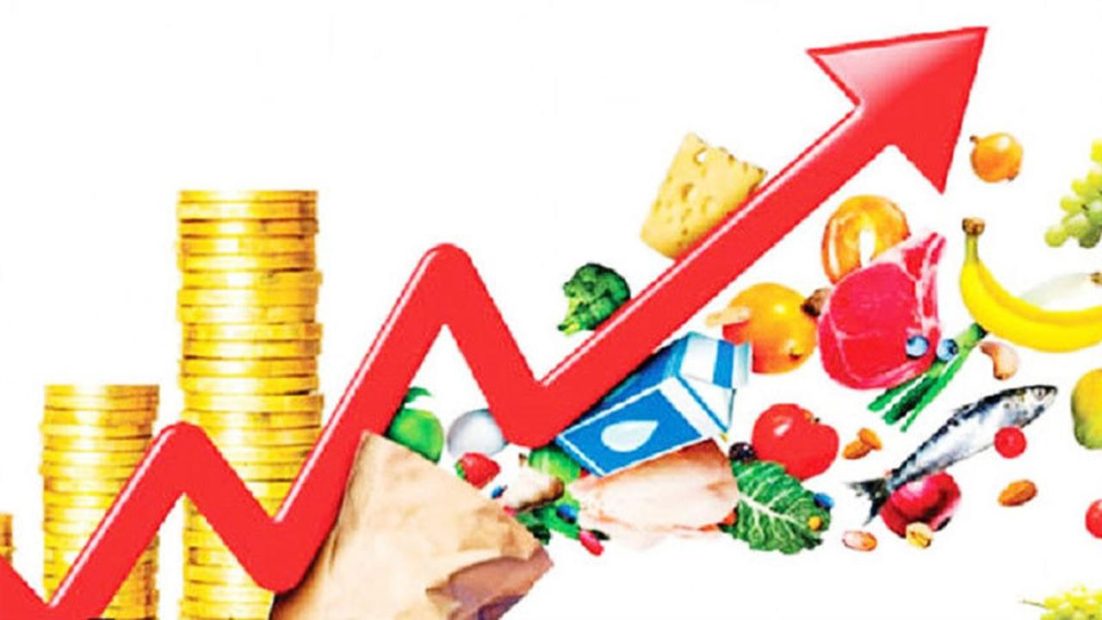
Inflation remains the main focus of the latest monetary policy. Bangladesh has been experiencing high inflation for a long time, making life increasingly difficult for low-income and middle-income households. But why has inflation not come down? Is Bangladesh Bank, as the central bank, solely responsible for controlling it? What role should the government and the National Board of Revenue (NBR) play? Or are we failing to take the coordinated action needed to bring prices under control?
Statistics show that overall inflation stood at 9.16 per cent at the end of June this year. Average inflation over the 12 months through August was 8.68 per cent, before falling slightly to 8.26 per cent in August. Food inflation was 7.02 per cent, while non-food inflation stood at 9.32 per cent.
Despite this decline, inflation remains far from the desired level. The figures also do not fully reflect the pressure people face in daily life. The market has already experienced a shortage of liquefied petroleum gas (LPG). On October 3, a national newspaper ran the headline, “LPG prices double in five years.” Prices of flour, semolina, milk, sugar and other essential goods have also risen sharply. Consumers cannot be sure that a product bought at a particular price today will cost the same tomorrow.
The government must address the reasons behind this instability. It must also closely monitor the market to prevent unscrupulous traders from using the ongoing conflict in the Middle East as an excuse to raise prices without justification.
Inflation is now a familiar term even to people in remote rural areas. Many understand it simply as an increase in the prices of goods because they have felt its effects for years. Yet it is unclear how fully policymakers understand the hardship it causes.
In conversations with people living in rural areas, many have expressed frustration. They say government employees have received salary increases, and private-sector salaries may also be adjusted. But they ask who thinks about ordinary people, especially low-income workers in remote villages.
Monetary policy announcements repeatedly raise hopes that inflation will finally reach the desired level. However, Bangladesh Bank has maintained a tight monetary policy since October 2024, without achieving that goal. Meanwhile, high interest rates have slowed investment.
Bangladesh Bank says investment growth remains weak. Private-sector lending has also slowed because of high risks. By the end of August, private-sector credit growth had fallen to 4.75 per cent. Given the overall situation, the central bank expects the economy to recover gradually rather than quickly.
A faster economic recovery would benefit the country, but global instability is creating further challenges. The ongoing Middle East conflict could continue for longer, and the Strait of Hormuz could remain closed for an extended period. These risks have kept global oil prices high and volatile. Tensions between Saudi Arabia and the Houthis have also intensified. As a result, Bangladesh, like many other countries, faces mounting inflationary pressure.
Can monetary policy alone control inflation, or is a coordinated approach needed? Effective control requires joint action by the government, its relevant agencies and the Bangladesh Petroleum Corporation (BPC). Inflation is also likely to rise following the announcement of a new pay scale. However, higher fuel prices can be a major driver of inflation because they increase transportation and production costs across the economy. This raises an important question: was the latest fuel price increase justified?
According to BPC figures, the corporation paid the government around Tk 119,500 crore in duties and taxes on fuel imports over the 10 fiscal years from 2016–17 to 2025–26. It also recorded a net profit of Tk 53,132 crore during that period.
Controlling inflation appears to have become almost entirely Bangladesh Bank’s responsibility. The central bank has kept interest rates high for an extended period in an effort to curb inflation. Although the desired inflation target has not been achieved, investment has slowed and unemployment has increased.
Some experts argue that inflation could be brought under control more easily if the government avoided raising fuel prices and imposing duties and taxes on fuel, even if subsidies were required. Some may raise concerns about fuel smuggling, but the country has the Border Guard Bangladesh (BGB) to help tackle that problem.
Controlling inflation is a responsibility of the state, with Bangladesh Bank playing a central role because it manages monetary policy. However, if the central bank raises interest rates to curb inflation while the NBR or customs authorities impose duties on goods to address the budget deficit, how can prices become affordable?
Fuel price increases also have direct and indirect effects on the prices of almost every product, making inflation even harder to control. Bangladesh Bank cannot manage this problem alone. The government must demonstrate a clear commitment to coordinated action. Bangladesh Bank, the NBR, the BPC and other relevant agencies must work together to address the causes of inflation. Only through such cooperation can the country move towards its inflation target and ease the financial burden on ordinary people.
The author is a banker and columnist.
aktarrofikul@gmail.com