Dengue overwhelms 10 districts of Khulna
Abu Hena Mukti
The dengue situation has taken a severe turn in Khulna division. As the pressure of dengue patients has increased at private hospitals and clinics alongside government hospitals, a shortage of beds has emerged. In some places, patients cannot find the desired beds, while in others, hospital authorities are struggling to cope with the excessive number of patients. As a result, people are rushing from one hospital to another with their sick relatives. Over the past few days, the number of dengue patients has risen rapidly at various hospitals in the 10 districts of Khulna division. Beds have now become difficult to find not only at government hospitals but also at private hospitals. So far this year, 16 people have died of dengue in the division. Khulna district is the worst affected in the entire division.
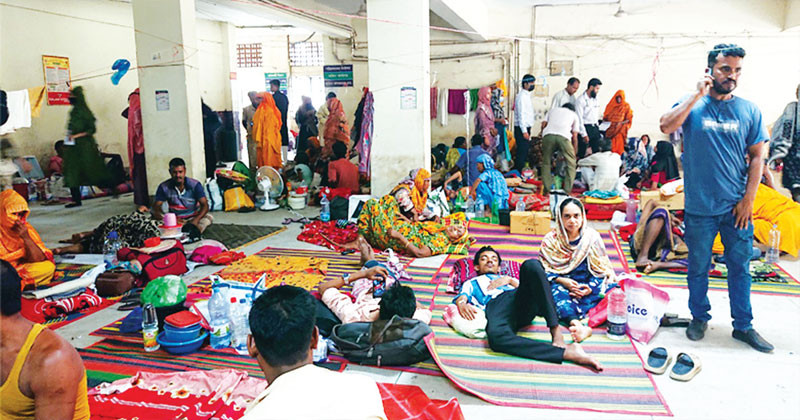
Even after opening separate dengue units at private hospitals, authorities are struggling to manage the situation. This has created concern and anxiety among both patients and their relatives. For many families, especially those searching for beds late at night, rushing from one hospital to another has become an extreme ordeal. The situation at Khulna Medical College Hospital is even more alarming. Due to the bed shortage, patients are being treated on hospital verandas and floors.
As of August this year, the total number of dengue cases across Khulna division has exceeded 4,600, with Khulna district recording the highest number of cases, at more than 1,400. The dengue situation in Khulna division has become extremely alarming, with hundreds of people being newly infected and admitted to hospitals every day, while hospitals are facing an acute shortage of beds.
According to information from the office of the Khulna divisional health director, the total number of cases in the division has exceeded 4,500. On average, more than 200 new patients are being admitted to hospitals every day. In the last 24 hours, 202 new patients were admitted to hospitals in the division. Since the beginning of this year, the total number of cases has exceeded 4,604. Currently, 618 dengue patients are undergoing treatment at various government and private hospitals in Khulna division.
Meanwhile, 14 new patients were admitted in Bagerhat, 17 in Jashore, none in Jhenaidah, two in Satkhira, two at Satkhira Medical College Hospital, four in Magura, 13 in Narail, two in Kushtia, three in Chuadanga and two in Meherpur.
Almost all government and private hospitals, including Khulna Medical College Hospital and General Hospital, have no vacant beds for regular dengue patients. As many more patients than the hospitals’ capacity have been admitted, many are being forced to receive treatment on hospital floors and verandas. The dengue outbreak is highest in Wards 22, 28, 29 and 30 of Khulna City Corporation. These areas have been placed under special surveillance.
To kill mosquitoes, the city corporation has divided the city into three zones and is spraying fogging machines and larvicides twice a day. Three free primary treatment and consultation camps have been opened in Sonadanga, Rupsha and Tutpara areas of the city for low-income people. As the situation has not come under control, various local organisations and political parties have demanded that Khulna be declared an emergency ‘dengue epidemic area’.
Against the backdrop of the severe deterioration of the dengue situation, the Khulna city unit of Bangladesh Nationalist Party has demanded that Khulna be declared an epidemic area and emergency health services be launched. At an emergency meeting of the party held on Monday afternoon on KD Ghosh Road, leaders alleged that the situation had gone out of control due to the failure to take effective measures in time. The deaths of at least seven people, including a lawyer and a housewife, over the past week have spread panic among the public.
Speakers at the meeting alleged that ordinary patients were suffering immensely due to inadequate beds and infrastructure at government hospitals. They also commented that the administration’s role in mosquito control was limited to token fogging. They demanded coordinated measures to control mosquitoes through regular spraying of larvicides and destruction of mosquito breeding grounds.
KCC Administrator Mr. Nazrul Islam Manju told Inqilab that the World Health Organisation had already warned that the dengue outbreak in Khulna would be severe this year. The government has issued an alert over the issue. The outbreak will continue for another two to three months, he said. KCC is carrying out extensive activities to prevent dengue in Khulna and working day and night to make city residents aware. Leave for officials and employees has been cancelled, while leaflets are being distributed and awareness campaigns conducted.
He said monitoring cells had been formed at Khulna Medical College Hospital, Sadar Hospital and various other hospitals. They are working there. Considering the infection rate, four wards have been declared red, five wards orange and the remaining wards yellow zones. Mosquito control operations have begun in each ward using 10 fogging machines and hand sprayers. In addition, one wheelbarrow fogging machine, a device that kills mosquitoes with smoke, is being used in each ward to control mosquitoes in open spaces and large drains.
Khulna Divisional Health Director Dr Sheikh Md Mosharraf Hossain said hospitals had been instructed to remain prepared as the number of dengue patients increases during the monsoon season. Field-level health workers have also been instructed to raise public awareness about the disease. He advised people to visit the nearest hospital and undergo a dengue test quickly even if they have had a fever for only one or two days.