Fueling Digital Mob Violence Across the Country: Who Are They?
Stalin Sarkar
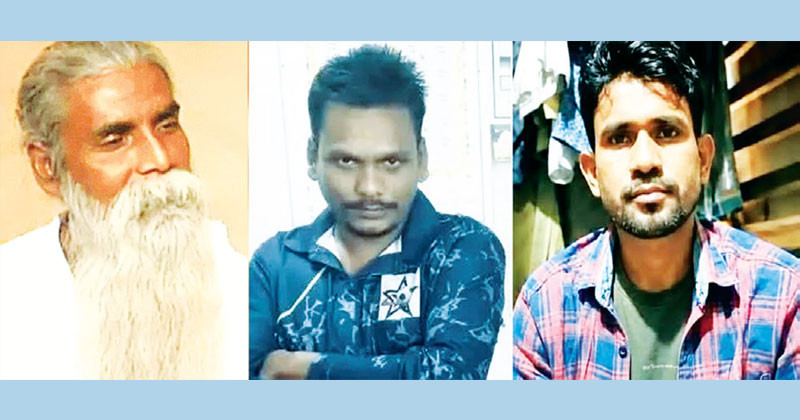
Recently, a mob beat Sufi saint Mr. Shamim Reza (Jahangir) to death in Daulatpur, Kushtia, over a charge of “insulting religion.” On the same charge, a mob also beat garment worker Mr. Dipu Chandra Das to death in Mymensingh. In Satkhira, an area where Jamaat is strong, people used “digital mob terror” and killed a man named Mr. Wahiduzzaman Shamim on the same charge. What do these signs mean?
Do such events fit the rule of law after an elected government took power? Some people at home and abroad are trying to prove that the country is a state of “rising fundamentalism.” Are BNP leaders and workers asleep while such events happen? Earlier this week, someone spread an audio clip on Facebook in the Kulia area of Debhata upazila, Satkhira. The clip made a so called charge of insulting religion against rural medical practitioner Mr. Wahiduzzaman Shamim.
People gathered through a local “Facebook live” and beat Mr. Shamim in a first round of mob beating. Police rescued him in a critical state and admitted him to Debhata Upazila Health Complex. At night, a violent mob of several hundred people broke the back door of the hospital. They dragged him out of the ward and beat him to death in a second round. His family says the young man had been mentally ill for a long time.
Wide criticism began across the country after this brutal event. Former interim government adviser Mr. Mahfuz Alam called this savage event “digital mob” terror. He said, “The country has boarded the train of extreme rightism. The soft and hot rights of every colour together will make sure of it. These digital mobs are in truth a systematic propaganda and character assassination mechanism. There is no quick way to avoid this mechanism.”
In his post, he blamed the political stance of the main parties, who chased power under the cover of reform. He said, “In the name of reform, perhaps for power, people opposed BNP and went close to Jashi (Jamaat Shibir). The secular society must pay the price for that. The traditional ulema society must also pay the price for serving Jashi.” In his political forecast, Mr. Mahfuz Alam says that the stronger Jamaat e Islami grows, the more certain the return of Awami League politics becomes.
He wrote in a sarcastic tone, “Good time is coming for Jashi and 72 others. For now nobody has the power to change this near future.” He also criticised BNP and cultural workers in the country. He wrote, “The rest of you, keep yourselves busy for now in the cultural war produced by Jashi.” After one and a half decades, a government elected by the votes of the people is in power.
Efforts are under way to fix the fragile economy, bring foreign investment, end unemployment and get out of many crises. So why do these unpleasant events happen one after another? Who is behind them? Ms. Sheikh Hasina, who is sentenced to death, sits in Delhi and runs a mission to label Bangladesh an “extremist state.” Hindutva India also runs a campaign about the “rise of fundamentalist politics” in Bangladesh.
To create a chance to carry out these plans of Ms. Sheikh Hasina and India, people commit one savage act after another in the name of religion. Is it not mysterious that issues rise one after another? At times people cook beef near a temporary puja pavilion. At times there is disorder over the hijab at a university. At times there is disorder over hanging a picture of Jinnah at DUCSU.
Islam never gives shelter to extremism. The dictionary meaning of the word “Islam” is peace. People call Islam a religion of peace because its main teaching and philosophy aim to build personal, social and global peace and order in human life. Islamic thinkers say Islam bans force and violence without cause. Prophet Hazrat Muhammad (Sa.) showed great patience in personal and social life and set an example of forgiveness and generosity.
Islam even teaches people not to be cruel to animals and birds without need and to protect their welfare. Yet people keep raising charges of insulting Islam for no good reason. Sometimes they kill people through “mob terror” and sometimes through a “digital mob.” Such brutality and savagery do not fit the rule of law. In a country with 92 percent Muslims, BNP believes in nationalist and Islamic values and holds state power.
Even so, it watches “extremist mob terror” as a silent viewer. BNP is in power, and it is very strong at the grassroots. Its leaders and workers spread from the capital Dhaka to village after village. When a party holds state power, its leaders and workers carry the duty to protect law and order. They must also build social justice and practise politics of fairness in society.
The party came to power eight months ago, but its leaders and workers seem to care little about these duties. They seem to focus more on changing their own “fortune.” Some people try to create chaos in the country by using Islamic politics and the claim of “establishing the law of Allah.” People create one unpleasant event after another in the name of religion to carry out the plan of Hindutva India. Still, BNP seems lost within itself.
Former adviser Mr. Mahfuz Alam understood the core of Jamaat politics in the name of “Islam.” He said, “Good time is coming for Jashi (Jamaat Shibir) and 72 others (Awami League). For now nobody has the power to change this near future. The more Jashi goes into good time, the more the return of the League becomes certain. We are going back to seventy one. There, one part of BNP will live in the world of Jashi, and the other part in the world of the League. The rest of you, keep yourselves busy for now in the cultural war produced by Jashi.”
BNP leaders do not need a great scholar to reach this understanding. So are BNP leaders, ministers, state ministers and MPs busy enjoying their posts and titles instead of caring for the political future of the party? It is true that the country saw wide disorder during the one and a half years of the interim government. Law enforcement agencies were careless, and 259 citizens lost their lives to “mob terror.”
At that time, people close to the interim government gave hidden backing to this mob terror. The party NCP, born from the July uprising, enjoyed its benefits. People kept the police in the dark and carried out mob terror on many excuses. Big businessmen and industrialists who had gained from fascist Ms. Hasina paid money at night to the masterminds of mob terror to save themselves. So people who once waited for free gravy of beef in university canteens became millionaires within one and a half years.
People who once hung from buses to travel now move around in Prado and BMW cars. The interim government was not elected, and it had little accountability to the people. But the elected BNP government has the duty to build the rule of law and protect the lives and property of the people. In 1973, in the time of Mr. Sheikh Mujib, famous politician Mr. Nirmal Sen wrote, “We want a guarantee of natural death.”
Do the killings of Sufi saint Mr. Shamim Reza (Jahangir), garment worker Mr. Dipu Chandra Das and Mr. Wahiduzzaman Shamim through digital mobs, on charges of insulting religion, give a message of a guarantee of natural death in the country? It is true that even when fascist Ms. Sheikh Hasina was in power, she tried to prove that the country was a “militant state” and a “rise of Islamic fundamentalists.” In 1998 and 1999, British Prince Charles and US President Mr. Bill Clinton visited Bangladesh.
Officials gave them books that listed the “rise of militancy in Bangladesh.” Later, Ms. Sheikh Hasina and her so called progressive intellectuals staged many militant dramas to prove the “militant label” to the West. The Americans understood this, though late, and moved away from the “militant” issue. But after the July uprising of 2024, the fugitive Ms. Sheikh Hasina, who lost power, sits in India. Under the production of Delhi, she runs a campaign about the “rise of fundamentalists in Bangladesh.”
Jamaat e Islami understands this false campaign. Still, in the name of opposition politics in the National Parliament, it does one act after another to prove the “rise of fundamentalists in the country.” Former interim government adviser Mr. Mahfuz Alam caught this and voiced his worry. Yet the policy makers of the ruling BNP stay silent while mob terror and the issue of rising fundamentalism grow. Hindutva India and Ms. Sheikh Hasina jointly run a planned propaganda to label Bangladesh a “fundamentalist or extremist state.”
This kind of false campaign and plot grew faster after the long march programme of Jamaat against the government of Mr. Tarique Rahman. Bot armies on social media try to build a bad image of Bangladesh in the international community. Ms. Hasina, who hides in Delhi, and a certain group at home blow up many isolated events and social disorder inside Bangladesh. They show them to the world. Journalists at home and abroad spread fake news and rumours in foreign media on purpose to damage the “harmony of Bangladesh.”
In some cases, people try to give a religious and extremist look to ordinary crime or a fall in social law and order. The aim is to brand Bangladesh as an unstable and extremist state. This will hurt the foreign trade, investment and geopolitical ties of the country. Meanwhile, Prime Minister Mr. Tarique Rahman takes many steps to make foreign investors keen to invest in Bangladesh. The ruling party and civil society must stay united to raise foreign investment and protect sovereignty, democracy and free thought.
But at this time, civil society sleeps and the ruling BNP watches in silence. BNP should think once about where its silence is taking the country.