Effectiveness of installing solar panels on rooftops and railway lines
Abu Afzal Saleh
In this third decade of the twenty-first century, Bangladesh is going through an unprecedented and multifaceted electricity crisis. Due to skyrocketing fossil fuel prices in the global market, complications in importing coal, gas, and oil caused by dollar shortages, and the rapid depletion of the country’s own natural gas reserves, load-shedding has now become a harsh everyday reality. To emerge from this severe power crisis and to counter the harmful effects of climate change, reducing dependence on fossil fuels and increasing the use of renewable energy is no longer merely a luxury topic of discussion but an inevitable strategy for survival.
In today’s world, energy security and sustainable development have emerged as major policy challenges for every state. Particularly in this third decade of the twenty-first century, reform of the power sector has become essential due to global geopolitics, fossil fuel inflation, and the harmful effects of climate change. Although Bangladesh has achieved unprecedented capacity in power generation over the past decade, load-shedding and power outages have become a regular problem due to the severe shortage of primary fuels such as gas, coal, and liquid fuel. Solar power — particularly rooftop solar power — has emerged as a groundbreaking and timely alternative for a permanent and environmentally friendly solution to this power crisis.
Bangladesh’s power sector has long been overly dependent on imported and domestic fossil fuels. Several specific macro- and micro-economic factors lie behind the crisis that has emerged in this sector in recent years. The country’s domestic natural gas reserves are rapidly depleting. On the other hand, due to the dollar shortage, importing liquefied natural gas and coal from the international market at high prices has become extremely costly for the government. As a result, despite having infrastructure for full electricity connectivity, power plants cannot be run at full capacity due to a lack of adequate fuel. In the power sector, private power plants are being kept idle while the government still has to pay them massive “capacity charges” or rent, causing the Power Development Board severe financial losses — the impact of which falls on ordinary consumers through repeated electricity price hikes. The sharp fluctuations in international oil prices caused by the Russia-Ukraine war and geopolitical instability in the Middle East have severely damaged the macroeconomic stability of developing economies like Bangladesh’s.
Bangladesh mainly uses three types of solar power technology: 1. Solar Home Systems — a highly successful project used to provide lighting in off-grid rural areas, though it cannot meet the demand of large industrial factories. 2. Utility-scale solar parks — large ground-mounted projects that supply electricity directly to the grid, but which require hundreds of acres of land, posing a risk to food security in an agriculture-dependent country like Bangladesh. 3. Rooftop solar — the most promising technology of the present time, which converts the rooftops of multi-storey urban buildings and factories into power plants without consuming any additional land. The factories of Bangladesh’s ready-made garment, textile, and other manufacturing sectors have vast rooftop areas. Megawatt-scale rooftop solar installations are possible on these roofs. The per-unit production cost of solar electricity is much lower than grid electricity, which significantly reduces factories’ operating costs. International buyers in Europe and America are now prioritizing environmentally friendly or “green” factories. Having rooftop solar in a factory reduces carbon emissions and increases the acceptability of products in international markets. Even if load-shedding occurs during peak daytime hours, solar panels can keep a large portion of a factory’s load running, saving on costly diesel generator expenses.
Rooftop solar projects are highly profitable in the long run. A solar panel typically has a lifespan of 25 years, while the initial investment or payback period is only 4 to 6 years — meaning customers receive electricity at a nominal cost for the remaining 20 years. Currently, rooftop solar in Bangladesh is mainly implemented through two business models: the CAPEX model, where the building or factory owner owns the system, and the OPEX or PPA model, where a third party or investing company owns the system, installs it at its own expense, and handles its full maintenance.
Just as large fossil-fuel-based power plants take a long time to build, their environmental damage is also extensive. Additionally, due to grid-line faults and system losses, delivering uninterrupted electricity to remote areas is difficult. In this situation, solar energy is an alternative that is naturally open, freely available, and environmentally friendly. Due to its geographical location, Bangladesh receives abundant sunlight year-round. Being a tropical country, it gets sufficient sunlight for about 300 days a year, with an average solar radiation of 4.5 to 5.0 kilowatt-hours per square meter per day — an ideal condition for solar power generation. Harnessing this inexhaustible natural resource can reduce pressure on the grid and ensure energy security.
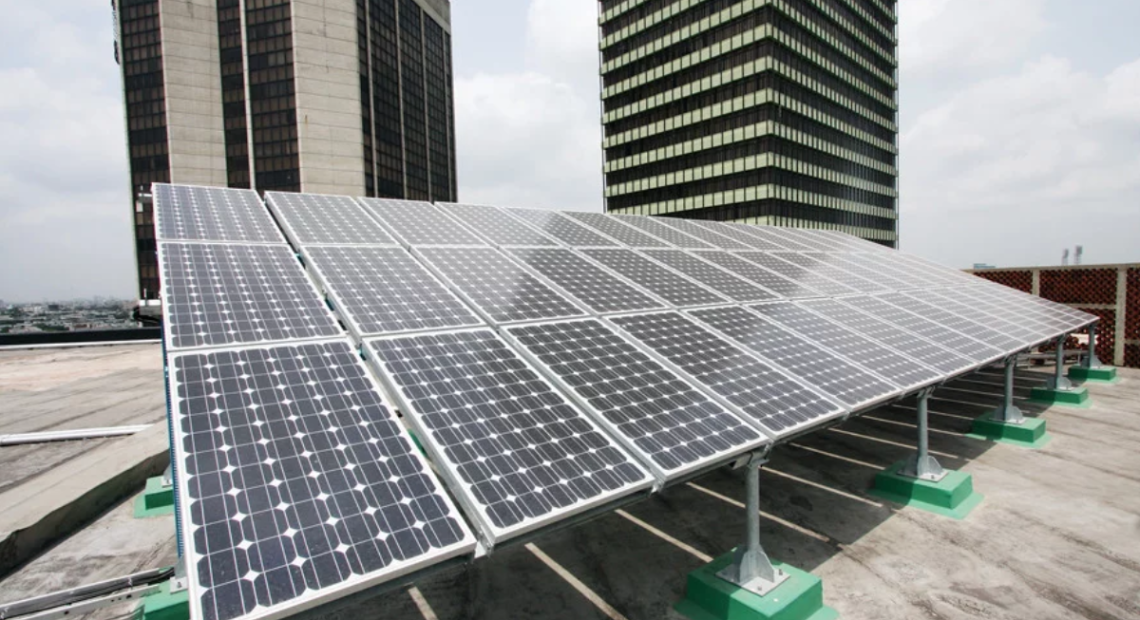
Rooftop solar, or installing solar panels on building roofs, is currently the fastest and easiest solution to implement. Bringing the roofs of government buildings, schools, colleges, hospitals, and residential flats under solar panels could meet a large share of daytime peak-hour electricity demand. From major megacities like Dhaka, Chattogram, Khulna, and Rajshahi down to the upazila level, millions of multi-storey buildings, factories, and government offices have unused rooftops. These roofs could be converted into mini power plants. Notably, sunlight is strongest precisely when offices and courts are operating, meaning the electricity generated is used immediately, without any need for battery storage.
To bring rooftop solar into the mainstream as a solution to the power crisis, coordinated initiatives are needed at the state level. All import duties and VAT on high-quality solar inverters, panels, and mounting structures should be completely withdrawn. Long-term, easy-condition, collateral-free loans for rooftop solar should be made available through commercial banks down to the grassroots level. When approving designs for new commercial buildings, government offices, and large factories, a certain portion of total demand (such as 10-15%) should be made mandatory to be generated from rooftop solar. The national grid needs to be modernized so it can easily accommodate variable solar power, alongside incentives for installing battery energy storage systems. Due to duties and taxes on imported solar panels and inverters, the initial cost remains beyond the reach of ordinary consumers, and the government needs to take on risk in this regard. Bank loan interest rates and easy financing options for rooftop solar remain limited. In a country like Bangladesh, where every inch of land is extremely valuable, rooftop solar requires no separate land — electricity is used exactly where it is generated, eliminating the waste or system loss involved in transmitting power over hundreds of kilometers of transmission lines. Being environmentally friendly green energy, it also reduces the carbon footprint of factories, increasing the acceptability and compliance of Bangladeshi products in international markets, particularly in Europe and America.
Railway lines run through the country’s remote regions. If electricity generated from solar panels installed alongside railway lines is supplied to nearby rural sub-stations, load-shedding in remote areas could be eliminated. Bringing railway infrastructure and the vast unused land adjacent to railway lines under solar power generation is a new and highly effective concept worldwide. Many countries, including India, Germany, and the United Kingdom, have already successfully applied solar power in the railway sector, and this could be a game-changer for Bangladesh as well. Bangladesh Railway holds thousands of acres of land, a large portion of which is either illegally occupied or lying unused. In the “right of way” or empty space on either side of railway lines, linear solar parks — long rows of solar panels — could be installed through proper planning, ensuring optimal use of the land and protecting it from illegal occupation. The country’s major railway stations (such as Dhaka Kamalapur, Chattogram, Sylhet, Khulna, or the newly built Cox’s Bazar Iconic Station) and the platform sheds of hundreds of intercity stations cover vast areas. Installing solar panels on these sheds could fully meet the stations’ own electricity needs (lighting, fans, air conditioning, signaling systems), with surplus power fed into the national grid. Solar panels could also be installed directly on railway tracks or sleepers — with technological advances, specialized solar panels are now being installed directly in the empty space between two rail lines or on sleepers (such as the technology of Switzerland’s Sun-Ways company). Bangladesh has a rail network of more than 3,000 kilometers; bringing even a portion of it under this technology could generate a substantial amount of electricity. Bangladesh Railway spends crores of taka annually on electricity bills, and this operating cost could be drastically reduced through solar power. Bangladesh Railway is gradually moving toward modernization and has plans to introduce electric trains in the future — electricity generated from solar panels along railway lines could be supplied directly to overhead catenary lines to run trains, reducing dependence on imported diesel.
Bangladesh’s ongoing power crisis is not merely a temporary problem but a structural weakness rooted in our long-standing dependence on fossil fuels. The key to permanent liberation from this crisis lies in the sustainable use of renewable energy. Using railway lines or land, or rooftop solar power management, is not only an environmentally friendly technology but also, given the current economic reality, the most effective tool for ensuring energy security in the country’s industrial and residential sectors. Through the combined efforts of the government, private investors, financial institutions, and the general public, a revolution in rooftop-based solar power is achievable. If unused building rooftops can be converted into power generation centers, Bangladesh could reduce its dependence on imported fuel and save billions of dollars.
The writer is a poet and essayist.