Everything About Agar Wood
Aftab Chowdhury
Agar wood also goes by the name agaru. Every well known tree carries a special botanical family name, and the agar tree has one too. Its name is Aquilaria agallocha, and it belongs to the Thymelaeaceae family. Different countries call this wood by different names. Bengal calls it agar or agaru, India calls it agar, Myanmar calls it akyaw, Sri Lanka calls it kayha, China calls it chenxiang, Arabic and Persian call it oud, and English calls it eagle wood.
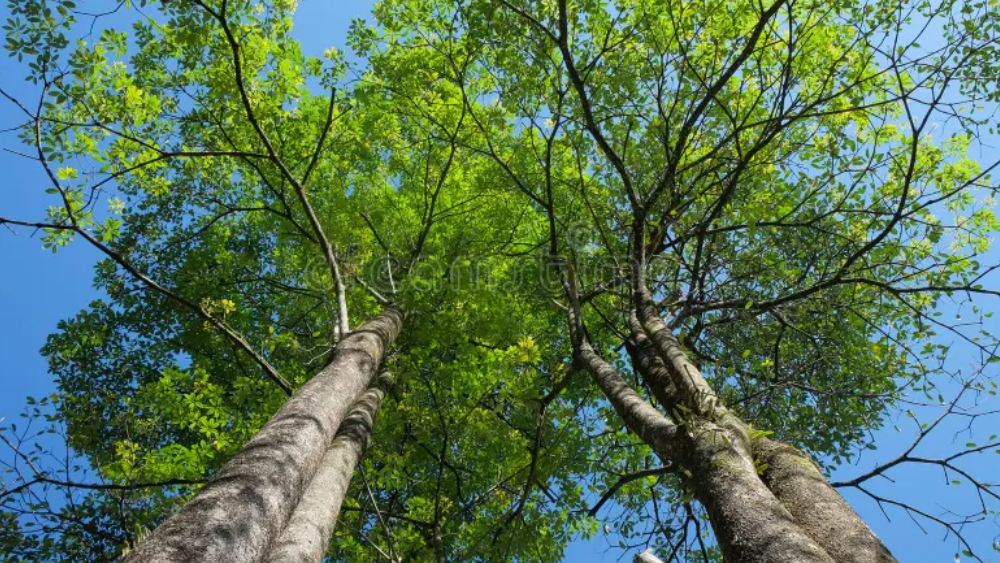
Agar trees grow not only in hilly regions but also on flat land. They reach a height of forty to fifty feet. Their branches grow bent and curled. Agar leaves measure three to four inches long and one to one and a quarter inches wide. The bark’s outer surface appears yellowish, whitish, and smooth.
As an agar tree grows older and larger, the joints between its trunk and its larger and medium branches turn deep black, coppery, or slightly coppery in color. All the tree’s fragrance concentrates in this colored section. The rest of the wood stays soft, pale yellowish white, and light in weight.
People across Bangladesh, India, and many other countries have widely used agaru wood throughout history, and they still do today. People consider agaru fragrance highly sacred. The Arab world uses it heavily. Hindus still use agaru in worship rituals today. Pre Islamic Arabs adapted the Greek word agalokhon into agalakhi as their name for the fragrant wood. Muslim Arabs later renamed this wood oud.
This precious agar tree grows in Sylhet, Manipur, Chattogram, Arakan, Myanmar, Magway, and Sumatra. Agar wood first traveled from India to China as an export. Traders later exported it from China to Europe. Physician Mr. Mohammad Hossain Khan wrote a detailed and reliable account of oud or agar wood in his famous herbal text Makhzanul Adawiya. This Persian language text also records many other medicinal plants, saplings, and vines.
Workers cut down the agar tree and sort out its colored pieces after breaking it apart. These colored pieces weigh much more than ordinary agar wood. The colored sections alone hold the fragrance, and workers extract attar or agaru essence from them. The tree must reach a certain age before these fragrant colored sections form.
In earlier times, agar wood exporters and attar producers used artificial methods to speed up this process. Workers would cut thick agar trees into pieces and bury them under damp soil. After a set period, they would dig up the wood and dry it. They would then sort the pieces by placing them in water. Pieces that sank completely in water earned the name nim garki or samalhe ala. Pieces that floated completely counted as ordinary grade. The most expensive agar wood, called garki, showed a deep black color. Nim garki showed a lighter black or coppery color. Dishonest traders sometimes mixed cheaper fragrant woods into batches of agar wood.
Arab merchants first exported two types of agar wood, oud e samandari and oud e kamari, to the Middle East. Traders called wood grown in the hills and plains of Sylhet and Chattogram, which they exported to the Middle East and Europe, oud e samandari. In ancient times, traders brought agar wood from Kamrup, Manipur, and Jaintia in Assam down the rivers to Chattogram port, then exported it to the Middle East and Europe. They called this wood oud e kamari. The word kamari comes from a colloquial form of Kamrup. Even today, the few agar traders still working in the Sylhet region mostly collect this kamari type of agar wood.
Agar wood produces more than just attar. Wealthy and refined people in the Middle East and Europe once used agar wood to craft jewelry boxes set with gems. They also used agar wood itself as jewelry, setting precious stones directly onto it. Devout Muslims made prayer beads from agar wood as well. European markets once sold agar wood at twenty to thirty pounds per cubic foot.
I have not seen any factory in Barlekha upazila of Moulvibazar district in Sylhet division that produces agar oil in significant quantity. However, I once watched someone extract oil from agar wood in a home’s courtyard in the Khadimnagar area of Sylhet city a few years ago. This region no longer produces attar from agar wood even as a cottage industry. Traders once shipped trunk loads of small agar wood pieces to various parts of India and beyond.
Experts once used a small, sharp, half inch chisel like tool to carefully scrape the black, coppery, and white sections from agar wood pieces and collect them in a container. These scraped pieces were very thin. Workers then placed the pieces into a steam resistant copper pot. The inside of this copper pot carried a nickel polish. Once fully polished, the inside of the pot shone like new silver.
Workers soaked the thin agar wood pieces in this steam resistant pot for two days. They then placed the sealed copper pot over a wood fire. A tube ran from a hole in the pot’s lid to the mouth of a bottle on the other end. As the fire heated the water inside the pot, the tiny thin agar wood pieces began to boil, and steam started flowing through the tube. Workers continuously poured cold water over the tube as the steam flowed through it.
The science behind this method is well understood. The cold water stream turns the agar steam back into liquid form, and the resulting attar drips into the bottle at the tube’s other end. Once the steam stops producing attar, workers remove the tube setup. They then dry the leftover agar pieces in the sun. People later burn these dried pieces indoors like incense, and the smoke carries a very pleasant fragrance.
Powdered agar wood also goes into making incense sticks or agarbatti. Mysore in India holds worldwide fame for producing agarbatti. Demand for agarbatti and incense sticks keeps rising every day, not just in Bangladesh and India but across the world.
Writer: Journalist and columnist.