Gas and power sectors crippled under Hasina’s rule: Immediate reform needed
Mobaiedur Rahman
The foreign policy of the current government, particularly its India policy, has received widespread praise from almost all sections of society except the Awami League and those aligned with it. It is now an established fact that relations between Bangladesh and India have hit rock bottom. I am not saying this as a Bangladeshi, but as a neutral and objective observer: India is entirely responsible for this deterioration in relations. After the July Revolution of August 5, 2024, the government that came to power, namely the government of Dr. Muhammad Yunus, initially did not say anything against India. But India itself took steps to damage the relationship. It said that it would maintain relations with an elected government.
India’s major media outlets repeatedly attempted to pick fights and create controversy over Bangladesh’s revolution. The July Revolution was a revolution of Bangladesh’s 180 million people. People from all sections of society joined the movement. From Dhaka city to remote villages, people came out of their homes. Why did India refuse to recognise such a massive, world-shaking revolution? It gave shelter to Sheikh Hasina. Dr. Yunus accepted that as well. He only said that Hasina could stay there, but she should not say anything about Bangladesh or politics. India completely ignored Dr. Yunus’s statement. During her 18-month rule, Sheikh Hasina continued speaking with Awami supporters inside Bangladesh and inciting them to hold anti-government rallies. She also repeatedly delivered provocative statements through audio clips.
India wanted to maintain relations with an elected government. The BNP government led by Prime Minister Mr. Tarique Rahman is a genuinely elected government. During his tenure, Sheikh Hasina organised a press conference at a foreign correspondents’ club in Delhi. The elected government of Bangladesh had already requested India to prevent Sheikh Hasina from holding that press conference. India again ignored the elected government’s request. It was difficult for an elected government to tolerate such disregard by India. A favourable environment in both countries is necessary for a meeting between the two heads of government. Sheikh Hasina’s press conference and India’s disregard for the Bangladesh government’s request poisoned that favourable environment. As a result, what was bound to happen happened. Prime Minister Mr. Tarique Rahman’s visit to India was put on hold. The Bangladesh government demanded that Sheikh Hasina and her associates be extradited to Bangladesh without delay. Bangladesh also demanded the return of those accused of killing Shaheed Osman Hadi, alleging that India had given them shelter.
In fact, these two demands by Bangladesh are entirely political. But India introduced a new twist. It gave a new interpretation, describing the extradition of both Sheikh Hasina and the accused in Osman Hadi’s murder as legal matters. It said that Sheikh Hasina had been sentenced to death by a Bangladeshi court and that India would examine whether the death sentence had been legally justified. For this, all documents related to the verdict sentencing Sheikh Hasina to death would have to be sent to India. Regarding those accused of killing Osman Hadi, India said they had entered the country illegally. They were arrested in Kolkata, and the Indian government had filed cases against them for illegal entry. Until those cases are resolved, India said, the accused could not be extradited to Bangladesh over the murder allegations.
Therefore, it is now becoming clear that India is not going to return Sheikh Hasina and her associates or those accused of killing Osman Hadi in the near future. Until they are returned, a favourable environment for the Bangladesh prime minister’s visit to India is unlikely to emerge. Except for those aligned with the Awami League, people from all sections of Bangladesh’s 180 million population have supported the Bangladesh government’s firm position.
II
That is why I began by saying that people from all sections of society have wholeheartedly supported this government’s foreign policy, particularly its India policy. But a country cannot run on foreign policy alone. Competent governance and good governance are also needed internally. As an impartial and patriotic citizen, it is necessary to present an accurate picture of the country to the government. We are observing with deep concern that mild criticism of the government has begun to emerge over several domestic issues. The main issue among them is the shortage of gas and power supply. In villages and rural areas, people are facing load-shedding for hours. During Dr. Yunus’s tenure, there was no load-shedding in Dhaka city. But now, for the past week, load-shedding has been occurring every day across the capital, including affluent areas. I have heard many people say that there was no load-shedding during Yunus’s tenure. Why is it happening now? The issue is technical. But ordinary people have never gone into the depths of such technical problems and will not want to do so now either. They want uninterrupted power supply. Where the gas, coal, furnace oil or diesel required to generate that power supply will come from is the government’s concern. People do not want to understand all these details.
Meanwhile, Finance Minister Amir Khosru Mahmud Chowdhury has said that at least two years will be needed to resolve the gas and power supply crisis. Does that mean people’s suffering will not end within the next two years? Everyone needs to understand that the issue is highly sensitive.
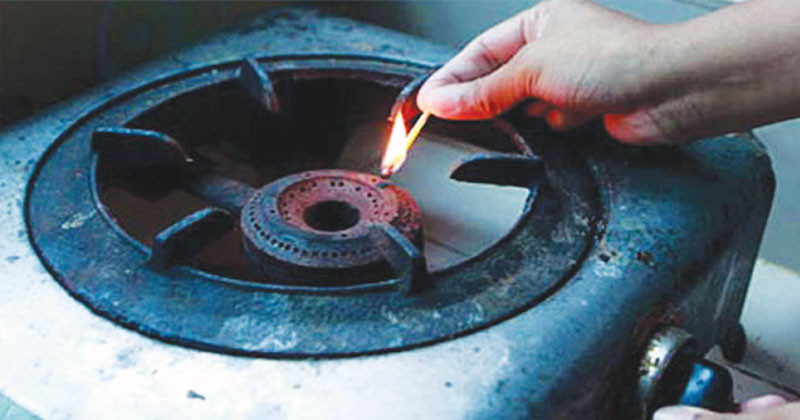
On the day I am writing this column, namely last Sunday, gas was also trickling through our Dhanmondi, Kalabagan and Kathalbagan areas throughout the day. The gas stoves were burning weakly. In most homes, gas pressure is somewhat higher at night. Such a situation can continue for two or four days, or at most a week. But if it continues beyond that, public dissatisfaction will emerge.
Personally, I believe the government needs to clearly explain the severe crisis that has emerged in the gas and power supply sectors. On July 21, part of a floating LNG terminal in Maheshkhali caught fire. The name of the terminal is Excelerate. The other one is Summit LNG. Bangladesh’s daily gas demand is 3.8 to 4 billion cubic feet. But supply is 2.1 to 2.3 billion cubic feet. In other words, the shortage is at least 1.5 billion cubic feet.
Peter Haas, a former US ambassador who worked in Bangladesh, is the strategic adviser to Excelerate. Summit LNG is owned by Muhammad Aziz Khan. Muhammad Aziz Khan is the brother of Faruk Khan, who was a minister in Sheikh Hasina’s cabinet. During the Awami League government’s 2009-2024 tenure, Summit Group established a major business presence in the power and energy sectors. A 2026 report by Khabarer Kagoj claimed that Summit Group had established extensive control over the power and energy sectors during the Awami League government’s 15-and-a-half-year rule. In any case, after partially repairing the damaged section of Excelerate, gas supply to the national grid resumed. But the following day, a gas supply crisis emerged at Summit’s terminal because a fuel tanker could not berth at the terminal on time.
III
If the gas supply crisis at the two Maheshkhali terminals were the reason for the current power supply crisis, perhaps the problem could have been completely resolved in the short term. But the problem is not limited to that. The problem lies elsewhere. A detailed discussion would involve many technical issues. Broadly speaking, Bangladesh currently has less power supply than demand. This is the main and biggest reason. Yet our generation capacity is 29,593 MW. Summer demand is 18,000 MW. However, the highest generation is 15,500 MW. The shortfall is 2,000 MW. At this moment, it is 3,000 MW.
Power supply demand will increase rather than decrease until winter arrives. Therefore, the shortage will remain. The only solution is to increase domestic gas production without delay. At the same time, as many solar power panels as possible should be installed as quickly as possible.
There are many vested interests and stories of massive corruption surrounding gas and power supply. During the Awami period, exploration for oil wells and blue-economy resources was deliberately delayed for years in the interest of India and to enrich a particular group of businessmen. An import-dependent energy policy was followed for years to fill the pockets of oligarchs linked to the Awami League. The disastrous quick-rental plants were imposed on the nation. Hundreds of crores of taka were paid under the name of capacity charges even without any production. Dr. Yunus had silenced those white elephants.
What this government needs to do now is present the people with a complete and unvarnished picture of the country’s energy situation, outline a plan for making the country self-sufficient in energy as quickly as possible, and implement that plan rapidly.