Govt has created a breach in the wall of trust of the wider population : Dr Enayetullah Abbasi
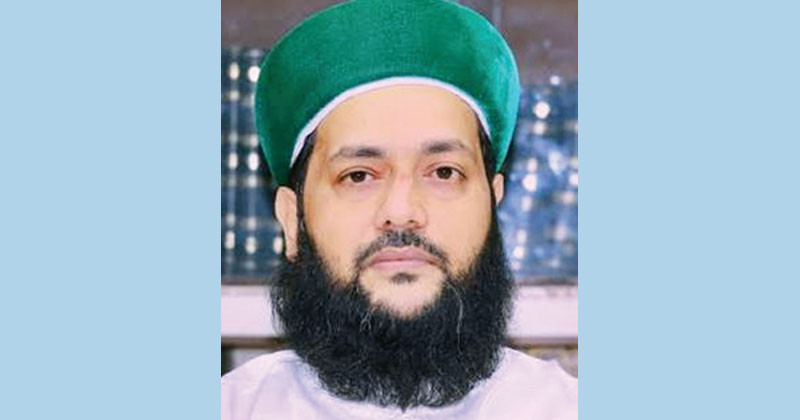
- Lincoln made state minister for religious affairs
Popular Islamic preacher and Pir of Jainpur Dr Enayetullah Abbasi has expressed strong anger and dissatisfaction over the appointment of a controversial and “La-Madhhabi” person as state minister for the Ministry of Religious Affairs, a sensitive government post. At a recent religious gathering, he alleged that through this decision, the government had created a major breach in the wall of trust among the country’s ulema, pirs and mashayekhs.
In his speech, Dr Abbasi claimed that the present government came to power with the support of the country’s ulema, pirs and mashayekhs, as well as people belonging to the Ahl-e-Sunnat Wal Jamaat and other mainstream Islamic groups. But without considering the trust of the religious majority, Salafi and La-Madhhabi lawmaker Shamim Kaisar Lincoln has been given charge of the Ministry of Religious Affairs. “I am most alarmed. By making this Shamim Kaisar Lincoln a state minister, the present government has created a breach in the wall of trust of the ulema, pirs and mashayekhs who represent the majority of the people of this country. They have to close this breach. If the breach becomes larger, they will not be able to manage the situation,” he warned.
He said the people of the country had not viewed the decision favourably. “I do not understand whose trap the government has fallen into to take this step. The ulema, pirs and mashayekhs of this country, Ahl-e-Sunnat Wal Jamaat and all mainstream and orthodox Islamic groups supported the government, and that is why it was able to come to power. Otherwise, coming to power would not have been so easy for them,” he said.
He added, “There, in an attempt to please the La-Madhhabi community, angering the mainstream and traditional ulema, pirs and mashayekhs of this country by giving this controversial person the post of state minister for religious affairs means there are some mischievous people around the government who want to put the government in trouble.” Describing followers of Salafi or Ahl-e-Hadith beliefs as a separate community, Dr Abbasi said mainstream Muslims identify themselves according to their respective madhhabs but never establish separate mosques or madrasas in their own name. However, he said, this group identifies itself as a separate community under the names “Ahl-e-Hadith” or “Salafi” and operates separate madrasas and mosques.
At the same time, he commented that various misleading sects were emerging in the future because of what he described as their ideological deviation. “They are Salafism. These so-called people are Salafi, they are La-Madhhabi. La-Madhhabi means, in one sense, Ladini. They do not fully believe in the religion of Islam. You cannot imagine how many followers of false sects have emerged from them. This ‘Ahl-e-Quran’ claimant, a mischievous group, a kafir community that has emerged, came from the La-Madhhabis,” he said.
Recalling the political context of the 2001-2005 period, Dr Abbasi said that during the BNP government at the time, the influence of Salafi ideology had created distance between the government and mainstream ulema. He said the government had to pay the price for this in the 2008 election.
Urging the government to learn from past experience, he called for reconsideration of the controversial decision. Dr Abbasi said, “I would remind the government that when they were in state power from 2001 to 2005, the Salafis created distance between the then BNP government and the country’s vast body of ulema, pirs and mashayekhs, Ahl-e-Sunnat and Ahl-e-Haq, who represent Muslims across the country. On various television channels, including Islamic TV and Diganta TV, their scholars made statements that created conflict with the Hanafi, Sunni and Ahl-e-Haq communities.”