
Govt to Send 10,000 Workers to Malaysia at Zero Migration Cost
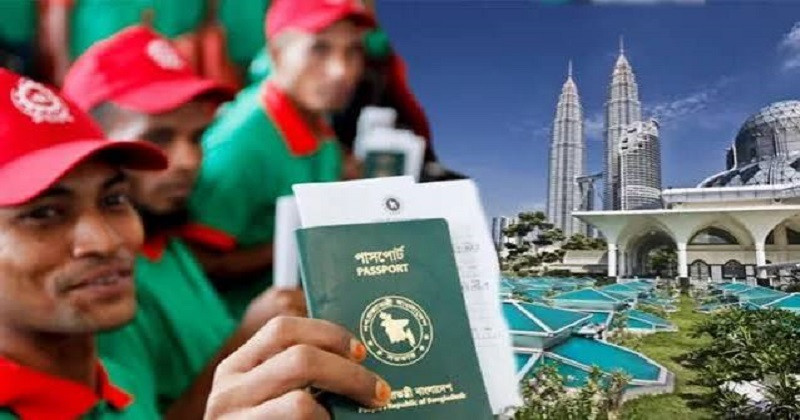
Fresh initiatives have commenced to dispatch Bangladeshi workers to Malaysia’s labor market, with over 6,000 quotas already allocated for their recruitment. Applications for the attestation of demand letters against these allocated quotas have been submitted to the Bangladesh High Commission, and several of these demand letters have already been verified and attested. Around 350 Malaysian employers have applied for quota allocations after paying the requisite government fees and levies in accordance with regulations, initiating the official processing of worker entry.
Alongside this private sector recruitment, the government has taken an initiative to send 10,000 workers to Malaysia at zero migration cost in the first phase through the state-owned enterprise, Bangladesh Overseas Employment and Services Limited (BOESL). Subsequently, there are plans to send workers through private recruiting agencies as well. State Minister for Expatriates’ Welfare and Overseas Employment, Ariful Haque, stated that 10,000 workers will initially be sent at zero cost through BOESL, after which private recruiting agency owners will send workers, while dismissing complications regarding the control of medical centers.
Stakeholders noted that one of the government’s primary objectives in sending workers to the Malaysian labor market is to reduce migration costs and ensure transparency in the recruitment process. Consequently, priority is being given to the initiative of sending workers at zero cost. Furthermore, emphasis is being placed on proper verification of quotas and demand letters for new recruitment in Malaysia, which stakeholders consider essential to prevent irregularities given the large number of undocumented foreign workers currently in the country.
Leaders of the Bangladesh Association of International Recruiting Agencies (BAIRA) emphasized the need to continue the government’s zero-cost recruitment initiative while swiftly sending workers under the allocated quotas. They noted that this dual approach would ease the heavy financial burden on outgoing workers and pave the way for creating sustainable, long-term opportunities for Bangladeshi workers in Malaysia’s labor market. They stressed that balancing public and private recruitment pathways is crucial for maintaining market stability.
According to relevant sources, if the initiative to send 10,000 workers at zero cost is advanced alongside the swift dispatch of workers with allocated quotas, opportunities for Bangladeshi workers in the Malaysian labor market could expand significantly. Government officials state that if the zero-cost worker deployment initiative succeeds, overall migration costs for outgoing Malaysian workers will decrease. Furthermore, maintaining regular worker recruitment through the private sector will create opportunities to further increase the presence of Bangladeshi labor in Malaysia.










