
Govt Weighs China’s Proposal for Third LNG Terminal in Kutubjom as Fuel Demand Rises
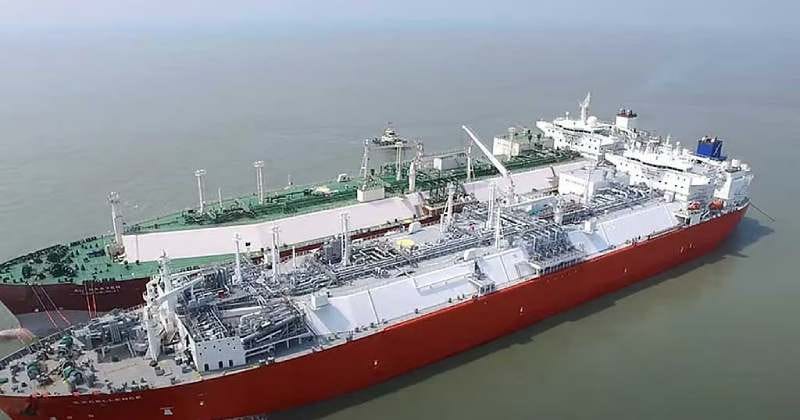
The government is reviewing a proposal from China National Energy Engineering and Construction Co. Ltd. (CNEE) to construct Bangladesh’s third Floating Storage and Regasification Unit (FSRU) at Kutubjom in Maheshkhali, Cox’s Bazar, to tackle the nation’s severe energy deficit. Although the proposal from the Chinese state-owned enterprise had previously secured approval in principle, the Energy and Mineral Resources Division unexpectedly withdrew it from Wednesday’s Cabinet Committee on Government Purchase (CCGP) meeting right before final sanction. The project aimed to establish an offshore terminal featuring a daily regasification capacity of 600 million cubic feet (MMcf/d) and a maximum capacity of 750 MMcf/d.
CNEE’s recommended bid proposed an estimated cost of BDT 12,324 crore for a 15-year tenure and BDT 13,161 crore for a 20-year term. Under the 15-year arrangement, the Chinese firm set a daily charter fee of $342,000, which is 35 to 37 percent higher than current operational expenses for existing facilities. In contrast, the government currently pays Excelerate Energy $254,000 per day and Summit LNG Terminal $249,115 per day. This substantial price variation triggered critical reviews regarding financial efficiency and contract terms, leading authorities to step back to re-evaluate the deal’s long-term economic viability.
Defending the cost structure, Petrobangla officials noted that existing facilities were commissioned in 2018 under earlier financial terms, making direct cost comparisons invalid due to global inflation and market volatility. An energy sector official emphasized, ‘When the Chinese proposal was initially received, the government had no alternative proposals on hand. Since then, a new proposal from an American company has emerged.’ Officials further noted that evaluating such massive energy infrastructure projects requires comprehensive assessments encompassing project capacity, financing costs, construction and operational expenses, risk distribution, contract duration, and transfer terms rather than focusing purely on daily rates.
The emergence of competing interests from the United States has introduced new dynamics into the government’s energy planning. During a meeting with Commerce Minister Khandoker Abdul Muktadir at the FBCCI office on September 7, U.S. Ambassador to Dhaka Brent T. Christensen stated, ‘A transparent and competitive bidding process is essential for setting up FSRUs,’ adding that American firms are highly interested in operating within Bangladesh’s expanding energy market. Taking the fresh American proposal into account enables the Chinese enterprise to review its terms while allowing the government to reach a well-informed decision.
Moving forward, the government is proceeding cautiously while evaluating both Build-Own-Operate (BOO) and Build-Own-Operate-Transfer (BOOT) business models for future infrastructure. To effectively address the ongoing energy deficit, authorities have announced plans to install three additional floating LNG terminals by 2029 across strategic coastal locations. Feasibility studies are currently underway for Payra, Mongla, and Hiron Point alongside active efforts to recruit prospective global investors. This cautious re-examination underscores a strategic shift toward open competition, transparency, and fiscal prudence in securing the nation’s long-term energy security needs.










