
Mobile Courts to Prevent Illegal Entry into Bangladesh Secretariat
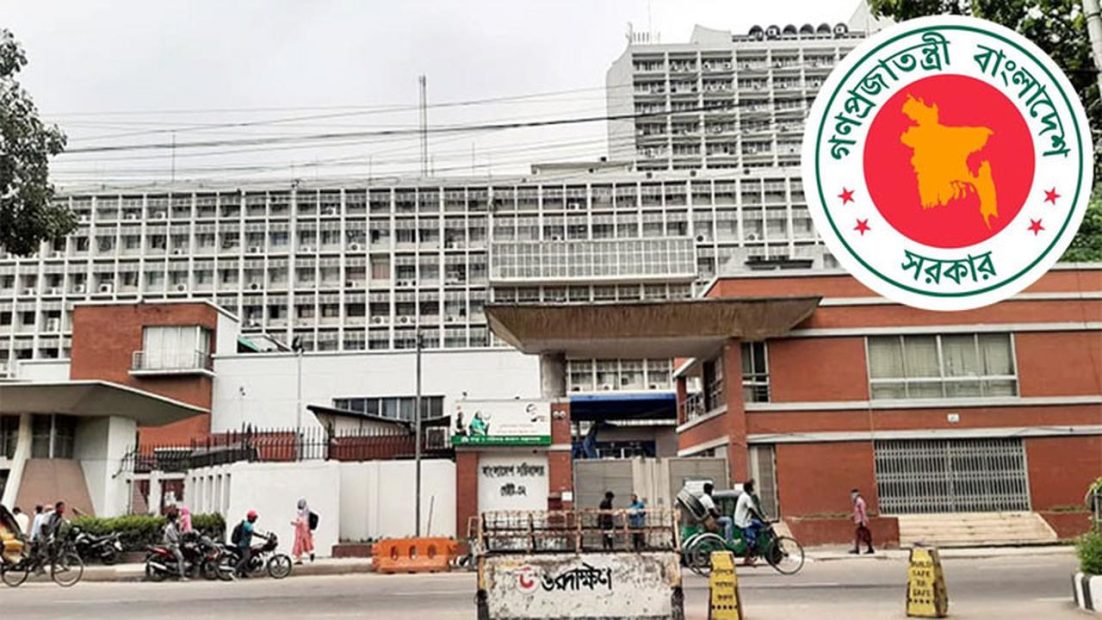
The unrestricted entry of visitors and outsiders into Bangladesh Secretariat, the administrative centre of the government, has long raised concerns. There have been allegations of fake and illegal entry passes, irregularities by security personnel and unauthorised entry through different gates. The issue has gained renewed importance as Prime Minister Tarique Rahman regularly works from the Secretariat.
The government has now decided to conduct mobile courts to prevent entry into the Secretariat using illegal or fake passes. The BNP government had also introduced mobile courts in 1992 to prevent entry using fake passes.
According to sources at the Home Ministry, mobile courts will regularly operate at the entrances and inside the Secretariat. Executive magistrates assigned to the operation will take immediate action if anyone is found inside without a valid pass. If necessary, the person will be handed over to the police. Several people were previously detained and questioned over fake passes before being released. Authorities have now instructed officials to take strict action in similar cases in the future.
A high-level government meeting on Sunday also decided to strengthen the implementation of the Bangladesh Mobile Court Act, 2009. The meeting, chaired by Prime Minister Tarique Rahman, discussed amendments to several provisions of the law and measures to make its enforcement more effective.
Cabinet Secretary Dr Nasimul Gani, Principal Secretary to the Prime Minister A.B.M. Abdus Sattar, Senior Secretary of the Home Ministry Manzur Morshed Chowdhury, Public Administration Secretary Md Kamruzzaman Chowdhury, Housing and Public Works Secretary Md Obaidur Rahman and Inspector General of Police Md Ali Hossain Fakir attended the meeting. Additional secretaries of the Cabinet Division and deputy commissioners of police from the Secretariat security wing were also present.
A recent intelligence report on Secretariat security found serious irregularities. It identified weaknesses in the issuance of entry passes and the overall security system and alleged that some officials responsible for security were issuing passes without following the rules.
The report also said some non-cadre officials of the Home Ministry assigned to security duties were allegedly issuing entry passes illegally. There were also allegations that visitors were being allowed to enter through several gates with the assistance of police personnel. Some members of parliament were reportedly entering the key-point installation with six or seven party workers. In some cases, people without passes were allegedly gaining entry through various means.
Security officials said such incidents not only disrupt the normal environment and discipline of the Secretariat but also put the security of a key government installation at risk. The risk is considered particularly serious because the prime minister regularly works there.
Despite OTP, irregularities continue
A one-time password (OTP) system has already been introduced to tighten control over visitors. Under the system, entry is supposed to be allowed only after verifying a visitor’s identity and the purpose of the meeting. However, attempts to enter the Secretariat using fake passes and other methods have continued even after the system was introduced. Home Ministry officials said technology-based measures alone cannot ensure security without strict monitoring on the ground. As a result, the government has decided to conduct regular mobile courts at the entrances.
Mobile courts are planned to operate daily under the leadership of officials at the senior assistant secretary level. They will be able to conduct surprise checks at different entrances and inside the Secretariat. Anyone found without a valid entry pass will have their identity verified and legal action will be taken when necessary.
Law exists, but enforcement questioned
Under the Bangladesh Mobile Court Act, 2009, executive magistrates have the authority, in specific cases, to take cognisance of offences and impose penalties immediately at the scene to prevent crime and maintain law and order. The law allows limited judicial proceedings to be completed at the site of an incident.
However, relevant sources said the law has not been enforced as effectively as expected at important and restricted facilities such as the Secretariat. Following the prime minister’s directive, the government has now moved to strengthen its implementation. According to Cabinet Division sources, a guideline has also been issued to prevent officials from facing legal or administrative complications while conducting mobile courts in the field. It explains the procedures, limits of authority and responsibilities of officials involved.
Government officials said mobile courts are not being viewed only as a means of punishment but also as a preventive measure to ensure security and discipline at the Secretariat.
Concerns over sudden entry
Ministers, secretaries and senior officials are not the only people who regularly visit the Secretariat. Members of parliament, political leaders and activists, representatives of different organisations, journalists and government officials also need access for various official purposes.
Therefore, maintaining security while ensuring normal movement for people with legitimate business is also important. However, relevant sources said concerns have grown over the sudden entry of some student leaders linked to the 2024 movement, the entry of political leaders and activists in groups, and violations of pass regulations.
There have also been allegations that some people violated the rules with the help of security personnel. An administrative official said a person’s identity or political affiliation should not determine access to the Secretariat; the rules should apply equally to everyone. Without equal enforcement, maintaining an effective security system will be difficult.
Home Ministry Senior Secretary Manzur Morshed Chowdhury said officials had been instructed to ensure that incidents that occurred previously do not happen again. “Necessary measures are being taken to ensure the security of the Secretariat,” he said.
He said mobile courts were being introduced to prevent visitors from entering the Bangladesh Secretariat with illegal or fake passes. Officials said several people were detained and questioned at the Secretariat on Sunday over allegations of using fake passes. They were later released. However, officials said legal action would be taken in such cases in the future.
The decision to strengthen the implementation of the Mobile Court Act is part of the government’s broader effort to improve security and law and order at the Secretariat. The effectiveness of the new initiative will depend on how strictly the rules are enforced and whether irregularities in the entry system can be brought under control.
The Secretariat is not merely a government building. Its security is closely linked to the environment for important state decisions, the discipline of government operations and the security of the country’s highest levels of government.










