Implementing plans key to reviving fragile economy
Md. Jahidul Islam
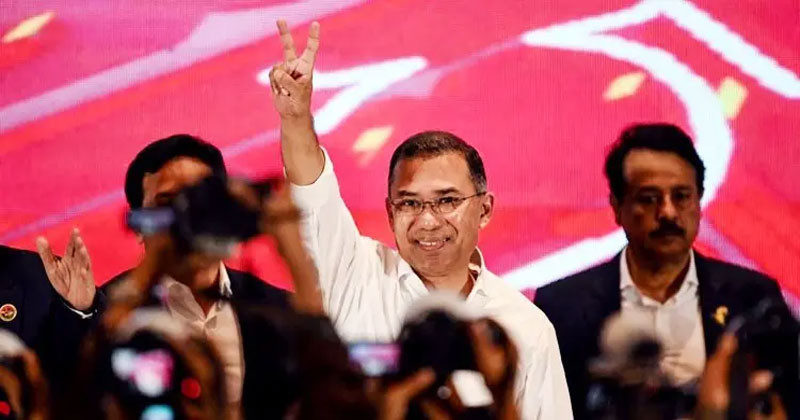
The BNP government has completed six months in office, prioritising a business- and investment-friendly environment. Prime Minister Mr. Tarique Rahman inherited numerous challenges, including an energy crisis, weakness in the banking sector, high inflation, foreign exchange pressure, revenue shortfalls and global uncertainty. The government has taken initiatives to ease business, attract investment, strengthen economic diplomacy, pursue free trade agreements, diversify exports, reduce business costs, develop a long-term tax structure and participate in international trade fairs. Implementing these initiatives is now the main challenge.
Reforms have progressed beyond announcements, covering licensing, port services, tax administration, energy supply, investment facilitation and new industrial sectors. The government plans to reduce the number of business licences and provide necessary approvals within 14 days. Customs, port and related banking services are also being prepared for 24-hour operations to reduce export delays and costs.
The government has moved to separate the National Board of Revenue’s policy-making and implementation functions and involve experts and private-sector representatives in tax policy. Bond licence validity has been extended from three to five years, with online renewal planned. Semiconductor, renewable energy, lithium-ion battery and light engineering industries are receiving special attention, including duty benefits for semiconductor raw materials, tax incentives for solar energy and a light engineering hub in Bogura.
Facilities for open-account trade, documentary collection and supply-chain financing have been expanded to ease working-capital pressures. To address the long-standing gas shortage affecting industries, the government has given policy approval for a dedicated floating storage and regasification unit (FSRU) for industrial use in Maheshkhali and is examining alternative gas supply options. Finance Minister Mr. Amir Khosru Mahmud Chowdhury, however, said a permanent solution to the electricity and gas crisis could take at least two years.
The government also plans to simplify e-visas and visas on arrival for foreign investors. It has set an ambitious target of earning $100 billion from exports by 2030, with semiconductors, ICT, light engineering, renewable energy and SMEs expected to complement the garment sector.
Bangladesh has signed an Economic Partnership Agreement (EPA) with Japan and a Comprehensive Economic Partnership Agreement (CEPA) with South Korea, while discussions continue with South Korea, Singapore, the UAE, Nepal and Bhutan to expand trade. Diplomatic efforts are also underway to secure GSP Plus benefits from the European Union after 2026 and retain patent-related benefits for the pharmaceutical industry under TRIPS until 2033.
The Export Promotion Bureau plans to participate in around 50 international trade fairs this year to promote Bangladeshi products, including garments, leather, agricultural goods, handicrafts, ICT, light engineering and jute products. Business leaders say it is still too early for a final assessment because most reforms remain under implementation. Improving gas and electricity supplies, reducing administrative complications, simplifying taxation and ensuring implementation at the field level are now the government’s biggest challenges.
FBCCI administrator and former BKMEA president Mr. Fazlul Hoque described the government’s initiatives on business facilitation, task forces and banking-sector recovery as positive despite the Middle East crisis, inflation, energy shortages and global uncertainty.
BGMEA president Mr. Mahmud Hasan Khan Babu said communication between the government and business community has improved over the past six months, with quicker responses and solutions to some major problems. However, bureaucratic complications remain, while improving gas and electricity supplies is the most urgent need.
Dhaka Chamber president Mr. Taskin Ahmed said confidence has returned to the business community following the election of a new government. He said the government is working on short-, medium- and long-term plans to address longstanding problems in the energy and banking sectors.
CPD distinguished fellow Professor Dr. Mustafizur Rahman said the government had taken several positive initiatives, including expanding bonded warehouse facilities, providing support to the banking sector, facilitating back-to-back LCs and implementing a single-window system. However, he said high inflation, stagnant investment, weak private-sector credit growth, sluggish job creation and banking-sector problems remain unresolved. More time will be needed to determine whether the government’s measures can bring meaningful changes to the economy.