India Openly Disagrees With Trump
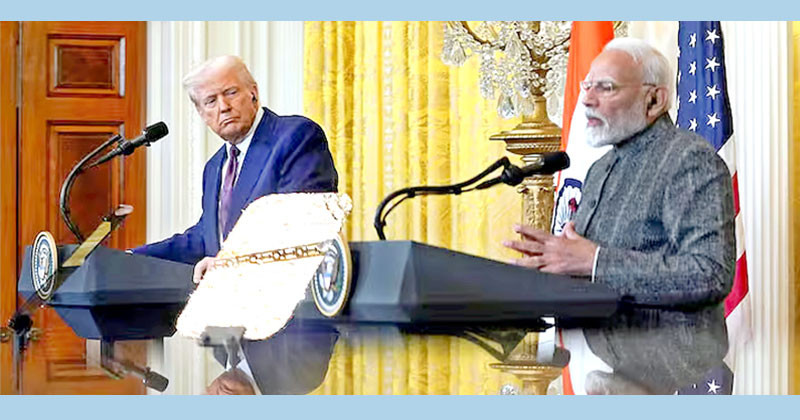
India has publicly voiced its position regarding escalating diplomatic and economic tensions with US President Donald Trump’s administration. New Delhi has raised strong objections to Washington’s policies across key strategic areas, including trade practices, India’s purchase of Russian crude oil, US diplomatic engagement with Pakistan, and counterterrorism strategies. Leaving aside its traditional preference for quiet diplomatic channels, India is now signaling its dissatisfaction openly following months of growing bilateral friction.
Speaking at an event in New York, India’s External Affairs Minister, S. Jaishankar, described certain US policies as self-centered and questioned Washington’s stance on India’s core security concerns. The underlying friction is particularly evident in trade, where bilateral goods trade reached $149.1 billion in 2025 with an Indian trade surplus of $58.4 billion. Emphasizing fair dynamic bilateral trade, Jaishankar stated that no nation should make unilateral decisions without fully weighing their impact on another country’s economy and its people.
Trade negotiations remain stalled over significant divergences, primarily concerning regulatory protections in India’s domestic agricultural sector. Mr. Jaishankar remarked that American expectations for immediate market opening are unrealistic given India’s commitment to safeguarding domestic farmers. Meanwhile, potential US tariff hikes threatened over India’s continued imports of Russian oil threaten to further complicate relations. Further anxiety stems from proposed US H-1B visa changes, prompting Mr. Jaishankar to note that global labor mobility, once viewed through an economic lens, is now caught in direct conflict with domestic political interests and immigration controls.
Relations are further strained by Washington’s rapprochement with Islamabad following a military clash between India and Pakistan last year. While Trump claimed US mediation secured a ceasefire, New Delhi strongly rejected third-party intervention. Mr. Jaishankar reiterated that India has endured cross-border terrorism for decades and emphasized counterterrorism as a non-negotiable priority, highlighting a distinct lack of American empathy toward Delhi’s security concerns. Former Indian diplomat Ajay Bisaria noted that Delhi’s decision to go public stems from accumulated experience, adding that the atmosphere grew increasingly complicated following the ceasefire controversy.
Despite domestic political pressures in India ahead of state elections, experts believe room for re-engagement remains between both nations. Chietigj Bajpaee, a South Asia fellow at Chatham House, observed that while differences have widened, efforts to repair relations have not broken down completely, pointing to a potential bilateral trade deal as a key bellwether. Similarly, Harsh V. Pant of the Observer Research Foundation noted that as New Delhi adapts to the Trump administration’s foreign policy approach, it is now opting to articulate its strategic and economic interests firmly and publicly.
Source: Reuters