India’s Kolkata New Market Loses Crores Daily as Bangladeshi Shoppers Decline
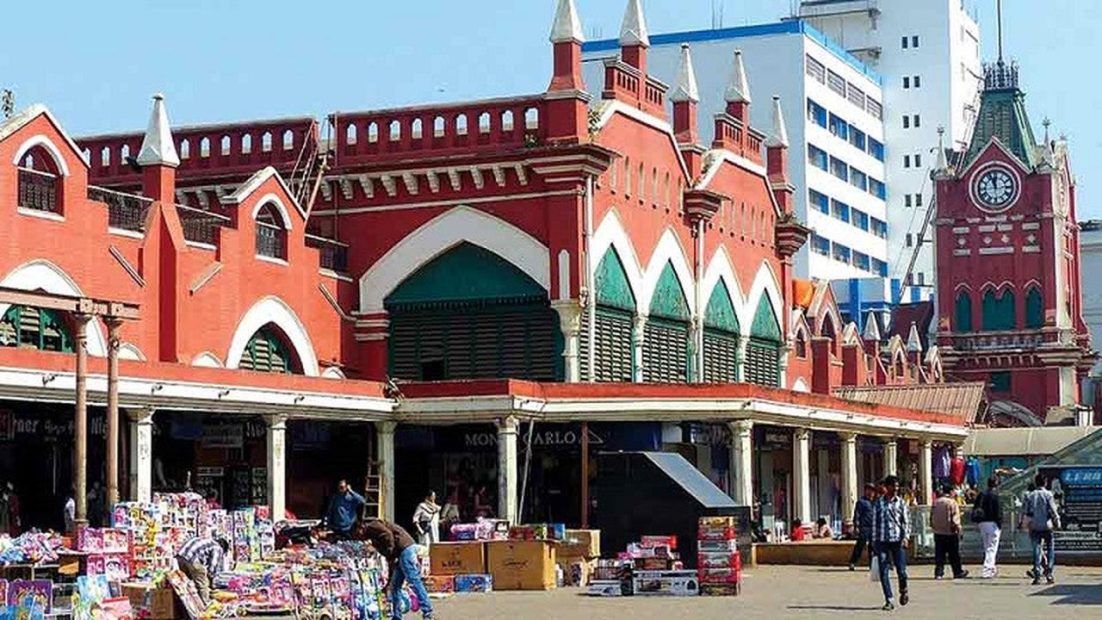
A fatal fire on August 19 at a boarding house on Free School Street in Kolkata killed nine people and disrupted commercial activity across New Market and adjacent business hubs. Following the tragedy, local authorities closed nearby hotels, lodges, and guest houses, causing a sharp decline in Bangladeshi tourists and shoppers, and creating severe distress for local traders.
According to a Times of India report on Sunday, around 5,000 businesses selling apparel, cosmetics, luggage, dried fruits, and chocolates across New Market and neighboring streets are collectively suffering daily losses exceeding ₹1 crore.
Sales had begun to recover after the Indian government resumed tourist visas for Bangladeshi citizens in late June. However, the recent fire and subsequent hotel closures reversed those gains.
For over two decades, retail hubs across New Market, Humayun Place, Bertram Street, Lindsay Street, and Free School Street have relied heavily on Bangladeshi visitors, who historically accounted for over half of all shoppers and roughly 60 percent of total sales.
Before political instability in Bangladesh in mid-2024 and the resignation of former Prime Minister Sheikh Hasina, nearly 60 percent of customers at Amrapali, a clothing store in New Market’s B-Block, were from Bangladesh. Owner Manoj Advani noted that while customer turnout briefly reached 15 to 20 percent after visa services resumed, hotel closures forced visitors to relocate or return home, driving Bangladeshi shoppers down to under 5 percent.
Similarly, Tarun Israni of Mansa Sarees reported that Bangladeshi clientele previously represented 70 percent of his sales. That figure fell to 15 percent following political changes in Bangladesh, briefly recovered to 25 percent after visa resumption, but plunged to 10 percent after the fire and is now approaching zero. Amit Saha, owner of Fancy Boutique, experienced a similar drop from 80 percent pre-crisis to virtually zero today.
Out of 2,700 shops in New Market, about 1,500 rely heavily on Bangladeshi footfall, particularly those selling garments, cosmetics, travel luggage, chocolates, dried fruits, and spices. Another 3,500 to 4,000 businesses on surrounding streets share the same dependence.
Uday Kumar Sahu, general secretary of the SS Hogg Market Traders’ Association, highlighted the financial downturn. Prior to June 2024, average daily shop sales were around ₹15,000, generating roughly ₹8 crore daily across 5,000 to 5,500 stores, with Bangladeshi shoppers contributing about ₹4.8 crore. Political turmoil in Bangladesh initially cut daily commercial turnover to ₹3 crore. Although sales temporarily rebounded to ₹8,000 per shop after visa services resumed, current sales have fallen back to ₹6,000 per store with minimal response from Bangladeshi buyers.
Mr. Sahu added that leisure shoppers have returned home, while medical tourists have relocated to accommodations near hospitals in areas like Mukundapur and Salt Lake, eliminating incidental shopping trips to the New Market area.