Israeli President and Indian Ambassador Attend Ahmadiyya Annual Convention in Haifa
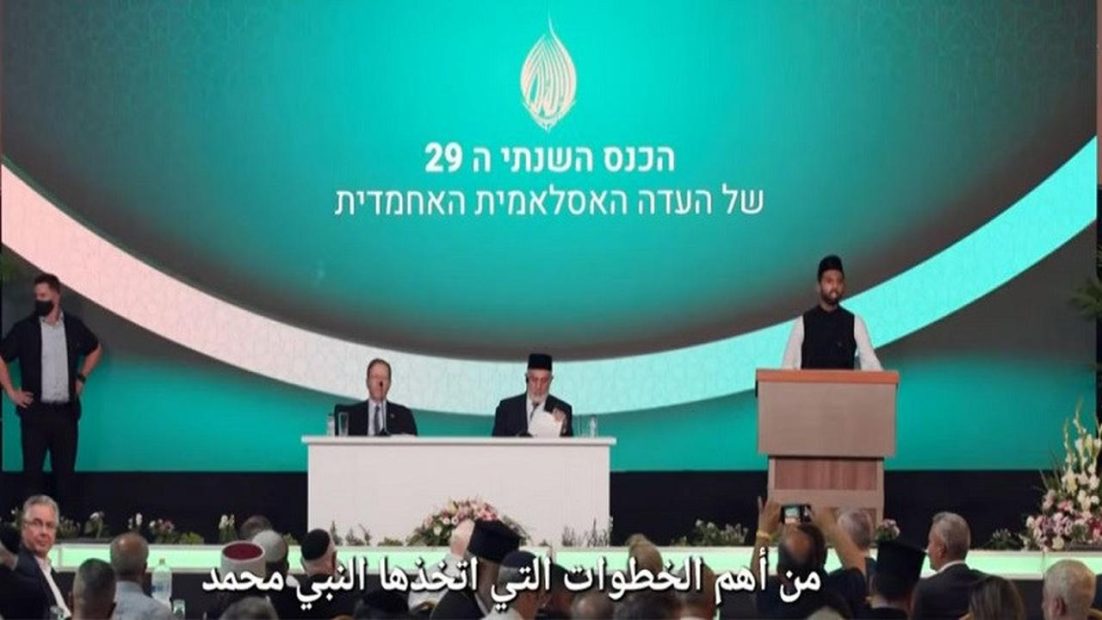
The 29th annual convention of the Ahmadiyya community in Haifa, Israel, has sparked widespread outrage and criticism across the Muslim world. Israeli President Isaac Herzog and Indian Ambassador to Israel J.P. Singh attended and addressed the gathering. Islamic scholars and analysts expressed strong indignation over the portrayal and endorsement of the Ahmadiyya community as a “model Muslim community” by Israeli and Indian leaders, both facing severe criticism for actions against Muslims.
Held on September 17, the convention, known as the ‘Jalsa Salana’ invoked the historical Charter of Medina to discuss joint citizenship, inter-community relations, civic responsibility, and the role of religion in promoting peace in a modern context. President Herzog described the Ahmadiyya community as a symbol of coexistence and tolerance, praising their role in Jewish-Muslim dialogue while presenting them as representative of the broader Muslim community. Indian Ambassador J.P. Singh highlighted India’s historical ties with the Ahmadiyya community and encouraged global adoption of their principles.
Other attendees included Haifa Mayor Yona Yahav, former mayor Amram Mitzna, several Knesset members, religious leaders, academics, and diplomats from various countries. Following the event, President Herzog posted on X (formerly Twitter): “If only more people around the world could see this gathering and experience this beautiful side of Israeli society!” He also expressed gratitude to the community’s leader, Amir Muhammad Sharif Oudeh, for the warm reception.
In his address, Ambassador Mr. Singh stated, “India holds a special place in the heart of the Ahmadiyya community.” Quoting their motto: “Love for all, hatred for none”, he emphasized its relevance as a universal philosophy.
Major Islamic organizations and religious scholars worldwide consider the Ahmadiyya community distinct from mainstream Islam due to fundamental doctrinal differences. Analysts argue that the political endorsement from Israel and India serves to elevate a proxy voice, attempting to reshape the narrative surrounding Muslim identity amid widespread global opposition to Israeli and Indian policies affecting Muslim populations.