Is Turkey Building the World of the Future?
World’s First Fully Self-Sufficient ‘Luxury Green City’
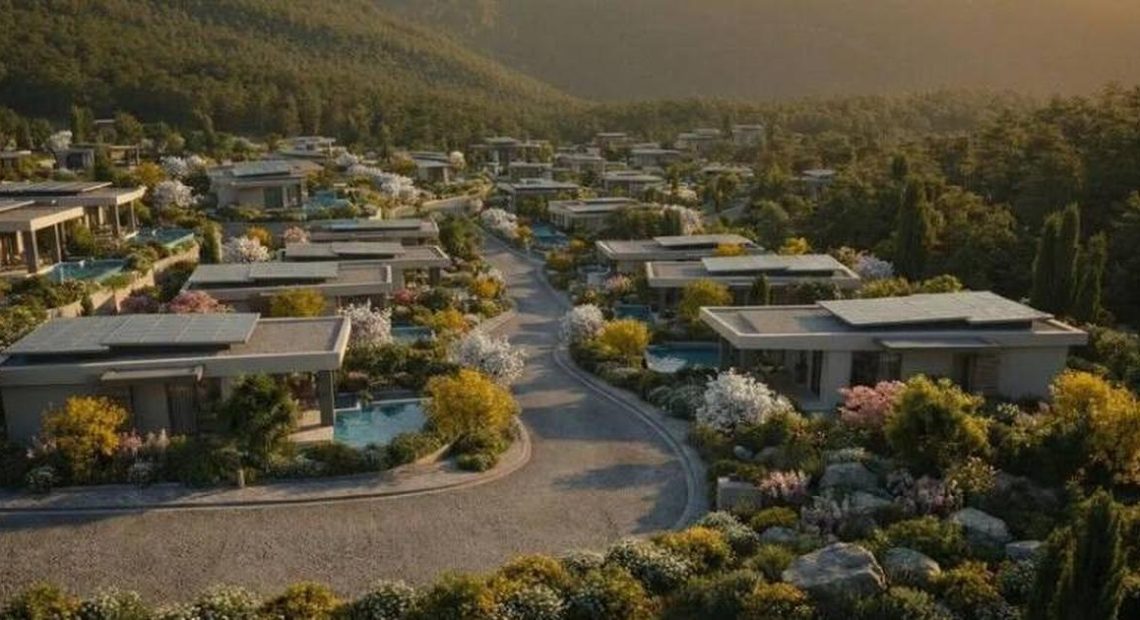
A groundbreaking self-sufficient housing project is taking shape in Turkey’s western province of Izmir, promising a new model of sustainable luxury living. Construction has begun on One Planet Habitat, which its developer describes as the world’s first fully self-sufficient, eco-friendly luxury housing model. The project will generate its own electricity, recycle water and produce pesticide-free food.
“We are not simply building new homes; we are creating a new way of life for humanity’s future. This is not ordinary housing, but the beginning of a new civilisation,” project managers said.
The model was developed after nearly six years of research involving academics, engineers, architects and nutrition scientists. A UN Environment Programme report published in May said buildings account for around 37% of global carbon dioxide emissions. The buildings are being constructed to meet Germany-based Passive House Institute’s stringent Passive House Standard, marking its first collective application in Turkey. The technology can cut electricity use for heating and cooling by up to 90% compared with conventional homes.
AI and advanced technology
AI will manage electricity, water and food supply systems at each villa. Indoor air will be purified through HEPA filters similar to those used in hospital operating theatres, while the homes are expected to be around 10 times quieter than conventional houses.
The structures are also being reinforced with carbon fibre technology used in aircraft manufacturing. The material is reportedly three times stronger than steel and designed to improve earthquake resistance.
Water recycling and pesticide-free food
Water will come from rainwater harvesting, controlled groundwater use and greywater recycling.
Food production will use aquaponics, a method recognised by the UN Food and Agriculture Organization that can use 90% less water than conventional farming. Greenhouses and farms will produce food year-round without chemical pesticides.
Each family is expected to receive around 800kg of vegetables, 500kg of fruit and 75kg of fish and shrimp annually, along with fresh eggs, dairy products and honey.
The luxury of the future
Paeyez Yesil, architect and sustainability director at Izka Construction, said future luxury would be about self-sufficiency rather than extravagant buildings. “True luxury is being able to stand on your own without depending on anyone else—securing your own uninterrupted electricity, safe water and chemical-free food,” he said.
The One Planet Habitat board said the project was inspired by efforts to establish self-sufficient settlements on the Moon and Mars, adding that humanity could build its future “here on Earth” rather than on another planet.
All income generated by the founder from the project will be donated to the One Planet Habitat Foundation for scientific research and nature conservation.