Israeli attacks continue in southern Lebanon
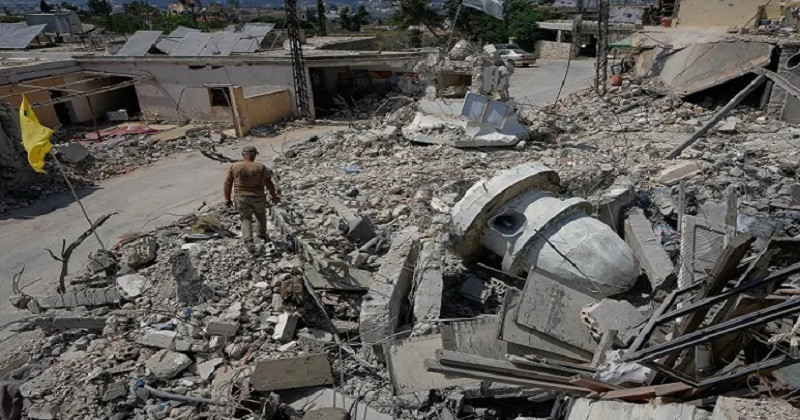
Israeli forces’ demolition operations and explosions continue in various parts of southern Lebanon. Explosion sounds are being heard day and night in Frawn and surrounding villages. This has destroyed homes and local infrastructure, while also disrupting water and electricity supply.
According to the Al Jazeera report, successive explosions by Israeli forces this week in the Qantara mountain range area of southern Lebanon have caused portions of the mountainside to collapse in at least two locations. Local residents and officials in Frawn, Ghandouriyeh, Burj Qalawiye, and Qalawiye say that, along with warplanes and drones, regular explosion sounds are being heard. These explosions are disrupting their sleep at night.
Mr. Hassan Saeed Ramadan, a 56-year-old resident of Frawn, said one explosion shook the ground like an earthquake and caused part of a nearby mountain to collapse. According to him, day-and-night explosion sounds have now become a regular occurrence for them.
Israeli forces maintain a presence across a wide area of southern Lebanon. Israel claims its military operations are targeting the positions and infrastructure of Hezbollah, the Lebanese armed group. However, local residents say military activity and destruction are disrupting their normal lives.
In March this year, Israel launched a second phase of military operations in Lebanon, having earlier conducted a first-phase ground operation in October 2024. Israeli forces subsequently maintained positions in five areas of southern Lebanon. Although US President Mr. Donald Trump announced a ceasefire in April, Israeli attacks and military operations in southern Lebanon have not fully stopped.
Meanwhile, in June, a structural agreement was reached between Israel and Lebanon through US mediation. Under it, plans were made to launch “pilot zones” in several areas of southern Lebanon. The plan involves the Lebanese army working to disarm Hezbollah in these areas, in exchange for which Israeli forces would withdraw.
In the first phase, Frawn, Sirifa, and Zawtar al-Gharbiyeh were designated as pilot zones. However, residents of Frawn and Sirifa have objected to this decision, arguing that Israeli forces had not previously established occupation in these areas. On the other hand, objections to the pilot zone plan have also emerged from the Israeli side.
Meanwhile, many residents who were displaced during the war and took shelter in Sidon and Beirut to the north have returned to their home areas after the ceasefire. But upon returning, they have faced destroyed homes and infrastructure. Water and electricity supply has still not returned to normal in various areas.
Mr. Mohammad Ali Nader, head of the Ghandouriyeh municipality, said the area was previously agriculture-dependent, producing crops including olives, wheat, chickpeas, corn, and tobacco. But after the war, a large part of the area has been destroyed, and many residents still do not have access to water and electricity.
The home of Frawn resident Mr. Hassan Ramadan was also damaged during the war. Although he had lived there for 30 years, he and his wife are now spending nights in the garage of their house. Their home has no water or electricity. During the day, he tries to repair the damaged walls.
Mr. Nasser Moqdad, an official with the Frawn municipality, said there is currently no government electricity supply in the area. However, the Lebanese government is working to restore services and has set a target of September 15 to normalize electricity supply.
Local residents say the current situation reminds them of the period of Israeli occupation of southern Lebanon from 1982 to 2000. Although many have returned to their home areas after the ceasefire, normal life has not yet returned for them due to destroyed homes, the water and electricity crisis, and ongoing explosions.