Sonam Wangchuk Warns India
Look at Sri Lanka and Bangladesh to See the Consequences of Suppressing Protests: Sonam Wangchuk
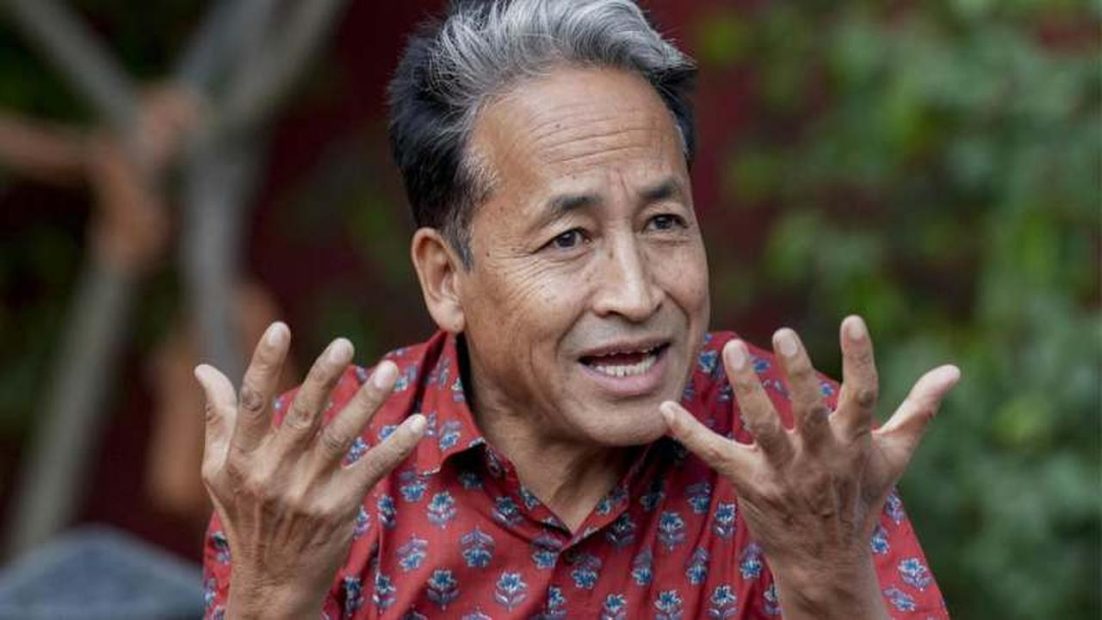
Popular Indian climate activist and educator Sonam Wangchuk said on Saturday that protests are an excellent way to improve the quality of government work and help authorities perform better. He cited recent mass unrest in Sri Lanka and Bangladesh as examples of what can happen when protests are banned or people are prevented from demonstrating.
Speaking at the ‘IPF Festival’ in Mumbai, Wangchuk said many countries readily allow protests, even directly in front of their national parliament buildings. He said the areas in front of parliament buildings often become the main centres of protests in many countries. Citing the United Kingdom, Norway and Sweden, he noted that peaceful demonstrations are allowed directly outside their parliament buildings.
Criticising India’s restrictions on protest venues, he said, “In India, the place for protests has been moved far away from Parliament. Even when protests were allowed only at Jantar Mantar, it was still far away from Parliament.”
He further stressed, “If the government looks at it positively, then protest or agitation is an excellent response and feedback mechanism to improve their performance.” His remarks came at a significant time, as the central government imposed strict restrictions across the capital following a protest called by the ‘Cockroach Janata Party’ at Jantar Mantar, demanding the resignation of India’s Chief Election Commissioner Gyanesh Kumar. Opposition parties have also strongly criticised the government’s decision to prevent demonstrations.
Referring to the situations in Sri Lanka and Bangladesh, Mr. Wangchuk warned, “Look at Sri Lanka and Bangladesh to see the consequences of not allowing protests or denying people freedom of speech.” He argued that people should not need prior government permission to hold protests or demonstrations. He added that government oversight should be limited to managing situations that affect the normal functioning of the city, such as major festivals, rather than restricting the right to protest.