Netanyahu’s Rival: Can Gadi Eisenkot Offer Israel a New Political Direction?
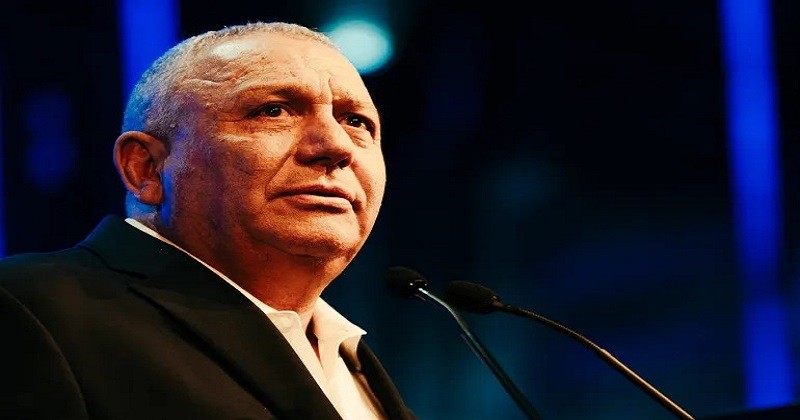
No political bloc won a single majority in the Knesset (parliament) in Israel’s election. So President Mr. Isaac Herzog has asked Mr. Gadi Eisenkot, head of the Yashar (Straight) party, to form a new government.
Mr. Eisenkot is a former Chief of Staff of the Israeli army. He will get 28 days to form a government, and this can be extended by 14 more days if needed. If he fails, the President will give another leader the chance, most likely current Prime Minister Mr. Benjamin Netanyahu. If that also fails, the country will call a new election.
In the current political situation, it may be hard for Mr. Eisenkot to build a majority government as Mr. Netanyahu did. He may need the support of at least one Ultra Orthodox party, which has long been Mr. Netanyahu’s ally. It is also very important for him to win over the hard right members of his own opposition bloc, so that Arab parties outside the government will back him. Analysts doubt how far he will succeed, because he is not used to political tricks and clever moves like Mr. Netanyahu.
A political beginner
Mr. Eisenkot came forward as leader of his unsettled opposition bloc only a few days before the election on 27 October. Even just before the vote, messages inside the bloc were confusing and poorly coordinated.
So far, the Ultra Orthodox party United Torah Judaism has left the path of its traditional partner Shas and has held back from backing Mr. Netanyahu. But it may ask Mr. Eisenkot to keep the law that excuses young Ultra Orthodox men from military service, in return for its support.
On the other side, parties of Palestinians who hold Israeli citizenship may set conditions for their support. One condition could be to stop the wave of violent crime in Palestinian areas inside Israel. They may also demand an end to violence by extremist settlers in the occupied West Bank. Mr. Netanyahu’s right wing ministers Mr. Itamar Ben Gvir and Mr. Bezalel Smotrich have urged on that violence.
However, Ms. Aida Touma Sliman, leader of the left wing Hadash party and a member of the Joint List, said Mr. Eisenkot does not want to depend on the Arab parties. She said: “He seems more keen to make a deal with the Ultra Orthodox religious parties on the military draft law than to take the risk of accepting Arab support.”
A fading image abroad
Whoever forms the new government will face one big challenge. That is to rebuild Israel’s image in the United States. The destructive war in Gaza and the Iran America war have pushed Israel’s popularity among Americans to an all time low. Critics say Mr. Netanyahu pushed US President Mr. Donald Trump into the war against Iran.
Just before the midterm elections in America, Mr. Trump announced an end to the 3.8 billion dollars of yearly military aid to Israel. Even so, Mr. Trump’s Republican Party suffered a historic defeat in the election. Many senior leaders, including Vice President Mr. JD Vance, blamed the Iran war for it.
Mr. Aaron David Miller, a senior fellow at the Carnegie Endowment, admits that Israel’s image in the United States has suffered badly. He said: “The world’s view of Israel has now hardened. Since 2023, the world has looked at it from two different angles. One is the events of 7 October. The other is the destruction Israel caused in response. In the eyes of many, Israel is no longer the victim but the oppressor.”
The “Anti Bibi” personality
For now, most Israelis back Mr. Eisenkot because his personality is the exact opposite of Mr. Netanyahu’s.
Mr. Netanyahu comes from a world of privilege, but Mr. Eisenkot has very ordinary roots. His parents came from Morocco, and he was born in Tiberias. He grew up in the city of Eilat. He joined the army at 18 and finally became army chief. Later he entered politics and served in Mr. Netanyahu’s emergency national unity government.
Mr. Eisenkot wears plain clothes and acts with restraint, in contrast to the luxury of the Netanyahu family. This makes him seem close to ordinary people. In December 2023, his 25 year old son Gal Meir Eisenkot was killed in Jabalia, Gaza, while fighting. The next day, his nephew Maor also died. In November 2024, another nephew, Yogev Pazi, was killed in Gaza as well. These personal losses have made the public feel more sympathy for him.
Mr. Yossi Mekelberg, a senior fellow at Chatham House, said: “He is a true military officer and a very steady man. He wants to send the message that Israel needs most right now, which is a sense of normal life and the rule of law.”
A general and his disputed past
Even though Mr. Eisenkot the man is different, little change is likely for the Palestinians. Mr. Eisenkot himself is the architect of the “Dahiya Doctrine”. It calls for destroying civilian infrastructure and using force out of proportion, in response to military resistance.
He showed no wish to sit with hard liners like Mr. Ben Gvir or Mr. Smotrich while in the emergency government. But as army chief, he led harsh military operations in Palestine and in neighbouring countries. More than 650 Palestinians were killed during his term from 2015 to 2018. In 2018 alone, 189 Palestinians were killed and thousands were hurt during the Great March of Return protests in Gaza. A United Nations inquiry later said forces under his command may have been involved in war crimes and crimes against humanity.
In the 2006 Lebanon war, where he developed the “Dahiya Doctrine”, Israeli attacks killed 1,109 people. Of them, 860 were ordinary civilians. So the question remains whether he will bring any big policy change.