

New Border Agreement, India Angered: Pakistan and China Ignore Delhi’s Objections
India has expressed concern and objection over a new border cooperation agreement between Pakistan and China in a Himalayan region. India has long claimed sovereignty over the area. Delhi’s position is that no border between Pakistan and China is recognised in that area.
Last week, Pakistan and China agreed to establish a joint commission to strengthen border management in a remote part of the mountainous region. Pakistan described the agreement as an “important milestone” in border management, trade and connectivity cooperation between the two countries.
India, however, has directly rejected the agreement. Indian Foreign Ministry spokesperson Randhir Jaiswal said there is no border between Pakistan and China. Delhi has also claimed that the so-called joint commission has no legal basis.
Dispute Over the Shaksgam Valley
One of the important areas covered by the new agreement is the Shaksgam Valley. Covering around 5,180 square kilometres, the area was handed over by Pakistan to China in 1963. India has never recognised that agreement. Delhi claims that the Shaksgam Valley is part of the former princely state of Jammu and Kashmir and that Pakistan handed it over to China after occupying it.
India’s Foreign Ministry has said that Indian territory is being held “illegally and by force” and that Pakistan has no right to take any action concerning the territory.
Pakistan, on the other hand, maintains that Jammu and Kashmir remains a disputed region. Therefore, Islamabad believes India has no basis to question the validity of the 1963 China-Pakistan border agreement.
According to Jabin T. Jacob, a professor at the Department of International Relations and Governance Studies at Shiv Nadar University in Delhi, the recent initiative is another manifestation of the long-standing disputes between India and Pakistan and between India and China. However, he questioned why the joint border commission was being implemented after so many years, despite the 1963 agreement containing a provision for such a commission.
Mr. Jacob believes the move may be driven by China’s broader efforts to settle its borders, as well as Pakistan’s interest in institutionalising connectivity and movement in the area at a time when there are conflicts and instability along its other borders.
Announcement Comes at a Sensitive Time for India-China Relations
The announcement of Pakistan-China border cooperation comes at a time when India and China are trying to stabilise the situation along the Himalayan border after several years of military tensions.
Military tensions have persisted for years along the disputed Line of Actual Control (LAC) between India and China. At least 20 Indian soldiers were killed in a clash between the two countries’ troops in Ladakh in 2020. Since then, the two countries have held discussions at multiple levels to manage the border situation.
Against this backdrop, analysts believe China-Pakistan border cooperation in an area adjacent to territory claimed by India is particularly sensitive for Delhi.
Jabin T. Jacob said India has reasons to be concerned about the development. According to him, a provision of the 1963 China-Pakistan agreement is also important in this regard. Article 6 of the agreement provided for renegotiating the agreement with the party controlling the relevant territory after the Kashmir dispute was resolved.
Infrastructure and Strategic Interests
Pakistan and China already have extensive infrastructure and connectivity links in the region. These include the China-Pakistan Economic Corridor (CPEC) and the Karakoram Highway.
Husain Haqqani, a former Pakistani ambassador to the United States and a senior fellow at the Anwar Gargash Diplomatic Academy and the Hudson Institute, considers the new joint border commission both a practical and political initiative.
According to him, the commission could be important for strengthening border cooperation, preventing illegal infiltration and protecting strategic infrastructure linked to CPEC. At the same time, it also carries a political message from China to India.
Mr. Haqqani said China has never accepted India’s position on the Kashmir issue. He also noted that Beijing views Gilgit-Baltistan from Pakistan’s perspective.
According to him, following recent political changes in Indian-administered Kashmir, Pakistan has also become more interested than before in institutionalising the 1963 agreement with China.
China’s Strategic Message?
According to analysts, Beijing has both strategic and geopolitical interests in deepening border cooperation with Pakistan.
Husain Haqqani said it is important for China to reassure Pakistan on the Kashmir issue. In his view, this deepens China’s relationship with Pakistan while also reminding India of the strategic realities of its relations with both China and Pakistan, its two neighbours.
Mr. Haqqani also considers the timing of implementing the agreement significant. According to him, China usually plans major decisions well in advance. Therefore, the decision to implement the joint border commission may also have been taken earlier. However, its announcement came at a time when China is strengthening its position in regional and multilateral diplomacy.
Professor Jabin T. Jacob, meanwhile, believes China’s relatively greater influence in the international information space is creating another challenge for India. According to him, the extensive presence of Chinese media and social media gives Beijing greater opportunities to present its narratives and maps in the international arena.
How Much Immediate Military Impact?
However, Jabin T. Jacob has cautioned against viewing the agreement directly as a military move. In his view, it is unlikely to have any immediate or visible impact along the LAC at this point.
In other words, the significance of last week’s announcement may not lie in immediately changing the situation along the border. Rather, the major concern for Delhi is that Pakistan and China are gradually attempting to institutionalise arrangements that India has long refused to recognise.
India’s Foreign Ministry, however, has described its position on the matter as “clear and consistent.” Delhi has said any attempt to legitimise Indian territory under Pakistan’s control is unacceptable and will have no impact on India’s sovereignty.
According to Husain Haqqani, the issue is not limited to the legal question of the border; it is also connected to broader geopolitical realities. In his words, the core of the border dispute between India and China is largely geopolitical. Therefore, there are also limitations to what can be achieved through discussions on the border and in practical border management.
Pakistan and China’s border cooperation is therefore gaining importance more as an initiative to further institutionalise the two countries’ long-term strategic partnership than as an immediate military change.
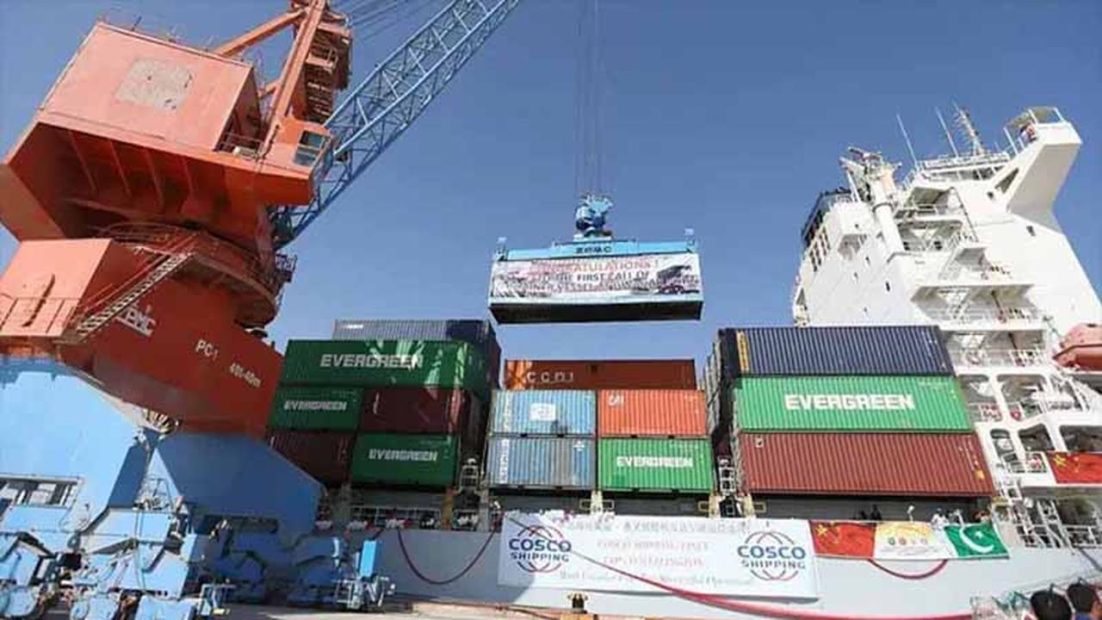
Gwadar Port in Karachi, Pakistan, which has been developed as an important corridor of China-Pakistan economic cooperation.
Source: BBC Bangla