Police Will Carry Out Crossfire Killings if Govt Approves: IGP
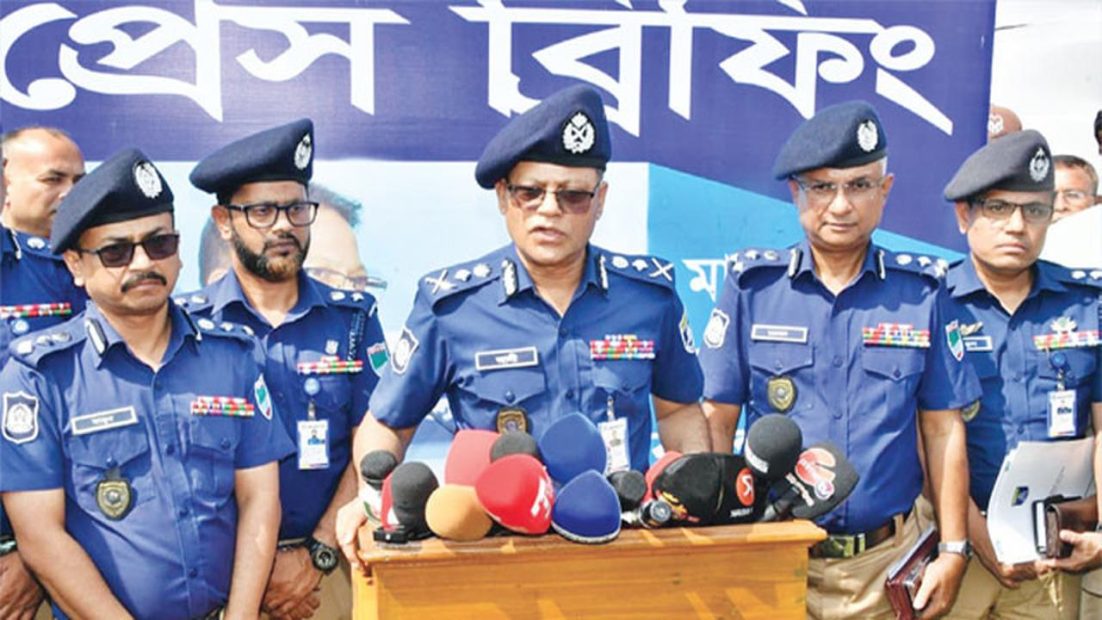
Many ruling party leaders, from the central level to district and upazila levels, have allegedly become increasingly reckless. Extortion, violence and illegal occupation are reportedly widespread. The law and order situation has deteriorated to such an extent that foreign investors are becoming reluctant to invest in Bangladesh.
According to police figures, 2,911 murder cases were filed across the country in the past nine months, averaging around 11 cases a day. The situation has reportedly become so serious that police officers in the Khulna area were instructed not to move around alone at night.
On October 25, Inspector General of Police (IGP) Md Ali Hossain Fakir said, “A cleansing drive has begun within the police force; 27 police personnel have been sent to jail over allegations of involvement in drug-related activities in the past two months.”
Twenty-four hours later, the IGP made another statement, saying, “Who will come, when they will come, what will happen—that is not the concern of our law enforcement agencies. Our responsibility is to apply the law and Constitution wherever and whenever necessary. If a crossfire is needed and the government allows it, we (the police) will do that.”
Government officials have acknowledged concerns about the country’s law and order situation. Statements by ministers, state ministers and advisers to the prime minister have reflected these concerns. The deteriorating security situation is also hindering efforts to revive the struggling economy. Alongside gas and electricity shortages, business leaders have repeatedly called for improvements in law and order, but the expected results have yet to materialise.
Prime Minister Tarique Rahman has been visiting different countries and urging foreign investors to invest more in Bangladesh, promising them all necessary support. During his recent visit to Japan, he delivered the same message to the country’s business community.
However, despite political stability returning to the country, the law and order situation remains a concern. Speculation about the possible return in December of former prime minister Sheikh Hasina, who has been sentenced to death and is living in India, has added to the uncertainty. The article alleges that some Awami League activists are planning to create disorder in December, hoping Hasina will return with the support of Indian Prime Minister Narendra Modi. It claims that these activists have occasionally staged processions and set vehicles on fire to create tension.
Meanwhile, incidents of snatching, extortion, illegal occupation and other crimes in Dhaka and across the country have added to concerns over public security. Against this backdrop, Prime Minister’s Information Adviser Dr Jahed Ur Rahman said at a press conference in September that joint forces could be deployed to maintain law and order if required by the state and the public.
However, Home Minister Salahuddin Ahmed recently said there were no plans for a special operation similar to the previous government’s Operation Clean Heart. Speaking at the inauguration of the Criminal Investigation Department’s (CID) Cyber Police Centre and Digital Forensic Laboratory at Dampara Police Lines in Chittagong, he said the government did not currently consider the law and order situation a challenge. He acknowledged that police sometimes came under attack while trying to arrest criminals but said law enforcement agencies were making their utmost efforts to bring offenders to justice.
Meanwhile, National Citizen Party (NCP) Convener Nahid Islam announced a mass protest at Shahbagh demanding the resignation of Home Minister Salahuddin Ahmed. Speaking at a press conference in Munshiganj on Monday, Nahid expressed concern about the country’s overall security situation.
“There is no security for people anywhere in the country. The home minister is responsible for maintaining law and order. Instead, he is now busy with the Constitution Amendment Committee. Therefore, we believe he can no longer remain in charge of the Home Ministry. He must resign,” Mr. Nahid said.
At the inauguration of Community Islamic, the Islamic banking service of Community Bank Bangladesh PLC, in Old Dhaka’s Chawkbazar on Monday, IGP Md Ali Hossain Fakir defended the police force’s position. “When the police use force, one side calls them fascists; when they remain inactive, they call them weak. The police must be given a suitable environment to perform their duties and be enabled to carry them out. If a crossfire is needed and the government allows it, we will do that,” he said.
The IGP said maintaining peace and order in society required compliance with the law and Constitution. He added that action must be taken against police personnel who commit crimes, just as action is taken against other offenders. He also called on the public to cooperate with the police and urged people to verify facts rather than be misled by rumours and false information.
“Collective cooperation is necessary to maintain normal law and order and ensure the country’s economic progress,” he said. The IGP further stated, “Who will come, when will Apa come—that is not the concern of our law enforcement agencies. Our responsibility is to apply the law and Constitution wherever and whenever necessary. Do not try to blackmail the police, and do not let yourselves be blackmailed either. From the cradle to the grave, the police are needed. Recognise this and allow me to perform my duties in accordance with the law and Constitution.”
Claiming that the police had not violated human rights or used any “unwanted force”, Ali Hossain Fakir said the force had faced serious difficulties following the July uprising. “You have seen the condition of the police in Bangladesh after the July uprising. Police officers were afraid to perform their duties on the streets and did not dare to go anywhere. We have been working day and night to improve that situation,” he said.
Transparency International Bangladesh (TIB) has strongly condemned the IGP’s statement that police would conduct crossfire operations if the government permitted them. According to TIB, the statement sends a dangerous message by presenting extrajudicial killings as an acceptable tool for controlling crime instead of addressing failures in maintaining law and order and institutional weaknesses. The organisation said the remarks showed extreme disregard for the Constitution and the rule of law.