Rooppur First Unit Gets BAERA Approval
Power Supply From Rooppur to National Grid Expected in December
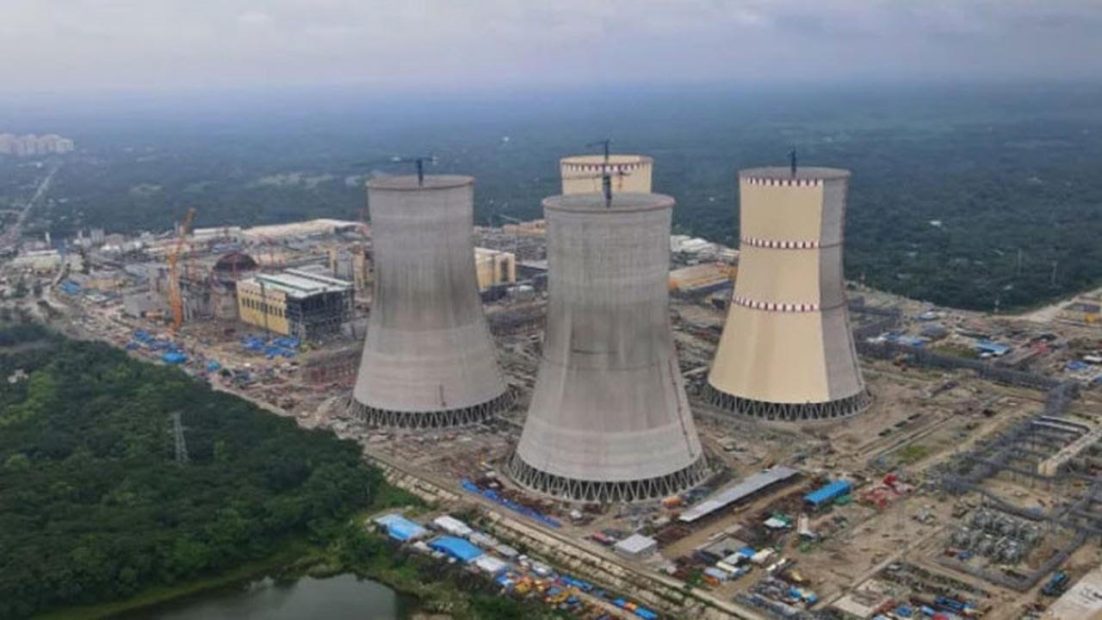
The first unit of the Rooppur Nuclear Power Plant has reached a long-awaited and important milestone on its way to generating electricity. On Thursday, the Bangladesh Atomic Energy Regulatory Authority (BAERA) formally approved the unit’s entry into the “B-2” stage. With this approval, preparations are set to begin for the first self-sustaining nuclear chain reaction, or first criticality. This is expected to mark a new chapter in the country’s energy security and power generation history.
Project officials said all activities under the “B-1” stage of the plant, built with technical assistance from the International Atomic Energy Agency (IAEA) and Russia, have been successfully completed. The final technical complications involving the testing of the automatic pressure relief valves have also been resolved. On September 30, 12 tests were completed during the first stage while maintaining an operating pressure of 16.1 megapascals and a temperature of 280 degrees Celsius. Although some technical complications emerged during tests at a pressure of 18.65 megapascals in the subsequent stage, all tests were successfully completed after nine valves were repaired with the assistance of Russian experts. The tests were conducted from both the main control room and the emergency control room.
Dr Md Kabir Hossain, project director of the Rooppur Nuclear Power Plant, said the necessary documents for moving to the next stage had been submitted to the regulatory authority. All previous activities have been completed and BAERA approval has been received, making it possible to enter the “B-2” stage.
Following BAERA’s approval, the first controlled self-sustaining nuclear chain reaction will be initiated in the reactor. In nuclear power terminology, this is known as “first criticality.” At this stage, various safety systems, control equipment and important technical parameters of the reactor will be closely monitored. Officials will observe when the valves open and close, how quickly they respond, how warning signals function, and how the safety systems respond at the specified pressure and temperature.
According to nuclear experts, during the physical start-up stage, the reactor will be operated at an energy level of less than one percent of its full thermal capacity before being brought to initial criticality. The reactor’s various systems will then be tested by gradually increasing its power. The entire physical start-up process, including first criticality, may take around 30 to 40 days. If the test results are satisfactory, the reactor’s power will be increased gradually.
The power start-up stage will follow. During this stage, the reactor’s power will be increased while turbine synchronisation and connection of the generator to the national grid will also be carried out. For this, the operating organisation will have to obtain the necessary trial operational licence from BAERA. Once generation is gradually increased to 300 megawatts, electricity will begin to be supplied commercially to the national transmission network. Project officials hope that, once all preparations and approvals are completed, the first unit will be able to supply electricity on a trial basis to the national grid by the end of December.
Construction of the eight designated transmission lines for supplying electricity from Rooppur to different parts of the country has also been completed. As a result, the infrastructure is ready to transmit electricity to the national transmission system once the first unit begins generation. According to the plan, generation will initially begin at limited capacity and then increase gradually.
Energy experts and economists believe that commissioning the first unit of Rooppur could bring positive changes to the country’s energy security. According to their estimates, the first unit could potentially save around $1 billion annually. As the long-term cost of nuclear fuel is comparatively low, pressure on import-dependent fuels such as coal and furnace oil is also expected to decrease.
Once the two 1,200-megawatt units of Rooppur, with a combined capacity of 2,400 megawatts, are fully operational, they are also expected to have an impact on the country’s industries and economy, according to officials. A senior official of the Bangladesh Economic Zones Authority (BEZA) said ensuring uninterrupted power supply would reduce uncertainties surrounding investment caused by gas and electricity shortages. In particular, opportunities for establishing new industries in the Ishwardi EPZ and surrounding economic zones would increase, creating potential for employment generation.
Environmentalists and climate researchers also see positive prospects for nuclear power from an environmental perspective. According to them, greenhouse gas emissions from nuclear power plants are much lower than those from coal-fired power generation. They estimate that once Rooppur’s two units operate at full capacity, there is potential to reduce carbon dioxide emissions by around 20 million tonnes annually.
The Rooppur project’s tenure has also been extended twice, now until June 2028. The total project cost is currently estimated at Tk 138,686 crore. Project officials said every stage of the safety, testing and regulatory approval process at the power plant, which is being built with technical assistance from Russia, is being carried out in accordance with international standards.
Following BAERA’s approval, the first unit of Rooppur will now move step by step towards power generation, beginning with first criticality. Those involved in the project expect it to create new opportunities for ensuring uninterrupted power supply, reducing pressure on fuel imports, expanding industrialisation and investment, and cutting carbon emissions. In the words of the senior BEZA official, reliable power supply would increase investors’ confidence in establishing industrial facilities, which could become an important positive change for the country’s economic growth and employment.