
One-Hour Eid Prayer Denied, Yet Kolkata’s Red Road Closed for Four Days for Puja
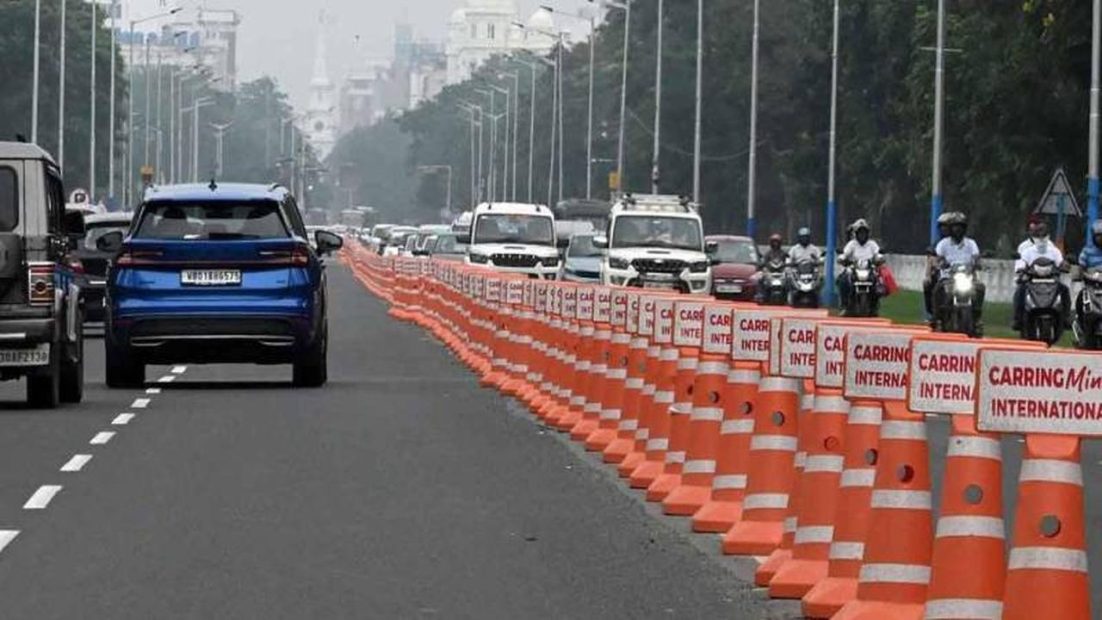
Since the Hindu nationalist BJP government came to power in West Bengal, the alleged curtailment of the religious and civil rights of the Muslim minority has intensified. Although Eid prayers on Kolkata’s historic Red Road, a tradition spanning more than a century, have been barred on the grounds of security and traffic congestion, the decision to close the major thoroughfare for days for events such as Durga Puja and International Yoga Day has sparked intense controversy and public anger.
According to reports in Indian media, the Lalbazar police and local administration have announced that Red Road will remain completely closed for four consecutive days, from Tuesday until the early hours of October 11. The closure is intended to facilitate major events organised around Mahalaya, including decorations, a performance featuring 3,000 dhakis (traditional drummers), and the construction of other event infrastructure.
On Tuesday, Kolkata Police Commissioner Ajay Nanda issued an order stating that vehicular movement on Red Road would be stopped or restricted from 10 pm on October 6. The order would remain in effect for 24 hours. The road would again be closed from midnight on October 9 until late on October 10 or the early hours of October 11.
The notice clarified that, to maintain normal traffic flow across the city during the festive season, traffic police on duty could divert vehicles through other connecting roads as necessary, in addition to restricting traffic in areas adjacent to Red Road.
Earlier, the state government led by Shuvendu Adhikari had arranged for Red Road to remain closed for seven consecutive days for International Yoga Day. Prime Minister Narendra Modi travelled to Kolkata to attend the main event marking the 12th International Yoga Day. He appeared on a massive stage set up on Red Road and demonstrated yoga exercises and postures before thousands of people. At the time, Chief Minister Shuvendu Adhikari and the then governor were also present on the stage with him.
Despite the repeated closure of this busy road, which connects important locations such as Raj Bhavan, the Calcutta High Court and the state legislative assembly, to showcase the power of those in authority, the Hindu nationalist administration allegedly paid little attention to the severe inconvenience caused to ordinary people.
No Permission for One Hour of Prayer, but Four-Day Closure for Puja
For 107 years, since 1919, a traditional one-hour Eid congregation has been held annually on Eid day on Kolkata’s Red Road. However, this year, Muslims were reportedly denied permission to offer prayers there for the first time, citing security concerns and traffic congestion. Instead, they were directed to the Maidan.
The contrast between the denial of permission for a one-hour Eid congregation for the minority community and the closure of a major road for days for Puja preparations and yoga events has sparked widespread anger among local residents, rights activists and political analysts in West Bengal. Ordinary citizens and opposition leaders are asking: if permission was denied for a century-old religious event lasting just one hour for Muslims, what kind of secularism allows roads to be blocked for days to advance political and religious agendas?
According to rights activists, this is not merely a matter of routine traffic management. They describe it as a deliberate attempt to deprive a minority community of its religious rights and openly establish preferential treatment for a particular group across the state.










