Staff Shortages Cripple Healthcare At the Ashtagram Upazila Health Complex
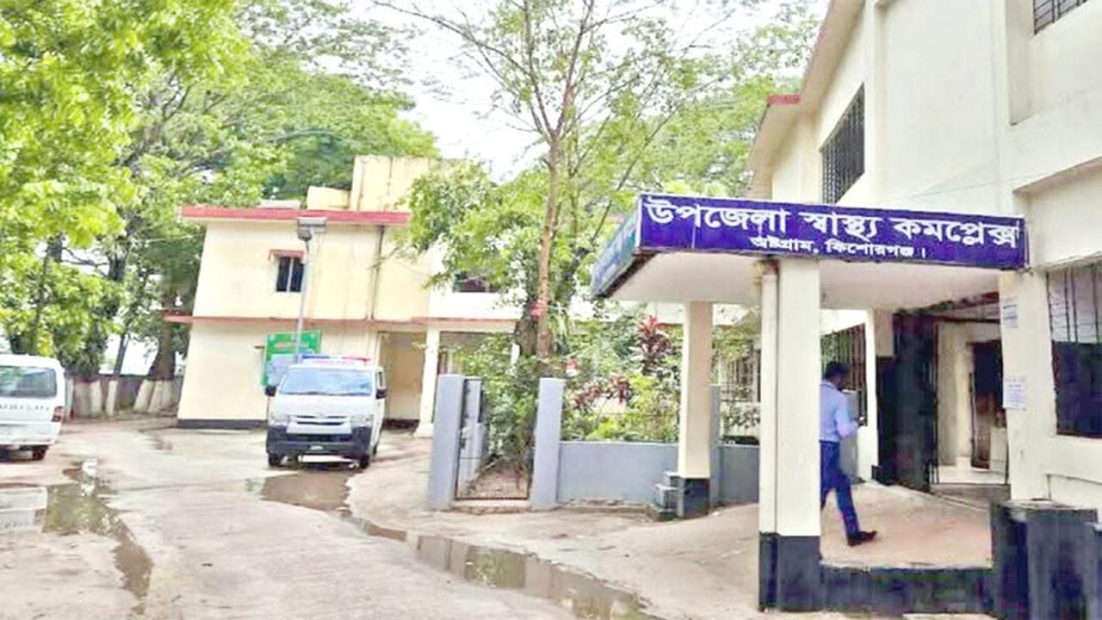
Healthcare services at Ashtagram Upazila Health Complex in Kishoreganj’s haor region are being disrupted by a severe shortage of doctors and support staff. Of the 33 approved doctor posts at the 50-bed hospital, 22 are vacant. Meanwhile, only two employees are working against 22 approved support staff posts. Shortages of nurses and other workers are adding to the pressure on services. The absence of a specialist gynaecologist has also raised concerns about maternal healthcare.
According to hospital data, 124,037 patients received outpatient services in 2025, while 6,659 patients were admitted during the year. The bed occupancy rate remained above 100% from 2023 to 2025. The high patient load, combined with the shortage of necessary staff, has raised concerns about access to healthcare for people in the haor region.
Hospital staffing records show that only 11 doctors are working against 33 approved posts, leaving 22 vacancies. This represents a vacancy rate of around 66.7%, meaning nearly two-thirds of doctor posts are unfilled. In addition, all 11 consultant posts and the post of resident medical officer are vacant.
As a result, the limited number of doctors must provide outpatient and emergency services while also treating admitted patients. People in the remote haor region depend heavily on the local hospital because of difficult transport and communication systems. A shortage of doctors could therefore increase patients’ suffering.
The shortage of support staff is equally severe. Only two employees are working against 22 approved posts, leaving 20 vacancies, or around 90.9% of the total. Important positions, including aya, cook, gardener, ward boy, pharmacist and X-ray technician, are among those affected by the shortage.
The hospital has also reported a need for 15 workers to keep various operations running. However, 10 people are working through outsourcing, while the remaining five are assigned to other workplaces. The nursing department is also facing a staff shortage. Of the 30 approved posts, 19 are filled and 11 remain vacant. The shortages of doctors, nurses and support staff are placing additional pressure on the hospital’s regular operations.
Hospital statistics show that 5,926 patients were admitted in 2024, rising to 6,659 in 2025. By August 2026, another 5,956 patients had been admitted. The bed occupancy figures also reflect the growing pressure on the hospital. The rate stood at 105.45% in 2023, 104.14% in 2024 and 104.42% in 2025.
Ashtagram Upazila Health and Family Planning Officer Dr Shah Md Mahibullah Sourav told The Daily Inqilab, “The issue of the hospital’s staff shortage has been regularly brought to the attention of local public representatives and higher authorities. However, doctors and nurses are reluctant to stay here because the hospital does not have adequate residential facilities. Strengthening hospital security is also essential. When injured people are brought to the hospital following clashes between two groups, they sometimes engage in further clashes inside the hospital.” This raises concerns about the safety of doctors and other healthcare workers.
“To resolve the hospital’s staff shortage, adequate residential facilities must be ensured for doctors and nurses, hospital security must be strengthened, vacant posts must be filled, and an emergency patient transport system suited to the haor region must be developed. Improving communication with the district town and introducing water ambulances would make it easier to ensure healthcare for patients. I hope these initiatives will significantly reduce the shortage of doctors and other essential staff and help people in the haor region receive better healthcare.” he said.