Steps Must Be Taken to Make Dhaka a Livable City
Recently, I was assigned to accompany foreign participants from China who had come to Bangladesh for an international conference. Among them were seven or eight teachers from different Chinese universities. They were staying at Hotel Fars, near Paltan intersection in Dhaka.
On the evening of the conference’s second day, I went for a walk with the Chinese participants at their request. We walked from Paltan, along the area near the Bijoynagar water tank, to Kakrail intersection. They mainly wanted to see the actual condition of Dhaka. However, they became extremely frustrated after covering only a short distance. Long traffic jams, excessive vehicle horns, inadequate footpaths, roadside hawkers and dust made their experience unpleasant.
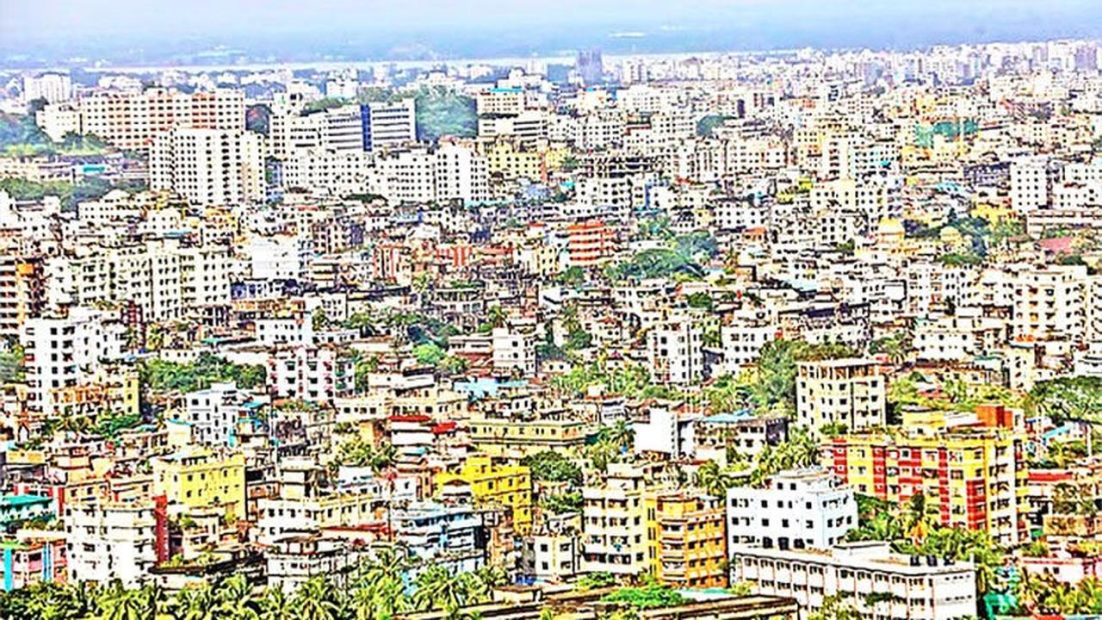
Just before returning to China, they were asked about their impressions of Bangladesh. Their answer was clear: their experience of Dhaka had been bitter. They found Dhaka particularly congested, and I agreed with them. One professor asked why the buildings in the capital differed so much in height, with some having two, three, four or five floors and others rising to 20 floors. He also wanted to know why the ground floors of many residential buildings were used for hotels, shops or other commercial activities.
I explained that most buildings in Dhaka were privately owned and that owners designed and constructed them according to their financial capacity. This was why some buildings had only two floors while others had 20.
The professor then asked whether the government had any policies or regulations on the matter. I told him that there were restrictions on the maximum height of buildings in certain areas, but I was not aware of any rules setting a minimum height. As a result, many landowners had built houses or tin-roofed structures on their plots according to their means. Consequently, buildings in Dhaka had not developed within a consistent planning framework.
I understood the reason behind the professor’s questions. In China, land is generally owned by the state, and people can obtain land-use rights for a specified period to construct buildings or engage in agriculture. Residential buildings must follow government regulations and planned development guidelines.
Residential communities in Chinese cities are carefully planned. A single community may contain 40 to 50 similar buildings, each typically 25 to 30 storeys high. This arrangement allows more people to live in a relatively small area while ensuring an orderly urban environment. As a result, despite China’s huge population, the infrastructure of its cities is generally well organised.
The professor was essentially asking whether a similar approach could help address Dhaka’s housing crisis. I explained that Bangladesh’s land policies differed from those of China and that introducing such a system at this stage would be extremely difficult.
It must be admitted that Dhaka has not become a suitable place to live despite the rapid expansion of its area and population over the past several decades. The city remains largely unplanned and poorly organised. Successive governments have introduced numerous plans and projects, divided the city corporation into separate bodies and changed administrative leadership in an effort to improve public services. However, these measures have failed to bring about the expected improvements. Instead of improving, many existing services have deteriorated and continue to decline.
Housing development in Dhaka shows little evidence of comprehensive planning. As the Chinese professors’ questions highlighted, buildings have grown without a consistent urban design. Essential services such as electricity, water and gas remain inadequate. The city lacks an effective drainage system, causing waterlogging and flooded roads after even moderate rainfall. Residents live with the fear of flooding.
Waste management is also poorly planned, allowing rubbish to accumulate across the city. Construction work continues throughout the year, covering streets and neighbourhoods with dust. Public transport services are unsatisfactory, while severe traffic congestion slows the city and reduces the productivity of its residents.
Green spaces are scarce. Although several projects have been announced to expand greenery, many have failed to materialise. Footpaths are inadequate, and much of the available space is occupied by hawkers. Noise and air pollution are also serious concerns. Dhaka frequently ranks among the world’s most polluted cities in air-quality assessments.
The list of problems continues to grow, reflecting a widespread crisis of urban management. In July last year, the Economist Intelligence Unit (EIU), the research arm of the Economist Group, published a survey of 173 cities worldwide. It assessed factors including stability, healthcare, culture and environment, education, and infrastructure. Dhaka ranked 171st on the list of the world’s most liveable cities.
In short, almost all essential urban services are inadequate, while the population has grown far beyond the city’s capacity. Experts warn that Dhaka is becoming increasingly unsafe because of rapid urbanisation, land grabbing, pollution, excessive numbers of vehicles, the occupation of rivers, water bodies and ponds, and the disappearance of green spaces. Unplanned development, climate change, earthquake risks and fire hazards have turned Dhaka into a city of growing anxiety.
The name Dhaka now brings to mind an enormous, overcrowded and poorly organised urban area. Population pressure is placing increasing strain on the city’s infrastructure and public services. According to the United Nations, Dhaka is projected to become the world’s most populous city by 2050.
The UN Department of Economic and Social Affairs, in its World Urbanization Prospects 2025 report, identified Dhaka as the world’s second-largest megacity, with a population of 36.6 million. The report presented population figures for the world’s 10 largest megacities in 2000, 2025 and 2050. In 2000, Dhaka had a population of 17.4 million and ranked ninth among the world’s largest cities. Over the following 25 years, its population increased by 19.2 million.
This represents an average annual increase of 768,000 people, or approximately 2,104 people a day. The United Nations expects this trend to continue for another 25 years or more. By 2050, Dhaka’s population is projected to reach 52.1 million, making it the world’s largest megacity.
Despite its enormous size, the quality of life in Dhaka continues to deteriorate. A large number of residents work in the informal economy, and overall productivity remains low. Therefore, the city’s expansion also reflects the spread of an inefficient economic geography. Dhaka has yet to develop into a modern metropolitan city.
Slums are visible in almost every part of the capital. Estimates of the number of slums and their populations vary. According to the Bangladesh Bureau of Statistics’ 2022 Urban Area Report, there were 4,761 slums in the areas covered by Dhaka South, Dhaka North, Gazipur and Narayanganj city corporations. The total number would exceed 5,000 if the entire Dhaka metropolitan area were considered.
Available estimates suggest that around four million people live in slums in Dhaka. Many of the larger settlements have developed on government-owned land, while around 80 per cent of slums are on privately owned land. Most slum residents live in rented accommodation.
Dhaka is already densely populated, but its slums are even more crowded. Some settlements have exceptionally high population densities, with more than 220,000 people per square kilometre. Child marriage and child malnutrition are common in these communities, while educational attainment is low and crime is a concern.
Poverty, social inequality, limited access to healthcare and weak administration remain part of everyday life for many Dhaka residents. Despite these conditions, people continue to move to the capital and seek to remain there. Education, healthcare, cultural activities, industry, business, construction, transport and even much of the informal economy are concentrated in Dhaka.
The capital is the powerhouse of Bangladesh’s economy. It contributes around 20 per cent of the country’s GDP and accounts for 44 per cent of formal employment. Around 80 per cent of the country’s export-oriented garment industry is concentrated in the Dhaka metropolitan area.
To transform Dhaka into a modern and liveable city, urgent action is needed on decentralisation, integrated traffic management, urban planning and environmental protection. Government offices, educational institutions and industries such as garment manufacturing should be encouraged to relocate to districts outside Dhaka to reduce population pressure. Planned satellite cities with modern facilities should be developed around the capital, particularly in Savar, Gazipur and Narayanganj.
The government should also consider replacing small, congested buildings with properly planned high-rise residential developments. Such projects must follow clear building regulations and provide adequate roads, utilities, drainage and open spaces.
Inter-district bus terminals should be moved outside the city, to locations such as Savar and Kanchpur, while city bus services should operate within the urban area. Metro rail and bus rapid transit (BRT) networks should be expanded, and policies should discourage unnecessary use of private cars.
Canals and rivers around Dhaka should be restored, and water-bus services should be introduced where feasible. Ring roads and short rail links should also be developed to allow vehicles to travel around the city without entering its congested centre.
The Rajdhani Unnayan Kartripakkha (RAJUK) and city corporations should jointly undertake urban renewal projects in slum areas and densely populated neighbourhoods such as Old Dhaka, where narrow roads and overcrowding create serious problems.
Hazardous chemical and plastic factories should be moved from residential areas, including Old Dhaka, to safer locations without delay. Restaurants and factories operating on the ground floors of residential buildings should be subject to strict safety regulations, including restrictions where necessary.
Encroached rivers around Dhaka and canals within the city must be recovered and restored to improve water flow. Walking paths should be built along suitable waterways, and effective waste disposal systems must be established.
The amount of concrete covering the city should be reduced by increasing the number of parks, playgrounds and open green spaces. Urban development must give priority to environmental protection and the well-being of residents.
No single agency can transform Dhaka on its own. RAJUK, the city corporations, Dhaka WASA, the Dhaka Metropolitan Police and all other relevant organisations must work together under a coordinated framework.
Political commitment, strict enforcement of laws and greater public awareness can help transform Dhaka from a dysfunctional megacity into a vibrant, green and liveable urban centre.
The author is a researcher and columnist.
Email: ajoymondal325@yahoo.com