Lacs Living Along the Teesta Eagerly Await Launch of Mega Project-3
The Teesta Will Determine the Course of Politics
The Teesta River may shape the course of politics in Bangladesh’s northern region, as millions of people living along its banks eagerly await the launch of the long-promised Teesta Mega Project. While travelling from Teesta Railway Station in Lalmonirhat towards Ratipur village, the home of renowned Bhawaiya folk singer Kachhim Uddin, two local residents stopped me and asked where I was going. When I told them I had come from Dhaka to learn about the joys and hardships of people living along the Teesta, one of them replied, “Will you really listen to our sufferings, brother? Come, let’s have some tea.”
Local schoolteacher Anwar Hossain took me to a nearby tea stall. As he sipped his tea, he pointed to a paddy field and said that Kachhim Uddin used to swim in the Teesta there and sing Bhawaiya songs at the top of his voice along the riverbank.
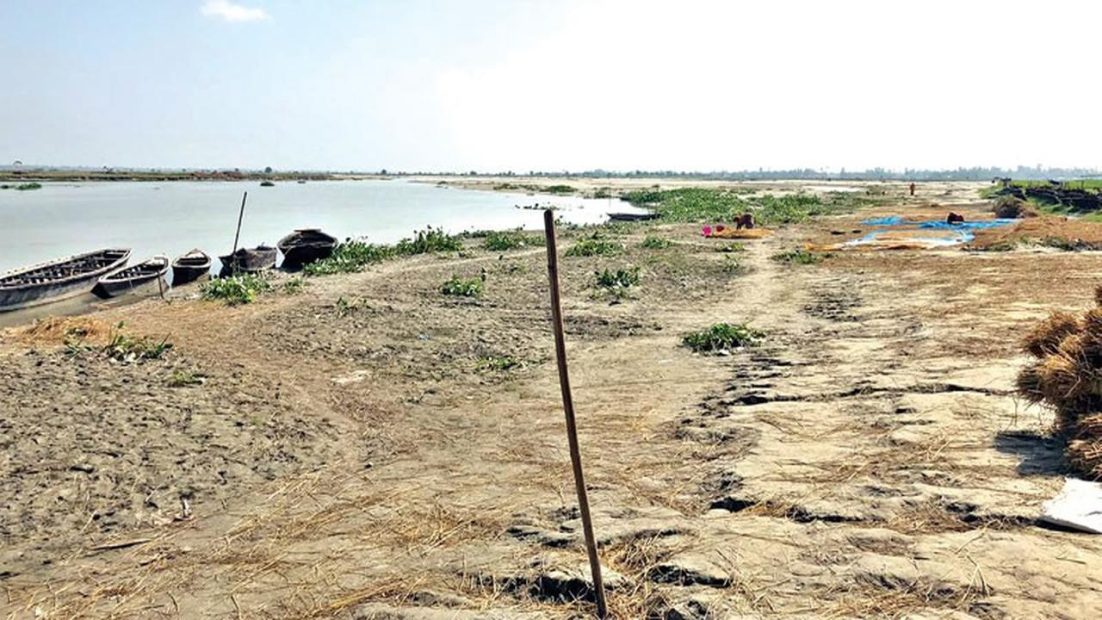
The river has now disappeared beneath farmland. Further ahead, he said, there was nothing but an endless stretch of sand. A few agricultural labourers were harvesting paddy in the distance. Pointing towards them, he recalled that a rally and human chain had been organised there last year demanding implementation of the Teesta Mega Project.
“We are people living along the river. Every year during the monsoon, the Teesta becomes like a sea. But now you can see that there is no river,” he said. He added that if Kachhim Uddin were still alive, he might have composed another song lamenting the river’s disappearance: “There was once a river called the Teesta here, but now it is gone.”
Anwar himself offered to show me the river and left his motorcycle behind before walking towards it. Under the intense Kartik sun, the sand was scorching, making it difficult to walk. It took around 25 to 30 minutes to reach the riverbank on foot. There, he called over some agricultural labourers and started talking with them.
Jasim Uddin, a farmworker, described the Teesta’s condition as “a blow upon a blow” for local people. “We can neither leave this river behind nor live here in peace. We used to catch fish and sell them. My father and grandfathers were fishermen. They caught fish in the Teesta, and that was how our families survived. Now there is no water in the river. Some members of my family have moved to Rangpur city to drive battery-run rickshaws, while I have stayed in the village with my family. I get occasional work; otherwise, I spend my days sitting idle,” he said.
He pointed to a nearby field of hybrid chillies, where the crop had grown well but fetched a poor price. His words reminded me of an earlier conversation with Mohammad Khalil of Harishwar village in Kaunia. Khalil, who had studied up to the Alim level at a madrasa, lived near the river and once expressed his frustration over its decline.
“Sir, the lives of two crore people in Rangpur, Nilphamari, Kurigram, Lalmonirhat and Gaibandha have developed around this Teesta River. This river was supposed to be a source of livelihood for the people of this region. It was supposed to change their fortunes. Once, it was the means of survival for thousands of people. But now the Teesta has become a curse for them,” he said.
Several people from different riverside villages gathered while I was talking to Khalil beneath the Kaunia Railway Bridge. All of them were suffering from the river’s drying up. They said the Teesta had long been used as an issue in electoral politics. The political debate intensified ahead of the February 12 election. Before the polls, candidates visited the riverbanks and promised dredging, embankments and various development projects. But once the election was over, MPs and ministers were rarely seen again.
Although the Teesta has failed to improve people’s fortunes, it has forced thousands of families to lose their homes. Many who once owned fish-filled ponds, cattle-filled sheds and granaries full of paddy have become daily wage earners. Some live beside roads, while others have moved to Chittagong, Feni and Dhaka to work as labourers and build lives in slums.
The BNP and Jamaat-e-Islami had promised before the election to begin the Teesta project with Chinese funding. However, the BNP has yet to initiate the project, while Jamaat has not raised the issue of the Teesta Mega Project in Parliament. Even during the 11-party alliance’s long march from Dhaka to Rangpur, led by Jamaat, only one or two speakers mentioned the Teesta. Implementation of the mega project did not feature among the alliance’s key demands.
During three days of travelling along the Teesta, I spoke with people living on the river islands and visited rural markets within a few kilometres of the river to understand their views. They said various organisations had been campaigning for the protection of the Teesta for years.
The movement began in 2017 in Hatibandha, Lalmonirhat, under the banner of the Teesta Left Bank Protection Public Committee. Local residents said they had taken part in the campaign. Later, the movement spread across five northern districts—Lalmonirhat, Nilphamari, Rangpur, Kurigram and Gaibandha—through the Teesta Save, Save Rivers Action Council, led by Professor Nazrul Islam Haqqani.
The campaign gained fresh momentum during the interim government under the banner of the Teesta River Protection Movement, led by BNP Organising Secretary Asadul Habib Dulu. Two crore people from different professions and walks of life took to the streets demanding implementation of the Teesta Mega Project with Chinese funding. On February 17 and 18, 2025, millions of people gathered at 11 points along the river across five districts for two days, calling for the project to be implemented. The movement received extensive coverage in national and international media.
The campaign drew the government’s attention. At the time, BNP Acting Chairman Tarique Rahman pledged that implementing the Teesta Mega Project would be the first task of a BNP government if it came to power. While returning to Rangpur city from the Teesta area in Lalmonirhat via Kaunia, I spoke with several people at a tea stall in a market near the Kaunia Upazila Parishad. After learning that I was a journalist, they spoke enthusiastically about the issue.
They said the national media should continue reporting on the Teesta Mega Project to put pressure on the government. They also urged journalists to help ease the suffering of riverside communities on humanitarian grounds. They recalled that a few days after Tarique Rahman’s speech at the Teesta rally, a delegation of advisers from the government led by Dr Muhammad Yunus visited the northern region and announced that work on the mega project would begin by January 2026.
However, people living along the Teesta requested the advisers, led by Syeda Rizwana Hasan, to start the work in November 2025 instead. They argued that everyone would be occupied with the 13th parliamentary election in January.
When November 2025 arrived, a fresh movement began demanding the launch of the project. Over the following months, people in the northern region organised a series of programmes under different organisations. On October 16 this year, torches were lit along 105 kilometres of both banks of the Teesta.
Shafiur Rahman, general secretary of the Teesta Save, Save Rivers Movement, said the construction of the Padma Barrage would cause the river to die and impose a heavy burden on nearby communities. “The government is more interested in that project. But millions of people would benefit if the Teesta Mega Project were implemented. The 22 small rivers connected to the Teesta could also be used as canals,” he said.
Several organisations working on river and river-island issues said implementation of the Teesta Mega Project could turn several lakh hectares of sandy riverbeds across the five northern districts into agricultural land. This could trigger an agricultural revolution in the region and contribute significantly to the national economy.
The project would also help hundreds of thousands of families regain their homesteads and create employment opportunities for thousands of unemployed people in the region. According to these organisations, no other development project in the region would achieve its full potential without implementation of the Teesta Mega Project.