Tk 900 Crore Sand Research Project Shrouded in Uncertainty
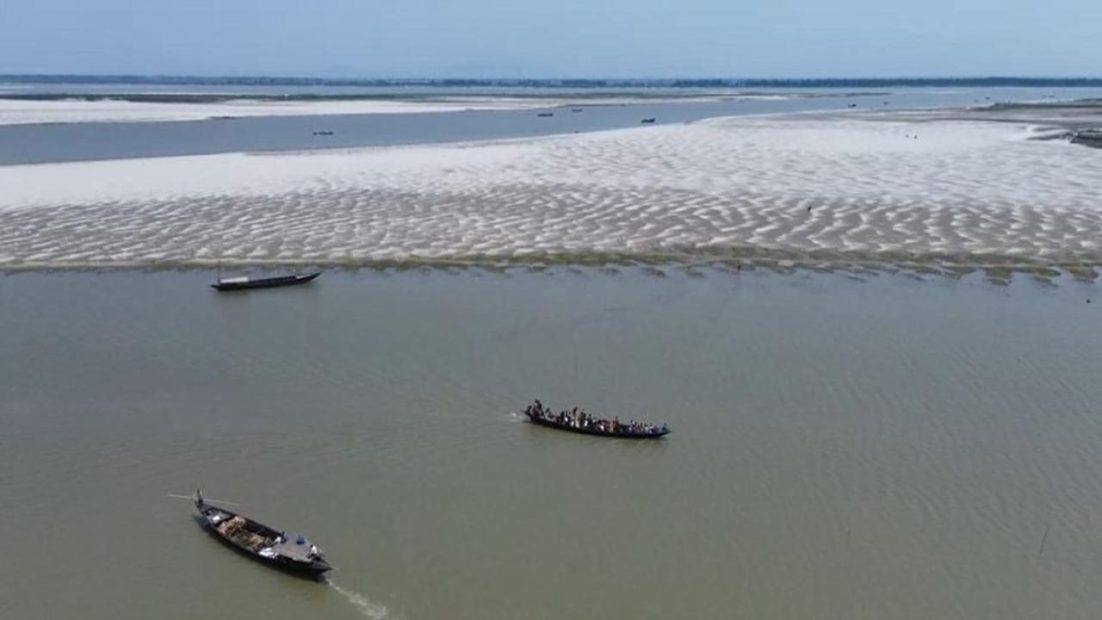
A plan has been proposed to establish a sand research and processing centre in Chilmari, Kurigram, to separate and process valuable minerals from sand in the Brahmaputra River. The proposal includes setting up a pilot research plant on 15 acres of land, with an estimated cost of around Tk 900 Crore. However, confusion has emerged over the project’s progress following reports that the district administration had expressed doubts about its economic benefits, a claim denied by the current deputy commissioner.
According to sources at the Geological Survey of Bangladesh (GSB), the plan aims to research and process valuable minerals found in sand across the Brahmaputra-Jamuna river system. As part of the initiative, a pilot plant has been proposed on 15 acres of land in Chilmari, along with a research centre on 10 acres in the Tograihaat area of Rajarhat upazila in Kurigram.
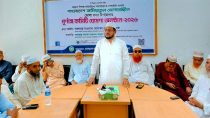
A consultation meeting on the proposed centre was held on June 11 at the Mokhlesur Rahman Auditorium of the GSB. The meeting outlined a 50-year master plan covering the period from 2026 to 2075. The initiative aims to separate minerals from river sand, develop modern processing technologies and build industries around the sector.
The plan focuses on separating minerals such as ilmenite, rutile, zircon, garnet, monazite and quartz. These minerals are used in various industries, including paint, ceramics, tiles and metal products. The plan also includes research into rare earth elements and the establishment of a geological big data centre.
Project officials believe the initiative could create jobs, promote industrialisation and generate foreign currency if implemented. However, detailed technical, environmental and economic studies are needed to establish its feasibility.
Meanwhile, the minutes of a meeting held by the Ministry of Power, Energy and Mineral Resources on July 19 stated under agenda item 10 that a report from the Kurigram district administration had concluded that the government’s expected returns would not be significant compared with the project’s estimated cost. However, the current Deputy Commissioner of Kurigram, Annapurna Debnath, has denied that such a report was sent.
The deputy commissioner said information about potential land for the research centre had been sent to the relevant authorities during the tenure of her predecessors, before she took office. However, she said her office had not submitted any report expressing the negative opinion mentioned in the minutes of the July 19 meeting.
Abdullah Al Faruk, executive engineer of the Kurigram Public Works Department, said the GSB had proposed the project based on the possibility of valuable and rare mineral resources in the Brahmaputra basin. A report on the suitability and feasibility of the land had been sent to the relevant authorities after an assessment, he added.
Dr Sohel Rana, deputy director (geology) of the GSB, said large quantities of sand flow from the Himalayas through the Brahmaputra-Jamuna river system. Valuable minerals could be recovered by separating heavy and light minerals from the sand, he said. The research and processing initiative was planned with this objective in mind.
Citing research by the Institute of Mining, Mineralogy and Metallurgy (IMMM), sources concerned said six minerals had been identified in Brahmaputra sand: ilmenite, rutile, zircon, magnetite, garnet and quartz. The institute claims that the potential value of these minerals in each square kilometre is at least Tk 36.3 billion, even without a techno-economic assessment. However, a detailed evaluation is needed to determine the actual quantities, recoverability and commercial value of the minerals.
Meanwhile, Australian company Everlast Minerals Limited is conducting mineral sand exploration and processing activities downstream of Chilmari, in the Kamarganj, Balashi and Mollarchar areas along the Brahmaputra. According to government documents, the company holds mining leases for three blocks in these areas.
The company is engaged in mineral sand exploration, sample testing and processing, with the aim of producing minerals suitable for commercial production. However, it could not be confirmed whether the company’s operations in Gaibandha involve any agreement or joint initiative with the proposed government research centre in Chilmari.
Shafiqul Islam Bebu, president of the District Development and Implementation Council, questioned why a negative assessment of the project’s costs and benefits had emerged before work had even begun. He said the government should take effective steps to implement the project, considering its potential to create jobs and support economic growth.
Disaster Management and Relief Minister Asadul Habib Dulu said he was unaware of the plan to establish the sand research centre. He assured that any complications involving the project would be addressed.