
US economy strained by $32 trillion Treasury debt
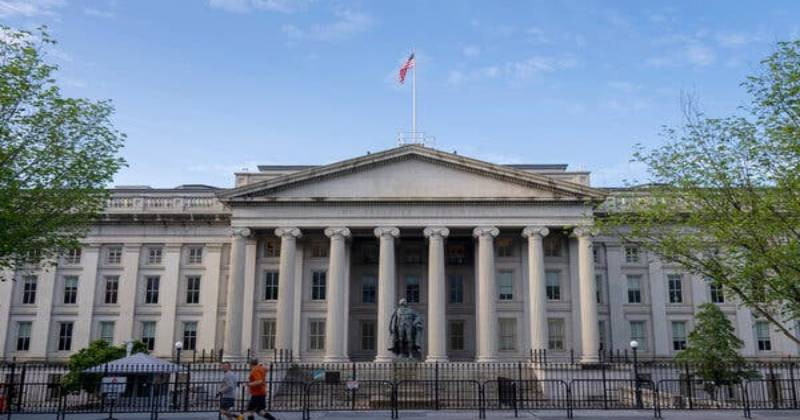
The interest rate on 30-year US Treasury bonds has recently risen above 5.3%, its highest level in nearly two decades, increasing investor concerns over the US government’s mounting debt. The yield is also providing an important signal about the future of the US economy. Concerns have intensified due to the war in Iran, inflation, an unstable government budget deficit and massive spending on artificial intelligence. The roughly $32 trillion US Treasury debt is now a key indicator of where the market economy may be heading.
The 10-year Treasury yield is particularly important because it influences interest rates on consumer loans, including mortgages and car loans, affecting sectors ranging from education to housing. Treasury bills mature in four weeks to one year, notes in two to 10 years, and bonds in 20 or 30 years. When bond prices fall, yields rise, reflecting investors’ demand for higher returns. The 10-year Treasury yield has risen from 3.96% at the end of February to 4.66%. After declining in April and May, it began rising rapidly again toward the end of June.
Investors believe yields could remain high for several reasons. Uncertainty over a peace deal in Iran has created volatility in oil markets, raising concerns about inflation and purchasing power. At the same time, questions have emerged over whether massive AI spending by technology companies is drawing investors away from bonds or strengthening expectations of higher economic growth and inflation. Barclays analyst Jason Goldberg recently said, “Treasury buyers are now much more sensitive to price,” meaning investors are demanding higher yields to absorb both government and corporate debt.
The traditional relationship between US stocks and bonds has also changed. Bank of America analysts said, “Investors are no longer willing to pay the same premium for an asset class that has less ability to provide protection against risk.” Rising Treasury yields also increase borrowing costs because the 10-year yield influences mortgage rates. According to Freddie Mac, the average 30-year mortgage rate was 6.67% last Wednesday, up from around 6% at the beginning of the year.
US Treasury yields also provide clues about future economic conditions. When short-term borrowing costs are higher than long-term rates, as happened in 2022, the inverted yield curve signals an increased risk of recession. Lawrence Gillam, head of fixed-income strategy at LPL Financial, said, “Higher yields during periods of stress drive buyers away.”