Will ‘Cockroach Movement’ Force Modi to Rethink Politics?
On August 4, Indian Prime Minister Narendra Modi’s Bharatiya Janata Party (BJP) suffered a major setback in Bihar. There, Prashant Kishor’s newly formed Jan Suraj Party ended the BJP’s three-decade dominance in Bankipur.
The seat had been held by BJP national president Nitin Nabin, who during the campaign described Gen Z protesters as “a virus and a bunch of cockroaches determined to break the country apart.” The result has raised a broader question: Will India’s most powerful political force, the BJP, be forced to change?
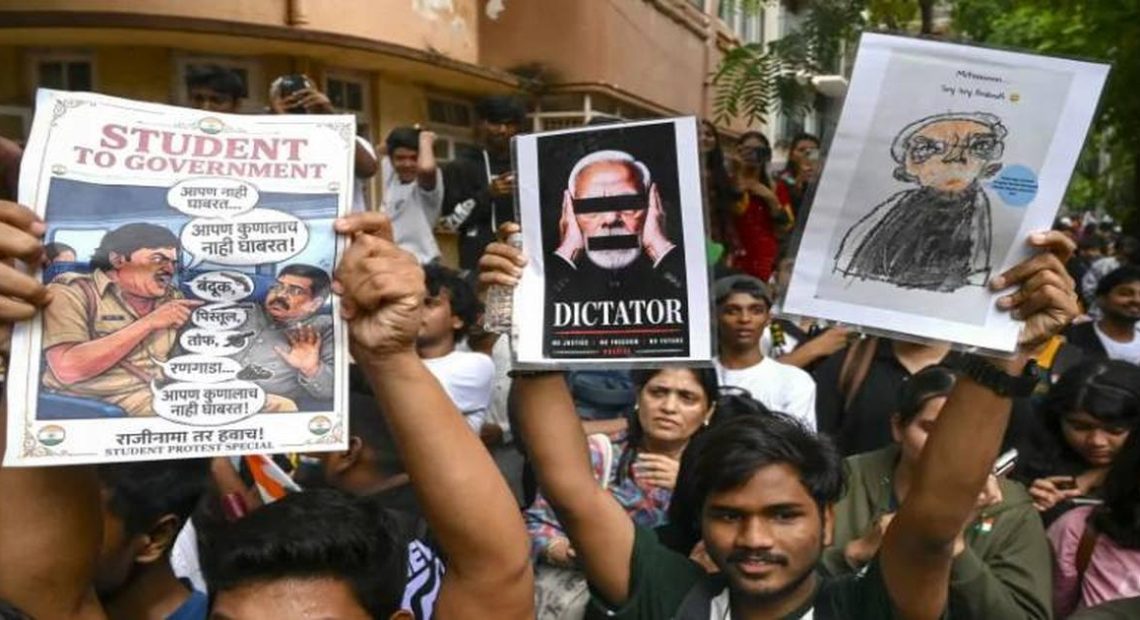
Less than two weeks before the defeat, Indian Education Minister Dharmendra Pradhan resigned. Before that, a seven-week student protest had been led by the satirical “Cockroach Janata Party,” which was created on Instagram in May. The group emerged after India’s Chief Justice Surya Kant compared the country’s unemployed youth to “cockroaches” and “parasites.”
The BJP’s subsequent efforts to appeal to Gen Z in Uttar Pradesh, including vocational guidance in schools and social media videos using internet slang, have been widely mocked online.
Analyst Asim Ali said the party remains powerful in mainstream media, but its emotional connection with the generation that came of age on Instagram between 2011 and 2014 has lost its effectiveness.
Jill Verniers of Sciences Po said the movement had disrupted the BJP’s strategy of portraying dissenters as anti-national, foreign-funded or terrorists. Unlike the 2019-20 protests against the Citizenship Amendment Act and the farmers’ movement, this movement was pluralistic and genuinely caste-neutral, attracting young people even from the BJP’s upper-caste Hindu base. It also damaged Modi’s image among young people.
“What this movement has done is turn him, in the public mind, into a genuinely old man,” Verniers said.
As 27-year-old Samajwadi Party MP Pushpendra Saroj said at Delhi’s Jantar Mantar, the government’s aggression had pushed the movement beyond students, drawing in former military personnel and serving police officers.
“Anyone who sees children being beaten does not like it,” he said.
Of the three by-elections held in early August, the BJP lost two, in Bankipur and Datia in Madhya Pradesh, but retained the Manjalpur seat in Gujarat. Ali therefore cautioned against reading too much into the results.
Anjali, a leader of the All India Students’ Association at Delhi University, described the unrest as the accumulated anger of the country’s youth over the past 12 years.
“Until communal, caste-based and misogynistic politics ends, this cannot be considered a victory in any sense,” she said.
Verniers said the deeper damage had been done to the BJP’s legitimacy.
“The protests have struck at the authority behind that dominance,” she said, creating a gap between the BJP’s political power and citizens’ willingness to comply with it.
Verniers added that the “Cockroach Janata Party” lacks the resources required for a national campaign but could influence the political agenda of opposition parties as an interest-based organisation.
Ali, meanwhile, does not believe the BJP will abandon its objectives.
“I don’t think the BJP will soften its Hindutva agenda; rather, I think it will intensify it,” he said.
Source: Al Jazeera