
Will Loans Alone Be Enough to Reopen the Factories?
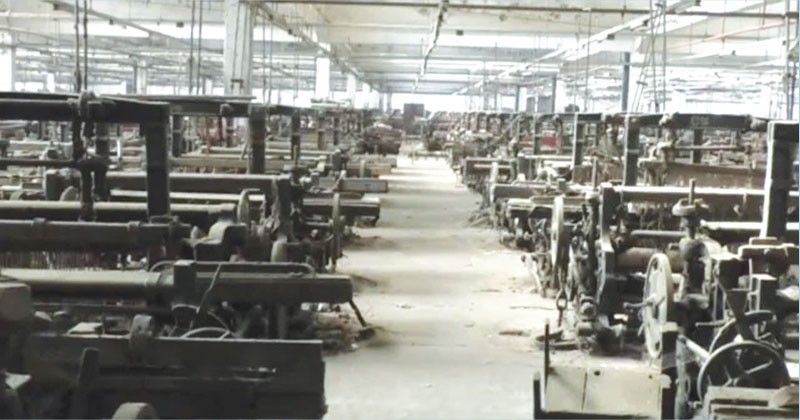
Two long closed government factories in Rajshahi have started production again. A Bangladesh Sangbad Sangstha (BSS) report on 8 October cited Pran RFL Group. It said Barendra Rajshahi Textile and Rajshahi Jute Mill now give jobs to about 5,000 people. About 90 percent of them are women. The factories make shoes, bags, luggage, tents and umbrellas.
Meanwhile, money moves very slowly from the 20,000 crore taka special scheme of Bangladesh Bank to revive closed industries and services. A Business Standard report on 18 October said 1,490 crore taka worth of loan applications were submitted. About 561 crore taka has been paid out, and 929 crore taka is in process. Only 2.8 percent of the allocation has been paid out. Counting the amount in process, progress is about 7.5 percent.
These two events raise a basic question. Is a low interest loan alone enough to reopen closed factories? There is no information that the Rajshahi factories reopened with money from the Bangladesh Bank scheme. There, the government gave its assets to private management on a long lease. The central bank scheme aims to bring closed or partly working firms back to production with financial help. So there are two different paths to revival, and the gap between them shows the limits of our industrial recovery policy.
First, we must understand that factories do not all close for the same reason. Some firms have capacity and a market but lack working capital to buy raw materials or pay wages. Some have old machines, high costs or a shrinking market. Some have weak management, ownership disputes or legal problems. Some carry such heavy old debt that they cannot realistically repay a new loan even if they restart. One loan policy for all will not work.
We cannot deny that loans are needed. A 2021 World Bank study, “Gearing Up for the Future of Manufacturing in Bangladesh,” looked at barriers to technology adoption in Bangladeshi firms. About 35 percent of firms and 50 percent of small and medium enterprises named lack of finance as the main barrier to new machines, software or processes. Firms that got loans for machines also had better technology. The study shows that productivity and technology link closely to access to finance.
But getting a loan and turning it into production are different things. A 2023 World Bank study by Mr. Asif Islam and Mr. Jorge Rodriguez Meza analyzed over 100,000 firms in 219 surveys across 144 countries. It found that about 30 percent of formal private firms face credit constraints. These firms are usually small, and credit constraints link negatively to their performance. About half of firms do not apply for new loans because they think their own funds are enough. More money supply alone will not expand business. Firms also need real production and market chances.
This points to a basic problem in credit markets. Research by Mr. Joseph Stiglitz and Mr. Andrew Weiss in 1981 showed that when lenders and borrowers hold unequal information, interest rates alone cannot fix the market. Higher rates may push safer borrowers away, while risky borrowers may still want loans. A heavier debt burden can also change how much risk a borrower takes. So banks may refuse loans to some applicants instead of raising rates to supply more credit. Economists call this credit rationing.
For closed factories, this information gap is even harder. For a running firm, it is easier to check sales, cash flow, production and market links. For a long closed factory, the bank must judge future chances. It needs to know how usable the machines are and whether a market exists. It must ask whether management can restore production and whether the firm can repay after clearing old debts. The entrepreneur may know the answers. But if the bank cannot check them, lending becomes risky.
The state of Bangladesh’s financial sector makes this harder. A 2025 World Bank report, “Bangladesh: Country Private Sector Diagnostic,” named high bad loans, weak bank capital and poor corporate governance as big barriers to private finance. Small and local firms feel these weaknesses more. The World Bank Bangladesh Development Update of 6 October says the bad loan ratio in the banking sector reached 33.2 percent at the end of June 2026. In such a system, new lending means more than handing out cheap money. It also carries the risk of not getting the money back.
Real experience of Bangladeshi firms shows that credit is not the only barrier. The same 2025 report used 2022 Enterprise Survey data. It says 21 percent of firms named electricity supply as their main barrier. Another 17.2 percent named access to finance, and 13 percent named corruption. Bangladeshi firms face power cuts 26 times a month on average. With a median length of 30 minutes, firms lose about 13 hours of production a month. This equals about 2 percent of yearly sales.
The 2022 World Bank Enterprise Survey also gave data on credit constraints. It found 22.1 percent of firms partly constrained and 8 percent fully constrained. Together, these facts show that finance is a big problem. But weak power supply and weak governance also hold back production. If fuel is a factory’s main barrier, a loan for raw materials will not make production steady. So the main barrier of each firm must be identified before a loan is approved.
We must keep this reality in mind to see the limits of the 20,000 crore taka scheme. Its main aim was to meet the working capital needs of closed or partly working industries and service firms hit by financial trouble. In September, the scheme changed the words “large industry” to “industry,” which widened its scope. But loans go only to firms with real chances of restoring capacity and market. The money cannot be used to pay or adjust old loans. The bank has an important role here.
The bank must check each application and judge the firm’s capacity, management, market and ability to repay. After paying out, it must watch sales and income and inspect the factory. The duty does not end at taking applications or checking collateral. The bank must also judge whether a closed factory can return to production.
On 5 November, Bangladesh Bank changed how the scheme is financed. The old prefinancing system is now a refinance scheme. A participating bank must first lend from its own funds, then apply to Bangladesh Bank for refinance. It needs approval from its board or an approved executive committee before lending. It must submit the refinance application with documents within seven days of paying out. It can get more time for valid reasons.
The scheme also requires a special escrow or revenue account for transactions. It requires a written statement from the borrower that they have no link to money laundering, fraud or misuse of funds. These changes aim to control the use of money and improve accountability. But there is a practical side. Banks must now lend first from their own money and liquidity.
So the bank’s ability to give the first funding also matters, along with its checks on loans. If a bank lacks liquidity, or doubts it will get its money back, a promise of central bank refinance will not raise lending. The coming data will show how much lending speeds up under the new system. The 2.8 percent figure for October covers the time before the new rule took effect.
The Rajshahi experience shows another path. According to BSS, Pran RFL Group first got the two government factories on a 30 year lease. It started production using existing power, gas, roads and industrial buildings. It also brought in the entrepreneur’s management, a production plan and market links. But the figure of about 5,000 jobs comes from the company. Job security, real wages, working conditions and worker safety need checking over the long term. Still, the case shows that reviving unused government assets needs more than bank loans. It needs a capable operator, a market and infrastructure working together.
So what should we do? First, we need a clear classification of closed and partly working industries. Firms whose main problem is working capital can get quick loans. Firms with old debt, ownership or legal disputes need financial and legal restructuring first. Firms with weak management need new management or partnership. Firms with no market, or with technology that cannot pay its way, should not get new loans that add to old losses. Their assets should go to other productive use.
Second, loan releases must link to checkable steps of production recovery. The first stage can fund machine repair, raw materials and wages. Later releases should depend on restarting production, sales, new orders and reliable income and spending accounts. This lowers the chance that borrowers divert the money or hide old financial weakness.
Third, we need a joint system to solve problems outside the bank. A factory may be shut because of a gas shortage, power supply, import trouble, transport cost, duty or a legal dispute. A bank alone cannot reopen it. For selected factories, the bank, the Ministry of Industries, the energy division, the National Board of Revenue and other agencies should work together. They should set a time bound plan to solve the problems.
Fourth, for firms that can recover, there could be a clear risk sharing arrangement with banks. But this must not let defaulters or powerful businessmen shift their burden onto public money. Willful defaulters and people linked to fraud and money laundering must be excluded. Firms that failed to repay only because production stopped, but can truly recover, should be identified through independent assessment.
Fifth, Bangladesh Bank should regularly publish data on applications, approvals, rejections, releases and recoveries. Knowing only how much money went out does not show the result of the policy. It should also publish how many factories restarted and how much production and sales grew. It should show how many workers returned to work and what their wages and working conditions are. It should also show how many firms survive after one year.
The writer is an Associate Professor at Shahid Buddhijibi Government College, Rajshahi.