Illegal Sand and Soil Extraction from Six Padma River Mouzas in Godagari Puts River Port at Risk
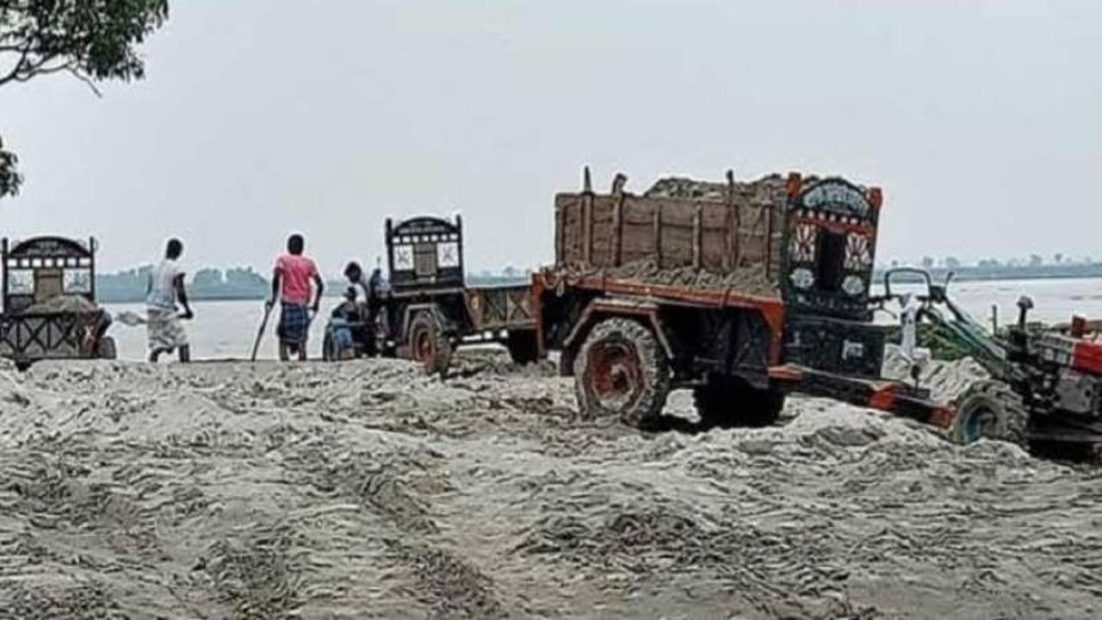
Illegal sand and soil extraction from six mouzas along the Padma River in Godagari, Rajshahi, is threatening the Sultanganj river port and surrounding areas, despite an official ban on the sand quarry. The Bangladesh Inland Water Transport Authority (BIWTA) operates an international river port at the confluence of the Padma and Mahananda rivers in Sultanganj, Godagari. A river communication route between this port and the Maya river port in West Bengal, India, was established several years ago. Import and export trade between Bangladesh and India through the Sultanganj-Maya route began on February 12, 2024.
The river port remains operational, with a 20-kilometre stretch of the river, covering both upstream and downstream areas, officially designated as its boundary. BIWTA is responsible for protecting this area. Considering sand extraction from the port’s designated river area a threat to navigation and port operations, BIWTA instructed the Ministries of Shipping and Land, along with the Rajshahi district administration, to stop leasing the sand quarry. Consequently, the Rajshahi District Sand and Soil Management Committee permanently closed the quarry covering six mouzas in Godagari and suspended its lease this year.
However, a field visit on Friday morning found that the former leaseholder, Abdul Mannaf, owner of Mam Enterprise, had continued extracting sand and soil. Since floodwaters receded, he has allegedly been using excavators to remove fertile alluvial soil from vast areas along the riverbank. Dredgers have also been deployed along a 10-kilometre stretch from Sultanganj upstream to Phultala downstream to extract millions of cubic feet of sand.
Large sand stockpiles have been created beside the highway in Sultanganj, Sarangpur, Faridpur, Bidirpur and Premtali. Excavators are loading the sand and soil onto dump trucks, trucks and other vehicles for transportation to different parts of the country. Local residents said fertile silt deposited by the Padma had raised agricultural land along the riverbank, extending from Bianabona, Premtali, Bidirpur and Phultala to Railbazar, Hatpara and Sultanganj.
They had planned to cultivate crops on the newly deposited soil after years of campaigning to close the quarry. However, the former leaseholder has allegedly been removing the fertile soil for the past two months. Residents claimed that hundreds of truckloads of soil and several lakh cubic feet of sand were being removed daily from four to five locations, including Phultala.
According to district administration sources, Mannaf filed a writ petition with the High Court in July, claiming he had suffered losses. On August 6, a High Court bench allowed him to operate the quarry for three months. The order was due to expire on November 6, but the former leaseholder subsequently obtained an extension.
After receiving a copy of the court order, Rajshahi Deputy Commissioner Kazi Shahidul Islam sent an urgent letter to the relevant authorities on September 7, requesting legal action. He stated that the lease agreement had expired on April 14, 2025, and that Mannaf had no further rights over the quarry under its terms. He also urged the authorities to file an appeal against the High Court order.
Sources said BIWTA initially decided to challenge the order but delayed filing the appeal following alleged pressure from a political leader in Rajshahi. The leader reportedly visited BIWTA headquarters late last month and urged officials not to file an appeal. BIWTA’s delay allegedly allowed the former leaseholder to secure another order through a one-sided hearing, permitting him to continue extracting sand.
Shariful Islam, a resident of the six-mouza quarry area, alleged that Mr. Mannaf had also continued illegal sand and soil extraction for three months after his lease expired last year. Rajshahi Additional Deputy Commissioner (Revenue) Mohammad Belayet Hossain said the district administration had requested the Law Ministry’s Solicitor’s Office and BIWTA officials to take legal action after receiving the first High Court order. “We do not know why the authorities are delaying filing the appeal,” he said. He added that the quarry had been abolished by a decision of the District Sand and Soil Management Committee and was no longer under the district administration’s control. BIWTA is now its custodian.
BIWTA Member and Joint Secretary (Planning and Operations) Mohammad Sajedur Rahman said a decision had been made to appeal against the High Court order and that all necessary documents had been prepared. Contacted over the allegations, Abdul Mannaf said he was operating under a court order that permitted him to carry out all activities, including sand extraction and transportation.
Meanwhile, residents and concerned citizens warned that continued extraction was causing embankments, homes, mosques, tube wells, roads, farmland and shops to disappear into the river. They demanded an immediate halt to sand extraction from the Padma.