City Corporation-CDA Drives Bring Relief as Footpaths Are Cleared of Waste and Debris in Chattogram
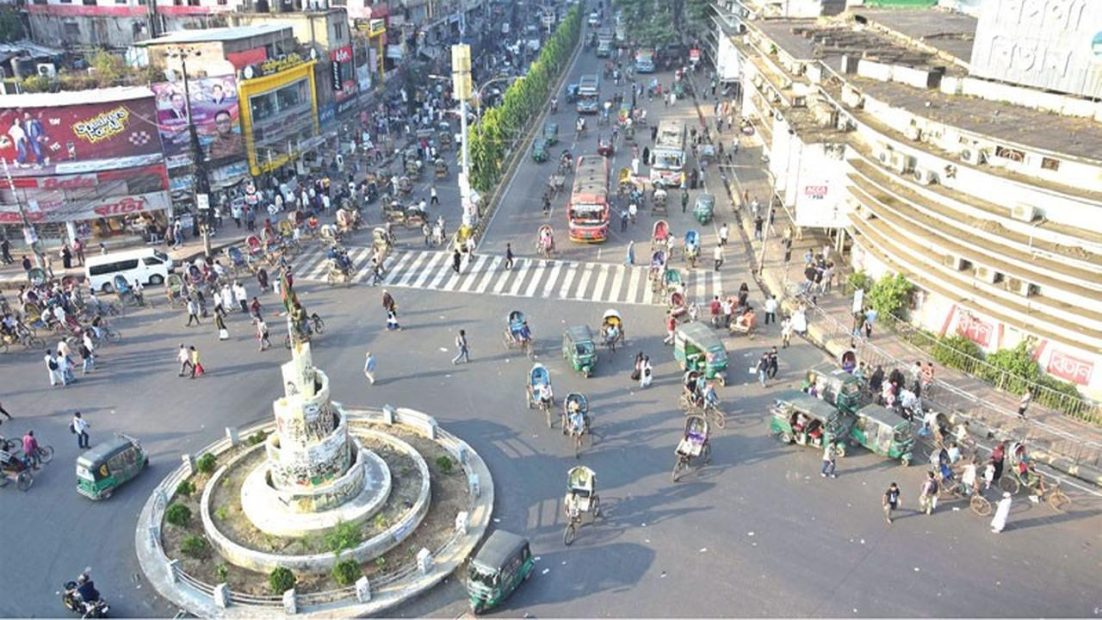
Traffic discipline is gradually returning to the streets of Chittagong, the country’s commercial capital. Continuous drives by Chittagong City Corporation (CCC) and the Chittagong Development Authority (CDA) are clearing several areas of hawkers and illegal structures, bringing some relief to residents. However, concerns remain over how long the improvement will last. Although hawkers have been removed from major roads and footpaths, illegal parking and construction materials continue to occupy roads in many parts of the city.
After assuming office as mayor under a court order, BNP leader Dr Shahadat Hossain, who is now serving as the city corporation administrator, announced a campaign to clear the city of illegal occupation and disorder. He personally supervises the drives to remove illegal structures from roads and footpaths.
Initially, hawkers returned to occupy the roads and footpaths soon after eviction drives, limiting their effectiveness. The city corporation then began conducting regular operations, sometimes carrying out eviction drives three times a week in certain areas. These efforts have gradually started producing results.
The situation around New Market intersection, one of the city’s busiest commercial areas, has changed significantly. Wooden and steel structures, makeshift tarpaulin and polythene sheds, and roadside displays of clothes, shoes, watches and winter clothing have largely disappeared. The usual crowd of hawkers calling out to customers and surrounding passers-by is also no longer visible.
Hawkers are now allowed to sell their goods for fixed hours in designated ways under the rules set by the city corporation. As a result, roads and footpaths have become clearer, allowing pedestrians to move more freely. Several square kilometres around New Market were previously occupied by roadside shops. The congestion was so severe that people could barely walk even on the roads, let alone the footpaths. Many pedestrians were forced to walk through the middle of the streets. Illegal occupation caused persistent traffic congestion and overcrowding.
The disorder extended from Old Railway Station through New Market to Sadarghat Road in the south, Kotwali intersection, the District Council, Laldighi Maidan and the area towards Jubilee Road through Tinpul’s Head in the north. The crowds around roadside shops and stalls also created opportunities for muggers and pickpockets. The situation has now improved considerably.
A visit to the area yesterday found the roads and footpaths largely free of hawkers. People were walking in groups along the footpaths, and pedestrians could move comfortably. Traffic congestion and disorder had also declined. The city corporation conducted several eviction drives last week. The day after one operation, an executive magistrate of the corporation returned to the area and removed structures that had again occupied the footpaths.
The corporation has instructed hawkers not to set up permanent shops on footpaths. Instead, they can sell their goods from vans during designated hours. Many hawkers are now following these instructions. A similar improvement has been seen around GEC intersection and its surrounding areas, where several eviction drives have cleared roads and footpaths. Hawkers now bring their goods in vans during permitted hours and leave after completing their sales.
Discipline has also improved at several busy intersections, including Anderkilla, Chawkbazar, Muradpur, Bahaddarhat, Agrabad, Barapole, AK Khan Road and Sholashahar Gate No. 2. However, footpath management remains poor in some densely populated areas, including EPZ, Steel Mill and Katgar. Hawkers continue to occupy roads and footpaths in these areas. There are allegations that ruling party activists are allowing hawkers to operate in exchange for monthly payments.
CCC Administrator Dr Shahadat Hossain said no form of disorder on roads or footpaths would be tolerated. He said hawkers and small traders could continue their businesses, but they must maintain discipline and operate only during designated hours. Setting up permanent shops on roads and footpaths would not be allowed.
CDA survey reveals widespread road and footpath encroachment
A recent CDA survey found that 57 per cent of the city’s roads have been partially occupied. Illegal parking, roadside shops and commercial activities are among the main causes. Although city corporation drives have removed many illegal shops, unauthorised parking continues to create disorder on several roads.
The survey also found that footpaths exist along 83 per cent of the city’s roads. However, 71 per cent of these footpaths are fully or partially occupied, while 68 per cent are virtually unusable for pedestrians. The city corporation is working to reclaim these footpaths and reopen them for public use. In some areas, footpaths have been cleared exclusively for pedestrian movement, with no permission for roadside stalls or product displays.
Illegal roadside parking is another major cause of traffic congestion in the city. After taking charge as CDA chairman, engineer Belayet Hossain launched drives to stop unauthorised parking. Several private hospitals, diagnostic centres and schools have already come under inspection. Although their approved building plans include dedicated parking facilities, many institutions do not have adequate parking spaces. Some have parking areas, but these are insufficient for their needs. In other cases, hospital equipment and other materials are stored in spaces designated for vehicles.
As a result, vehicles belonging to hospitals and schools are parked along nearby roads, causing persistent traffic congestion in those areas. Following CDA drives, several private hospitals and schools have expanded their parking facilities. Some institutions have also appointed their own staff to manage vehicle movement and parking.
These measures have helped improve traffic discipline in areas such as Mehedibag, Golpahar, Katlaganj and Jamal Khan. CDA Chairman Engineer Belayet Hossain said parking spaces approved in building plans must be used exclusively for parking and not for other purposes.
He added that institutions that had failed to provide parking facilities in accordance with approved plans must establish them. He said ensuring proper parking facilities would help restore order on city roads and reduce traffic congestion. The CDA will continue its drives to enforce the rules.