Widespread Confidence Emerges Under Tarique Rahman’s Leadership

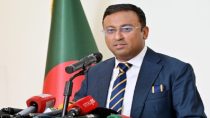
Prime Minister Tarique Rahman’s bold and dynamic leadership has begun opening up vast opportunities for domestic and foreign investment as well as employment in Bangladesh.
Following the BNP-led alliance’s landslide victory in the 13th general election, the country has witnessed the return of democratic politics and a renewed climate of confidence, encouraging regional and international development partners to strengthen commercial and strategic ties with Bangladesh.
The Daily Inqilab believes these investment prospects, if properly utilised, could generate millions of skilled jobs and help transform Bangladesh into a trillion-dollar economy by the beginning of the next decade. It says ensuring political stability, social harmony and economic security will be essential to achieving that goal.
According to the Editorial, the interim government that took office after the July uprising, failed to fully restore investors’ confidence, resulting in lower-than-expected investment over the past two years. However, within six months of taking office, the Tarique Rahman administration has begun creating a favourable environment for both local and foreign investors.
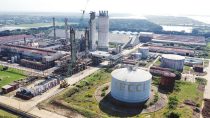
After assuming office in February, Prime Minister Rahman set policy priorities for his cabinet and government, which the editorial says, have already started producing positive results. Over the past five months, many of Bangladesh’s leading trade and development partners have expressed support for his leadership and pledged potential investments. Chinese and Korean export processing zones have also resumed activities with renewed momentum.
Bangladesh’s garment and textile industries have long struggled with shortages of gas, electricity and fuel. Hundreds of factories closed over the past five years, causing billions of taka in lost investment and leaving large numbers of workers unemployed, while both the previous Sheikh Hasina government and the interim administration for failing to resolve those problems.
The garment and textile entrepreneurs recently met the Prime Minister, who issued practical directives to address the sector’s challenges. He also assured business leaders that while immediate measures would be taken, the energy crisis would be resolved within a year. The editorial says entrepreneurs have expressed confidence in those commitments.
Investors from China, Japan, South Korea and several other countries have again shown interest in Bangladesh. Although many investment proposals were made over the past two decades, the editorial argues that political instability, uncertainty and bureaucratic delays prevented most of them from being implemented.
Prime Minister Rahman’s first official visits to Malaysia and China as timely and courageous, saying they projected the image of a `New Bangladesh’. His efforts to secure commitments from China and Malaysia on resolving the Rohingya crisis. Projects involving connectivity with China through Myanmar, the Teesta Master Plan and the Ganges Barrage have, it says, created fresh optimism about the country’s future.
Alongside long-standing development partners such as China and Japan, investors from Türkiye, Saudi Arabia and the United Arab Emirates have also become increasingly interested in Bangladesh. Investors from the United States are also showing confidence in Bangladesh under Tarique Rahman’s leadership.
The recent visit of US Deputy Assistant Secretary for South and Central Asian Affairs Sergio Gor reflected Washington’s confidence in the new government, citing the easing of a travel advisory issued during the previous administration. Saudi Arabia has expressed interest in recruiting more skilled Bangladeshi workers and investing in fisheries, food, solar energy, IT and AI.
At the `Bangladesh Investment Promotion’ seminar in Osaka, State Minister for Primary and Mass Education, Bobby Hajjaj invited Japanese businesses to invest in Bangladesh and use the country as a gateway to a market of 300 crores consumers.
Bangladesh’s geographical and geopolitical position offers significant commercial opportunities. The country’s journey towards prosperity must begin with the confidence, security and cooperation of farmers, workers and investors.
In this context, the government must tackle any threat to political instability, while prioritising inflation, energy shortages and the rising cost of living. Maintaining the confidence of both domestic and foreign investors will be vital to turning Bangladesh’s investment potential into lasting economic progress.