Dhaka Takes the Path of Dignified Diplomacy
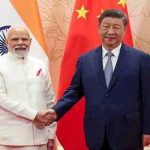
The 18th BRICS Summit began in New Delhi on Saturday. The entire city has been decorated with banners and signboards, while various buildings and roundabouts have been illuminated. More than a dozen world leaders are attending the summit. Around 30,000 security personnel have been deployed. Chinese President Xi Jinping, who is visiting India after seven years, Russian President Vladimir Putin, Iranian President Masoud Pezeshkian and UN Secretary-General Antonio Guterres have already arrived in New Delhi. But Bangladesh is absent from this major gathering. Many see Bangladesh’s absence as a new chapter of diplomatic firmness by Dhaka.
During the fascist regime, Sheikh Hasina often rushed to attend even small conferences in India, but Bangladesh gained little in terms of respect or strategic outcomes. At that time, diplomacy was focused on presence and photo opportunities. Dhaka’s confidence is now completely different. Bangladesh is absent from the BRICS event in New Delhi because the government now believes that true diplomacy is not about rushing to every platform. It is about taking a position in the international arena by prioritising the country’s dignity, conditions and interests. This confidence is now Dhaka’s greatest diplomatic strength.
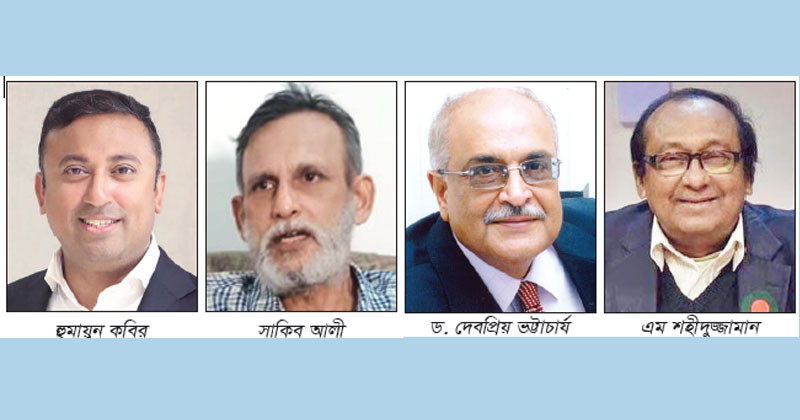
Bangladesh is currently serving as the chair of BIMSTEC. Indian Foreign Ministry spokesperson Randhir Jaiswal had said that Bangladesh Prime Minister Tarique Rahman was invited for a bilateral visit to India and to attend the outreach session of the BRICS Summit as the chair of BIMSTEC. However, Foreign Affairs State Minister Humayun Kabir made it clear that Prime Minister Tarique Rahman was invited not as the Prime Minister of Bangladesh, but as the chairman of BIMSTEC. For this reason, the government decided not to attend the summit. His statement makes it clear that Bangladesh understands the importance of the wording and process of an invitation and does not compromise on matters of protocol.
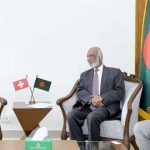
Former diplomat Sakib Ali has placed special emphasis on Bangladesh’s independent strategic position and the need to maintain balance in global politics. He also called for caution so that Bangladesh does not become a tool for the interests of any single bloc amid the ongoing geopolitical tensions in the Indo-Pacific region.
Former professor of the Department of International Relations at the University of Dhaka and geopolitical analyst Dr M Shahiduzzaman has assessed BRICS and Bangladesh’s security and defence diplomacy from a completely different strategic perspective. According to him, Bangladesh needs to deepen relations with powerful countries in the Global South and the Muslim world to overcome its geopolitical vulnerabilities. He also believes that the decision to join or not join any international forum should be based on the country’s long-term security interests rather than protocol.
Distinguished economist and public policy analyst Dr Debapriya Bhattacharya, an honorary fellow of the Centre for Policy Dialogue, has discussed Bangladesh’s long-term economic strategy and its relationship with BRICS at various forums. Against this backdrop, analysts believe, “Bangladesh’s own bargaining power is more important than whether it joins BRICS or not.” This view is consistent with the government’s decision. If Bangladesh can secure bilateral trade benefits with major countries without joining the bloc, that would be preferable. The government is following that path.
Business leaders and entrepreneurs in the readymade garment sector believe, “Our main markets are the United States and Europe. Although discussions on BRICS currency or de-dollarisation sound good in theory, in our current reality, we have to sustain trade through Western markets and the dollar.” The government has taken its decision while respecting this reality.
They believe that taking a cautious position rather than becoming overly enthusiastic about the political process of BRICS is the better approach. The government’s decision reflects that caution. Prime Minister’s Information and Broadcasting Adviser Dr Zahed Ur Rahman had also raised objections to the process through which India extended the invitation. He said the matter should be taken “seriously.” At a press conference organised at the Secretariat on the progress of various government activities, he made the government’s position clear, saying, “We want to make one thing very clear—when this has been given as a condition for the Honourable Prime Minister’s visit to India, you have to take it seriously.” His statement shows that the government did not take the invitation process lightly.
BRICS is no longer the old bloc consisting only of Brazil, Russia, India and China. Its scope has expanded significantly after the inclusion of South Africa, Egypt, Ethiopia, Iran, Saudi Arabia, the United Arab Emirates and Indonesia. BRICS currently represents 11 member countries, accounting for around 49 percent of the world’s total population and about 40 percent of global GDP. But because of this importance, every decision needs to be taken with greater caution. Bangladesh has done exactly that.
Bangladesh needs development financing and economic partnerships—that is true. In 2021, Bangladesh became a member of the New Development Bank, established through a BRICS initiative. As of June 2026, the bank had approved around $44 billion for 141 projects. However, making use of these opportunities does not require Bangladesh to sacrifice its dignity. The government has demonstrated that.
Analysts say the value of a major international summit in diplomacy lies not only in the main sessions. Meetings on the sidelines, informal discussions, dinners or even a few minutes of conversation can sometimes produce major results. But if the wording of an invitation itself is insulting, it becomes difficult to make use of such opportunities. Bangladesh has taken a clear position on this issue. This is not a sign of weakness but of confidence.
The government has said that the Prime Minister will make a bilateral visit to India when a favourable environment is created. State Minister Humayun Kabir said, “When there will be a positive environment, we will go on a bilateral visit. There is no hurry here.” This statement makes it clear that Bangladesh does not take decisions in haste. Rather, it wants to advance relations on its own terms while protecting its dignity.
Bangladesh’s decision not to attend the BRICS Summit is not a sign of weakness. Rather, it demonstrates that Dhaka knows its position and wants to engage in diplomatic relations while preserving its sovereignty and self-respect. By not attending a major platform like BRICS, Bangladesh may be missing some opportunities, but the more important point is that it has protected its dignity and strategic independence. This confidence could take Bangladesh to a stronger diplomatic position in the long run.