When the Protector Becomes the Predator
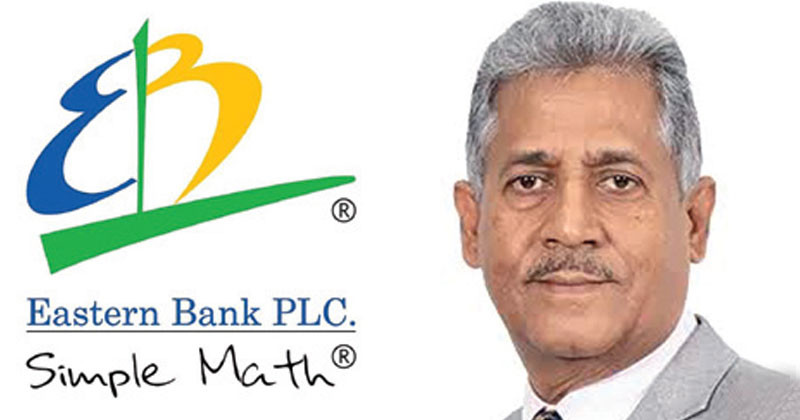
On paper, Shawkat Ali Chowdhury is a former chairman and current director of Eastern Bank PLC (EBL). However, a special inspection report by the Bangladesh Bank’s Banking Supervision Department has raised allegations that he has maintained control over the bank for years by holding proxy shares in the names of undisclosed entities, employees and relatives.
According to the report, Mohammad Shawkat Ali Chowdhury directly and indirectly controls 20.48 percent of EBL’s shares, which had reached 21.10 percent as of July 20, 2017. Under the Bank Company Act, however, an individual, his family or entities linked to his interests can hold a maximum of 10 percent of a bank’s shares.
According to the documents, the special inspection of EBL’s head office was conducted with the approval of Deputy Governor-3 of Bangladesh Bank on April 13 this year. The report was finalised after analysing documents provided by the bank, shareholding reports, balance sheets, income tax records and documents from the Registrar of Joint Stock Companies and Firms (RJSC). An additional director, who led the inspection team, and an assistant director of the Banking Supervision Department prepared the report.
The report found that 9.98 percent of the direct shareholding is held in the names of Chowdhury, his wife Tasmia Ambarin, their two daughters Zara Namreen and Sabah Samrin, son Zaran Ali Chowdhury, Namreen Enterprise and Z N Enterprise. The remaining 10.50 percent indirect shareholding is centred around two entities—Messrs Arusa & Co (Private) Limited and Anika Shares & Securities Limited.
Even after the inspection report was finalised, there has been no visible progress or action by Bangladesh Bank or EBL under the law. Meanwhile, shares held by the alleged proxy entities have been sold.
According to the report, Anika Shares & Securities held 1.14 percent of EBL shares as of December 31, 2025. But according to the March 2026 shareholding report, it now holds only 0.05 percent. This means the company sold almost all of its shares while the investigation was underway.
An application submitted to the governor on August 19 claimed that Arusa & Co’s holding had similarly declined through successive sales from 9.98 percent to around 5 percent, meaning nearly half of its shares had changed hands.
The application questioned how shares whose actual ownership and source of funds were the main issues could be allowed to be converted into cash while the inspection report remained on file. The Economics of a ‘Dummy Company’
The figures in the report clearly show the economics of what has been described as a “dummy company.”
Messrs Arusa & Co (Private) Limited was registered on July 8, 2001, with paid-up capital of only Tk 100,000. In 2002, it purchased 718,080 EBL shares for Tk 79.1 million, at an average purchase price of around Tk 110 per share. Over the next 24 years, it did not sell a single share. Instead, through bonus shares and stock dividends, its holdings increased to 159,153,292 shares, or around 222 times the original number. Of these, 158,435,212 shares were obtained without additional investment through bonus issues.
At a face value of Tk 10 per share, the holdings are worth Tk 1.5915 billion at face value. According to the report, their market value as of June 30, 2024, was around Tk 3.005 billion. This was nearly 38 times the original investment and around 30,000 times the company’s Tk 100,000 capital at the time of registration. Because of the bonus shares, the effective purchase cost of each share has fallen to only 50 paisa, while its market price was around Tk 19.33.
On top of this, the company has received cash dividends every year. According to EBL’s announcements, the bank paid a 25 percent dividend each in 2021, 2022 and 2023, half of which, or 12.5 percent, was paid in cash. In 2024, the bank declared a 35 percent dividend, including a 17.5 percent cash dividend. For 2025, it declared a 28 percent dividend, of which 25 percent was in cash.
Based on these rates, Arusa & Co received approximately Tk 153.5 million in cash dividends in 2021, Tk 172.7 million in 2022, Tk 194.3 million in 2023 and Tk 278.5 million in 2024. The total was around Tk 800 million in four years, more than 10 times its original investment in 2002. If the company received the 25 percent cash dividend declared for 2025 based on its March 2026 shareholding, another Tk 397.9 million would have been added in a single year.
This raises a key question: the EBL board of directors recommends the rate of bonus and cash dividends, and Shawkat Ali Chowdhury himself served as chairman and director of the bank for a long period. According to the inspection report’s findings, he is also the ultimate beneficiary of these shares.
In other words, the person sitting at the table where dividends are determined is also allegedly among the beneficiaries. This benefit was obtained while he retained control of 20.48 percent of the bank’s shares—9.98 percent directly and 10.50 percent indirectly—despite the 10 percent limit set by the Bank Company Act.
Questions Over Ownership Documents
The company’s ownership documents have also come under question. According to Form-9 at the time of its establishment, Arusa’s managing director was Naimul Haque and its other shareholder was Anika Tehjib, the sister-in-law of Shawkat Ali Chowdhury. Of the company’s 1,000 shares at the time, 950 were in Naimul Haque’s name and 50 were in Anika Tehjib’s name. On April 10, 2007, Anika Tehjib’s shares were transferred to the name of Naimul Haque’s wife, Salma Shirin.
Later, the company’s authorised shares were increased to 100,000, and on February 6, 2014, 5,000 shares were allotted to Shawkat Ali’s daughter Zara Namreen. Those shares were transferred back to Naimul Haque’s name on July 20, 2017. The report concluded that “the company was directly owned by the family of Mohammad Shawkat Ali Chowdhury until July 20, 2017.”
The inspection also found that Naimul Haque’s income tax return, based on June 30, 2025, showed only 950 Arusa shares worth Tk 95,000 under his assets in IT-10B. However, his actual number of shares was 5,950.
According to the report, he concealed information about his shareholding in his income tax asset statement, and there was nothing in his declared assets to explain how he could have purchased such a large number of shares. The bank authorities told the inspection team that despite Arusa holding a significant number of shares, the company had no representative at the bank. They also said the bank had no information about the company or Naimul Haque.
Although the company’s memorandum allows share purchases and sales, it has never sold any EBL shares. According to Dhaka Stock Exchange data, it also does not hold shares of any other company in its portfolio. For this reason, the report said the company was established not for profit but “primarily for the purpose of holding EBL shares on behalf of Mohammad Shawkat Ali Chowdhury”, and that he is the “ultimate beneficial owner” of those shares.
Financial Transactions Under Question
The report also contains information about transfers of money from Arusa. According to the balance sheet as of June 30, 2014, Tk 99 million was given to Shawkat Ali Chowdhury as an advance for the purchase of land. The amount remained recorded as an advance even in the 2024 balance sheet.
No land had been transferred to the company’s name even after a decade, and no steps to recover the money were recorded. In addition, Tk 272 million was given as an advance to S N Corporation, owned by him, as of June 30, 2024.
The two transactions totalled Tk 371 million, for which the inspection team found no sufficient commercial or contractual justification. The report also found that Tk 107.1 million was invested in National Tea Company (NTC), an entity linked to his interests, during the same financial year.
Meanwhile, although 98 percent of Anika Shares & Securities is owned by Md Jasim Uddin, the remaining 2 percent is owned by Anika Tahjib, who was also a shareholder and director of Arusa until 2007. Her address in Form-11 submitted to the RJSC is 28, Sursan Road, Chattogram. The address provided to the bank for the beneficial ownership of Shawkat Ali Chowdhury and his family is also the same.
Enforcement of Rules Questioned
Under Section 14(A), sub-section (4) of the Bank Company Act, 1991, amended up to 2023, shares exceeding the 10 percent limit must be sold to an entity in which the person or his family members have no shares.
Under sub-section (5), if the excess shares are not sold within the prescribed period, they will be vested in the government or an institution designated by the government. Payment will be made at whichever is lower between the face value of the shares, Tk 10 each, and their market value.
According to the report, after receiving shares against his equity during the conversion of BCCI into EBL in 1992, he did not sell the excess shares within the prescribed period and “clearly violated” the relevant legal provision.
As ownership and share-related activities of banks fall under the jurisdiction of Bangladesh Bank’s Banking Regulation and Policy Department-2, the report recommended that the department take action according to the rules. The report also recommended further investigation and action according to law regarding other allegations mentioned in the complaint.
These include providing a bank guarantee to Strategic Finance in exchange for the transfer of shares in Cidenet and Frontiers Towers to Zaran of Dock Limited, a company owned by his son, involving former State Minister for Information Arafat and controversial bank looter Nafis Sharafat.
Other allegations include the personal use of a Mercedes-Benz AMG G63 imported with duty-free facilities using industrial loan funds; assets worth $3.2 million in Singapore under the names of Chowdhury and his wife at the address of fugitive loan defaulter Mujib Rahman Milon; and obtaining dual citizenship of Saint Kitts and Nevis.
The report recommended that these matters be investigated further and that the Bangladesh Financial Intelligence Unit (BFIU) take action according to the rules.
Application Filed With Bangladesh Bank Governor
Meanwhile, Advocate Kamrul Islam, a member of the Dhaka Bar Association who filed the original complaint on March 29, submitted an application to the Bangladesh Bank governor on August 19, alleging that no action had been taken even after the authorised investigation and that information had been leaked.
The application also referred to the alleged “silent release” of accounts of the relevant individuals and entities by the BFIU, despite the accounts having been frozen twice earlier. It claimed that the state had already paid a price of $25 million for the inaction during the first round. When contacted by phone to ask whether Bangladesh Bank or EBL had taken any action over the allegations of fraud against Shawkat Ali Chowdhury, EBL Managing Director (MD) Hasan O. Rashid did not answer the call.