Why Are There Concerns Over India’s Role in Matarbari Deep Sea Port?
Japan’s Big-B initiative around Bangladesh’s first deep sea port in Matarbari has raised questions over regional connectivity and India’s involvement.
During Prime Minister Tarique Rahman’s visit to Tokyo last month, Bangladesh and Japan agreed to take the initiative to a new level under the banner of the Big-B Initiative for Shared Prosperity.
The joint declaration highlighted regional connectivity and the importance of a free and open Indo-Pacific. However, some political parties have questioned whether the project will give India special connectivity benefits. The government has denied any such intention.
What Is Happening in Matarbari?
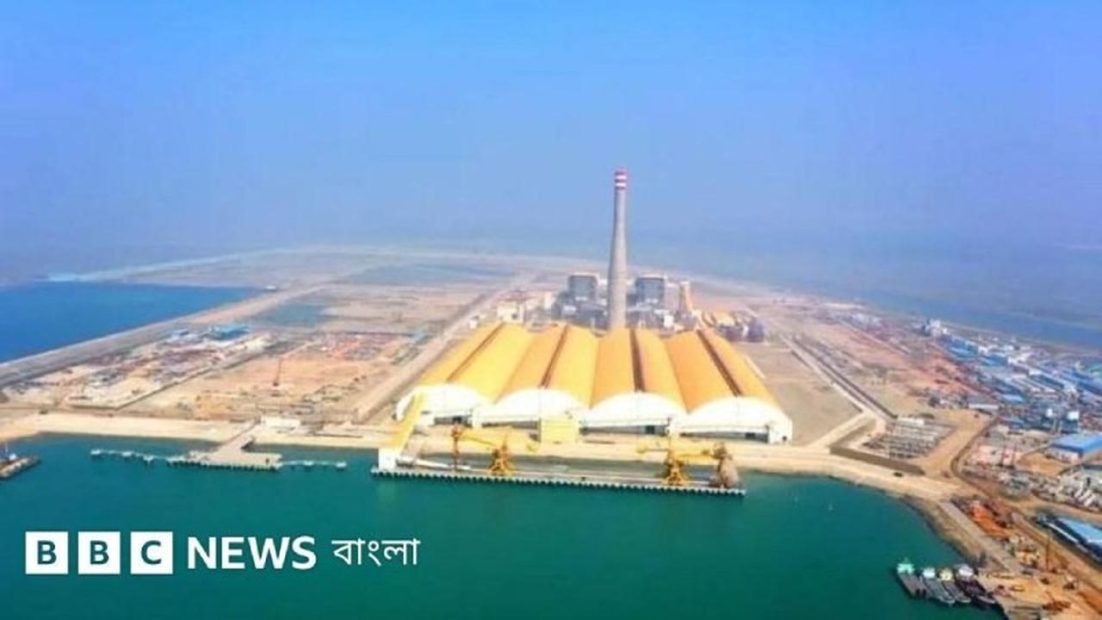
Matarbari is in Maheshkhali upazila of Cox’s Bazar. Bangladesh and Japan initially planned to build a coal-fired power plant there in 2014. Construction began in 2017.
A 14-kilometre-long and 250-metre-wide channel was built to transport coal to the power plant.
In a preliminary survey in 2017, the Japan International Cooperation Agency (JICA) proposed using the same channel to establish a commercial port to its south. This would reduce costs and ensure better use of land.
Bangladesh accepted the proposal. The channel was subsequently expanded and deepened to accommodate the deep sea port.
What Is the Big-B Initiative?
Big-B stands for Bay of Bengal Industrial Growth Initiative. It is a Japanese investment plan focused on Bangladesh’s Bay of Bengal region, particularly Cox’s Bazar and Chattogram.
Japan plans to develop an industrial zone around the Matarbari deep sea port, alongside improved transportation and logistics facilities.
A coal-fired power plant has already been built, while a solar power plant is under development. An LNG terminal, deep sea port and industrial zone are also planned.
The Bangladesh-Japan joint declaration highlighted four key areas: regional connectivity centred on Matarbari, disaster and geopolitical risk management, public-private partnerships, and peace and stability.
Under the investment plan, Japan is expected to invest more than $6 billion in Bangladesh over the next five years. The initiative also includes cooperation in defence equipment and technology.
Finance and Planning Adviser Rashed Al Mahmud Titumir told BBC Bangla that the government wanted to turn Bangladesh into an export hub.
He said the first priority was to develop the deep sea port, followed by energy, logistics, economic and industrial facilities. A planned city would also be developed to make Matarbari a global export centre.
Bangladesh Will Have to Repay the Loans
The development of power plants, LNG terminals, industrial facilities, the seaport and transportation infrastructure will require massive investment. Japan will provide much of the funding, but Bangladesh will have to repay the loans.
This has raised questions about how much the country will ultimately benefit.
Khandaker Golam Moazzem, an economist and president of the Knowledge Hub Institute, told BBC Bangla that the project offered significant economic opportunities.
He said total investment could reach $60 billion to $65 billion, including $48 billion to $50 billion in private investment, mainly from Japanese investors.
According to him, Japanese investment would bring technology and encourage local businesses to enter joint ventures. It could also help develop supply chains and create around 2.8 million jobs over several decades.
Why Are There Concerns Over India?
Japan first introduced the Big-B concept in 2014 during a visit to Japan by then Prime Minister Sheikh Hasina. The plan initially considered a wider market involving Bangladesh, India’s northeastern states, Myanmar, Nepal and Bhutan.
Then Japanese Prime Minister Shinzo Abe introduced the concept during Hasina’s visit in May 2014. In June that year, Akihiko Tanaka, then president of the Japan International Cooperation Agency (JICA), explained the initiative at an event at Dhaka University.
He identified three main pillars: industry and trade centred on a deep sea port, energy and transportation.
The plan envisioned Matarbari as a global trade hub, with improved transport links extending to neighbouring countries.
The initiative gained further attention in 2023 during then Japanese Prime Minister Fumio Kishida’s visit to India.
Although the latest joint declaration during Tarique Rahman’s Tokyo visit did not directly mention India, its emphasis on connectivity and regional trade has renewed questions about India’s potential involvement.
At a rally in Dhaka on October 31, Jamaat-e-Islami raised concerns about whether India was being given connectivity benefits through the project.
“People want to know clearly whether there is any hidden agenda regarding the Matarbari deep sea port. Bangladesh must not be leased to anyone in the name of connectivity,” Jamaat Ameer Shafiqur Rahman said.
Jamaat Secretary General Mia Golam Porwar told the BBC that the party would examine the joint declaration and agreements with Japan before making an official comment.
The concerns mainly relate to whether India could receive corridor or transshipment facilities through the project.
Former diplomat Mr Sakib Ali told the BBC that the Big-B economic model was promising. However, he said political consensus within Bangladesh would be necessary before extending connectivity benefits to India.
He said an integrated regional market could be economically beneficial, but the country first needed political agreement on the issue.
Geopolitical Concerns
India is not the only country raising questions about the initiative. There are also concerns about how China will view the project.
The joint declaration referred to a Free and Open Indo-Pacific, a strategy led by the United States. China views the strategy as an attempt by Washington to contain its influence in the region. Japan is a key US partner in the initiative.
Economist Mr Khandaker Golam Moazzem told the BBC that Japan was giving importance to India under Big-B and could gradually involve more regional countries.
He said Japan wanted to develop the region into an economic zone for investment while limiting the influence of major powers.
There is also a perception that Japan is increasing investment in Bangladesh to reduce China’s influence.
Mr Moazzem said Bangladesh should focus on economic interests while maintaining balanced relations with China and India. He stressed that the country should avoid becoming politically aligned with any particular bloc.
Former diplomat Mr Sakib Ali also said Bangladesh needed to maintain relations with Japan and the United States while expanding cooperation with China.
What Is the Government’s Position?
Finance and Planning Adviser Mr Rashed Al Mahmud Titumir told BBC Bangla that the government wanted to maintain balanced relations with all countries.
He said Bangladesh welcomed investment from every country. Chinese investment was already being made in economic and industrial zones at Chattogram and Mongla ports, while countries from the Middle East, Southeast Asia and Europe were also involved in investment activities.
He added that Matarbari would remain open to all countries.
According to him, any country could submit an investment proposal, but the government would consider its merits and Bangladesh’s national interests before accepting it.
Source: BBC Bangla