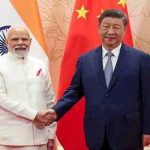

Adani Cuts Power Supply, Allegedly Breaching Contract
A day after Foreign Affairs State Minister Humayun Kabir’s announcement, India’s Adani Power suspended electricity supply to Bangladesh, citing technical problems. The move further intensified the country’s power crisis. The timing of the two events has raised questions about whether the incident was merely coincidental or part of a planned strategy to exert diplomatic pressure.
On September 10, Foreign Affairs State Minister Humayun Kabir officially announced that Prime Minister Tarique Rahman would not travel to India. The very next day, one of the 800-megawatt units of Adani Power’s 1,600-megawatt plant in Godda, Jharkhand, India, was shut down. The plant’s generation fell below 750 megawatts. At the same time, Bangladesh’s highest load shedding reached 3,557 megawatts. The gap between the two events was only one day, naturally raising questions.
For several weeks, Dhaka and New Delhi had been engaged in diplomatic communication over a possible visit by the Prime Minister to India. It was eventually confirmed that he would not attend the outreach session of the BRICS Summit scheduled to be held in New Delhi on September 12 and 13.
Dhaka clarified that the invitation was extended not to the Prime Minister in his capacity as head of government, but as the current chair of BIMSTEC. At the same time, Bangladesh repeatedly said that an “favourable environment” was needed for a bilateral visit to India. Analysts believe that the suspension of electricity supply in response may reflect India’s diplomatic dissatisfaction.
Bangladesh’s power sector was already under pressure due to shortages of gas, coal and liquid fuel. On September 2, Adani Power claimed that coal supplies to the Godda plant had declined due to congestion on India’s railway network and restrictions on coal transportation. On September 11, one unit of the plant was suddenly shut down due to a boiler-related problem. The Bangladesh Power Development Board (PDB) said the unit had to be shut down because of a problem with the feed unit and would take around 48 hours to cool down. However, in the case of a long-term cross-border electricity supply agreement, ensuring alternative arrangements in the event of a supply disruption is the responsibility of the supplier. No such initiative by Adani or the Indian authorities has been reported.
In 2017, Bangladesh signed a 25-year agreement to purchase electricity from Adani’s Godda plant. The agreement was not signed by the current government; rather, it was a long-term power purchase agreement made during the previous government. Bangladesh is still purchasing electricity under the agreement. Despite the existence of the contract, the supply has been suspended, which is being described as clear evidence of a breach of the agreement by India.
International relations expert Professor Shahab Enam Khan said that Bangladesh’s current position should not be viewed simply as “anti-India.” Meanwhile, former US diplomat John F. Danilovich said the Prime Minister should not visit India without a meaningful agenda. Energy expert Professor M. Tamim and M Shamsul Alam of CAB have called for a review of the Adani agreement, describing it as one-sided and unequal.
Bangladesh pays for this electricity. It is not a donation but a commercial agreement. Yet India has repeatedly suspended supplies on various grounds without ensuring supply as stipulated in the agreement. This is disrupting production in industries, increasing business costs and adding to public suffering. According to data from September 11, overall electricity generation stood at 13,000 to 14,000 megawatts, while demand was more than 16,000 megawatts. Therefore, India’s move has further aggravated the crisis.
Questions are now being raised about what exactly went wrong at the Godda plant, why coal supplies were halted for so long, what specific responsibilities Adani has under the agreement, whether Bangladesh will receive compensation, and whether the incident has any direct connection with the ongoing political tensions. India will have to answer these questions.
Under international commercial practices, the supplier cannot disrupt a contract for political reasons. Electricity cannot be used as a tool of political pressure. India must respect Bangladesh’s sovereign decisions and the terms of contract-based trade. Otherwise, the situation could become a major risk to Bangladesh’s national security, economy and independence in decision-making.
An analysis of the sequence of events shows that the close timing of the power supply suspension and the apparent tendency to avoid contractual responsibilities together present a clear picture. In international diplomacy, the use of energy supplies as a tool of pressure is not new. However, such action in a contractual relationship raises questions about the reliability of the supplier.
The incident has made it even clearer that Bangladesh’s electricity security is facing a strategic risk. Now the question is whether India will change its position and restore normal electricity supplies in accordance with the agreement, or maintain the current situation as part of a strategy of diplomatic pressure. The answer will determine the future course of relations between Dhaka and New Delhi.